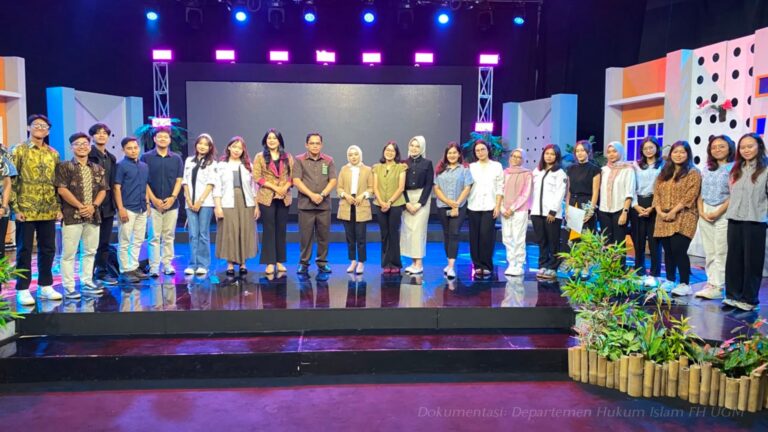
The Faculty of Law at Universitas Gadjah Mada (UGM), in collaboration with the Directorate General of Legislation at the Ministry of Law of the Republic of Indonesia, held a Public Consultation (Uji Publik) on the Draft Law on Clemency, Amnesty, Abolition, and Rehabilitation (Rancangan Undang-Undang Grasi, Amnesti, Abolisi, dan Rehabilitasi/RUU GAAR) on Tuesday, April 14, 2026, at the Auditorium of Building B, FH UGM. The event forms part of the national criminal law reform effort - in particular, the project of updating the regulation of the President's constitutional prerogative powers in line with modern legal developments and human rights principles.
The Draft GAAR Law is designed to address a range of shortcomings in the existing regulatory framework - including incompatibility with the paradigm of the new Penal Code (KUHP), the absence of transparent and accountable mechanisms, and insufficient protections for vulnerable groups. Through a more comprehensive regulatory approach, the draft covers the procedures for filing applications, the mechanisms for granting these constitutional remedies, and the protection of the rights of applicants and their families throughout the GAAR process.
The Vice Dean for Research, Community Service, and Information Systems at FH UGM, Prof. Dr. Heribertus Jaka Triyana, stated that the public consultation is a strategic step toward ensuring that the regulation being developed is aligned with the principles of humanity, legal certainty, and proportionality. The government, through the Directorate General of Legislation (DJPP), also reaffirmed its commitment to opening the broadest possible space for public participation in order to strengthen the substance of the draft law.
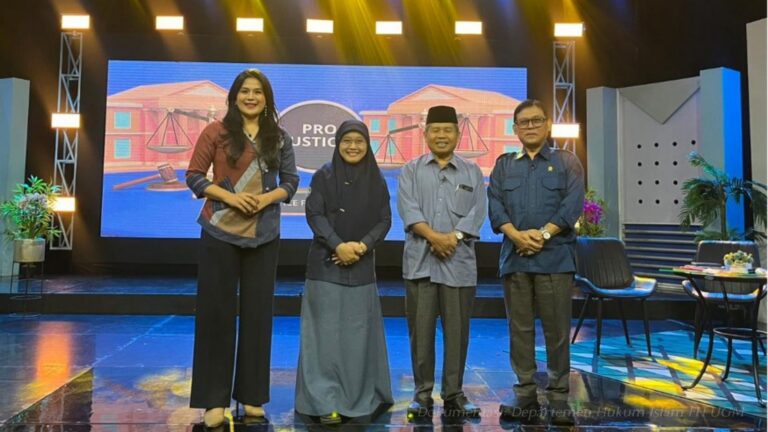
The event was held in a hybrid seminar format and featured resource persons from the academic, practitioner, and law enforcement communities. The four resource persons were Dr. Supriyadi, S.H., M.Hum. and Prof. Andy Omara, S.H., M.Pub. & Int. Law, Ph.D., both lecturers at the UGM Faculty of Law; Muhammad Ismail Hamid, S.H., M.H., a Mid-Level Judge at the Yogyakarta District Court; and Peggy Marin, S.H., M.H., a Junior Mid-Level Legal Analyst at the Directorate General of General Law and Administration. The discussions emphasized the importance of formulating GAAR provisions grounded in modern constitutionalism, with clear criteria and no room for the abuse of power. The reorganization of procedures and the use of digital systems were also identified as important for improving the effectiveness of GAAR implementation.
Through this forum, it is hoped that the Draft GAAR Law will not only satisfy the formal requirements of legislation, but also deliver substantive justice oriented toward the protection of human rights and the interests of society at large.
The Public Consultation on the Draft GAAR Law is aligned with the Sustainable Development Goals (SDGs) - specifically SDG 16 (Peace, Justice and Strong Institutions). Transparent, participatory, and human rights-based regulatory reform reflects the strengthening of accountable and inclusive legal institutions. The involvement of multiple stakeholders in the legislative process also supports the principles of good governance, and ensures that the criminal justice system in Indonesia is increasingly responsive to social justice and the protection of vulnerable groups.
Author: Zahrotunnisa (Part-Timer, Department of Criminal Law) Editor: Public Relations