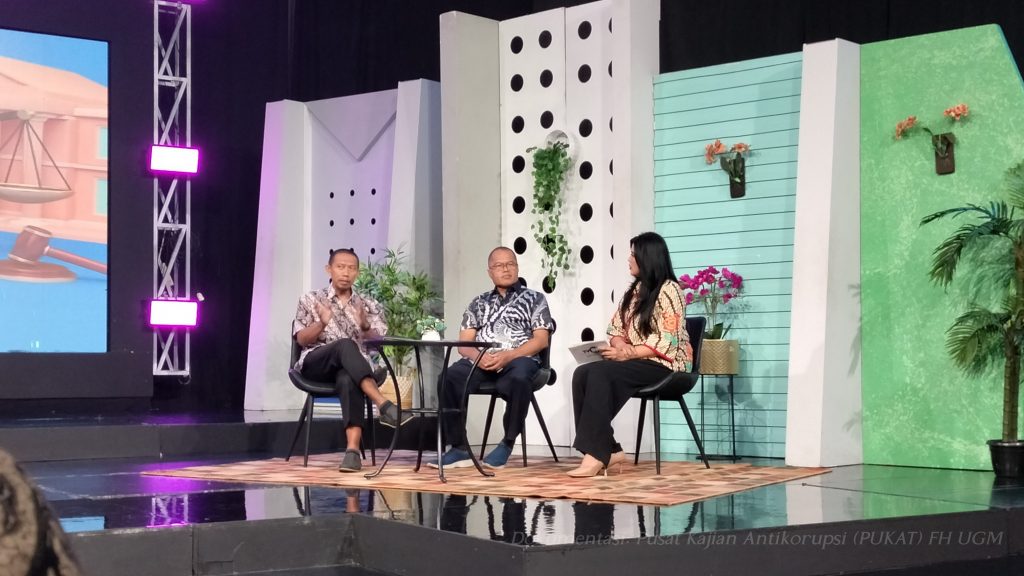
The Legal Consultation and Assistance Centre (PKBH) of the Faculty of Law, Universitas Gadjah Mada (UGM), has once again collaborated with TVRI Yogyakarta to air the Pro Justicia broadcast program. This edition addressed the theme "Mediation as a Conflict Resolution Tool" - exploring mediation as a mechanism available to the public for resolving disputes and conflicts. The broadcast aimed to provide information and encourage the public to consider using alternative dispute resolution through more effective negotiation that prioritizes mutual agreement. This alternative is known as mediation: a dispute resolution process in which the parties negotiate in the presence of a neutral third party (the mediator
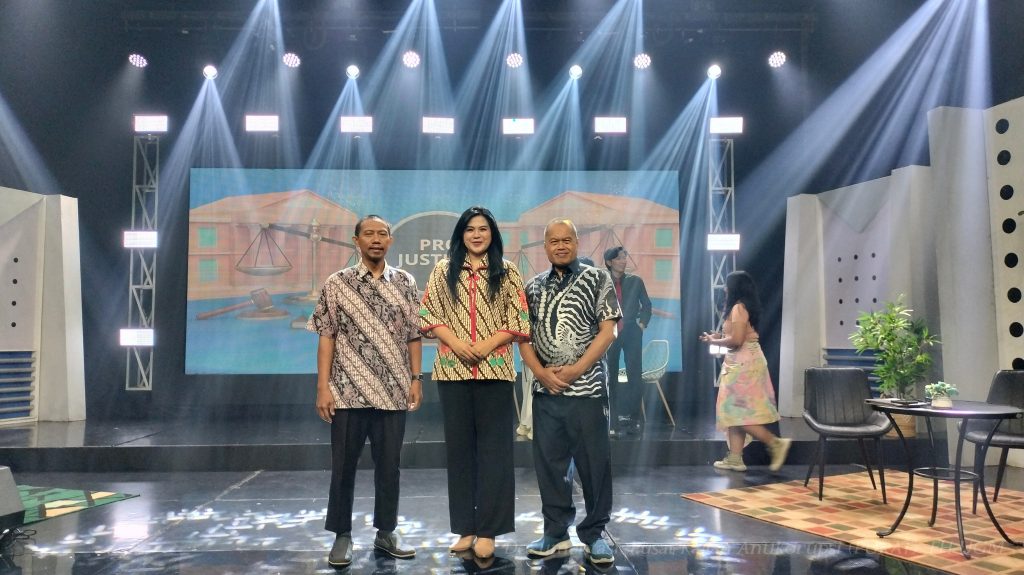
The Pro Justicia broadcast was transmitted live from the TVRI Yogyakarta studio on Tuesday, April 14, 2026, from 3:00 to 4:00 p.m. WIB. The broadcast featured speakers from the UGM Faculty of Law: Prof. Dr. Tata Wijayanta, S.H., M.Hum. and Hasrul Halili, S.H., M.A., both from the Department of Civil Law at the UGM Faculty of Law.
Through the broadcast, the speakers explained that mediation is a conflict resolution instrument that places dialogue at the center, with the assistance of a neutral third party. Unlike litigation (court proceedings), which typically concludes with a win-lose outcome - where one party prevails and the other does not - mediation creates space for the parties to reach an agreement that is more mutually beneficial (a win-win solution).
The speakers also addressed the distinction between in-court mediation and out-of-court mediation. Under existing legislation, in-court mediation is a mandatory procedure that parties to a dispute must undergo after a claim has been registered. Out-of-court mediation, by contrast, is voluntary and is based on the good faith of the parties before the dispute escalates to court proceedings. In its evolving practice, mediation is no longer confined to civil law matters - it has been applied to criminal cases as well.
The broadcast included a Q&A session in which audience members raised questions about the practical implementation of mediation. Topics that emerged included the effectiveness of mediation in preserving harmonious relations between parties, the technical procedures for conducting mediation, and the legal force of the resulting settlement agreement. The discussion also highlighted mediation's role as a strategic instrument for reducing the cost burden of court proceedings. All questions relating to the mechanisms of mediation in the court context were addressed with the aim of giving the public a more thorough understanding of both the procedure and the benefits of the mediation pathway.
Through this edition of the Pro Justicia broadcast, both speakers sought to deliver practical, applicable legal education to the public. The broadcast is hoped not only to deepen public understanding of mediation as a legally mandated mechanism in dispute resolution, but also to encourage the production of mediation agreements that are genuinely effective and responsive to the specific needs of each party -- rather than mere formal compliance with the applicable provisions.
This broadcast supports the achievement of the Sustainable Development Goals (SDGs) agenda - particularly SDG 16 (Peace, Justice and Strong Institutions). Mediation contributes directly to this goal by providing a peaceful channel for resolving disputes, ensuring public access to legal justice, and encouraging dispute resolution outside the courts. The event also connects to SDG 10 (Reduced Inequalities), because mediation opens up more accessible, affordable pathways to dispute resolution for people from all social and economic backgrounds. The Pro Justicia broadcast therefore not only improves public legal literacy, but contributes to the creation of a more just, equitable, and peaceful society. The event also reflects the spirit of SDG 17 (Partnerships for the Goals), by providing an accessible and inclusive forum for resolving disputes through deliberation and consensus.
Author: Josephine Dominique Silalahi