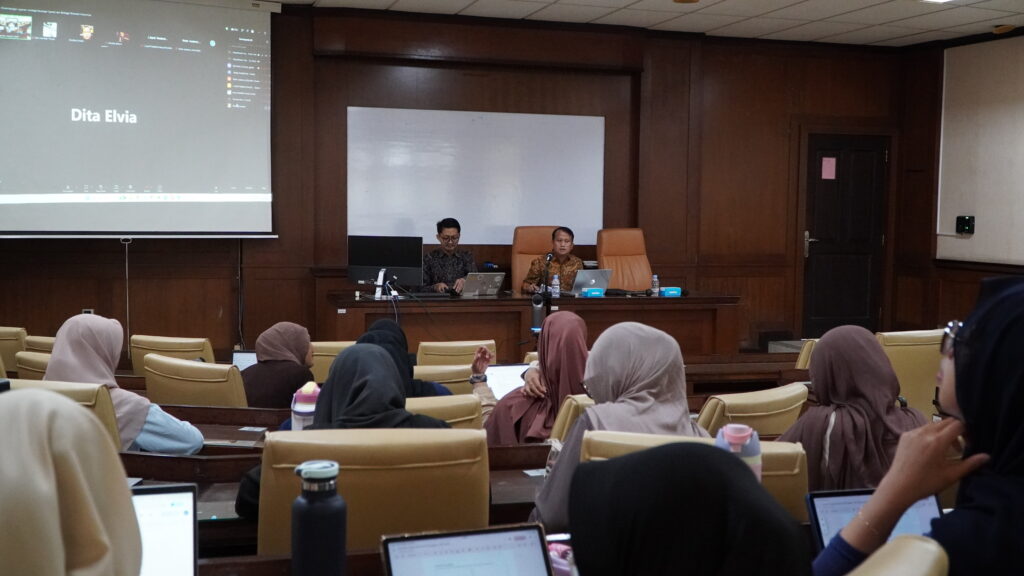
As the newest Research Centre at the Faculty of Law, UGM, the Centre for Islamic Law and Society Studies (Pusat Kajian Hukum Islam dan Kemasyarakatan/PUSHIMAS — Study Center for Islamic Law and Society) organized the Islamic Law and Society Discussion Series, a regular discussion program designed to introduce Islamic law and social issues to students and the general public. The series reflects the increasingly rapid development of Islamic law in keeping with the dynamics of contemporary society. Across the fields of Islamic economic law, family law, and issues of Islam and public law. The first Discussion Series was held on Friday, September 25, 2026, from 9:00 to 10:30 a.m. WIB, in a hybrid format in Room III.1.3, FH UGM, and via Zoom Meeting. This inaugural series carried the theme "Developments in Islamic Financial Institution Services and Their Legal Issues", featuring Dr. Khotibul Umam, S.H., LL.M., a Lecturer in the Department of Islamic Law at FH UGM and Chair of PUSHIMAS, as the resource person, moderated by Mastri Imammusadin, S.H., a Master of Laws student.
The choice of topic was driven by the increasingly rapid development of Islamic financial institution services, with the growth rate of the Islamic finance industry now surpassing that of the conventional finance industry. This has been fuelled in part by the growing awareness among Muslim communities to shift toward Islamic financial products. At the same time, it poses a challenge, as the general public does not yet fully understand the various legal issues arising from the development of the Islamic finance industry. The theme was also chosen in light of students' strong interest in the study and research of Islamic economic law, particularly in several courses offered by the Department of Islamic Law. More specifically, the session was also designed to offer students who have an interest in Islamic law issues but are not enrolled in the Islamic Law concentration an opportunity to engage with the topic.
The Islamic Law and Society Discussion Series also forms part of a series of events organized to introduce PUSHIMAS to students and the general public. The existence of this research centre is hoped to provide a home for research and the development of student competencies in Islamic law. Subsequent series are planned with a range of contemporary themes, tracking the latest issues in the field of Islamic law.
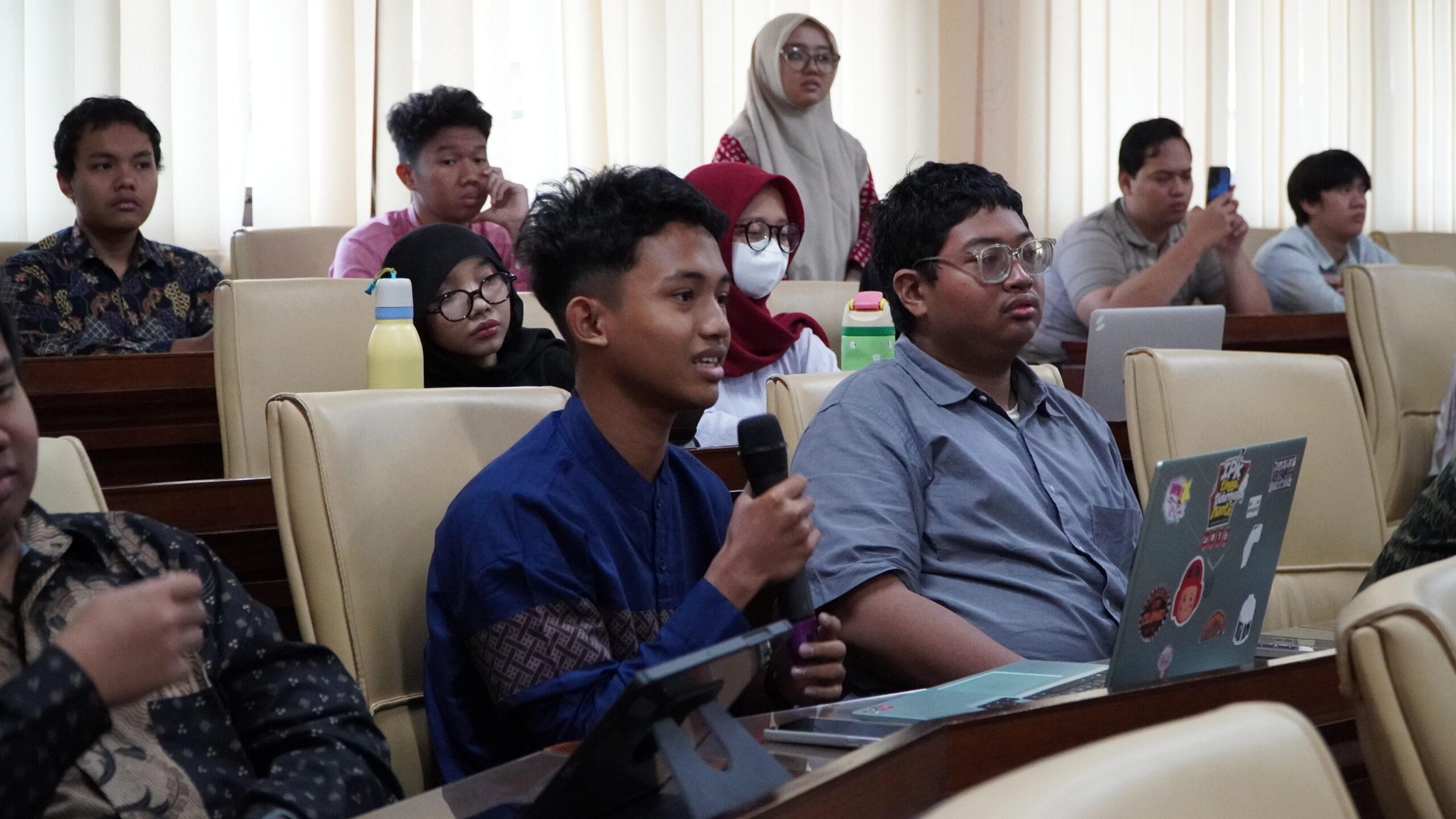
The session was attended by 30 in-person and 10 online participants comprising students, legal practitioners, academics, and members of the general public. In addition to the presentations by Dr. Khotibul Umam, both in-person and online participants engaged actively in an interactive Q&A session. In his presentation, the resource person emphasized that the Islamic finance industry continues to experience rapid growth, with the diversification of its products and services expanding accordingly. As a result, sharia compliance must be reflected not only in substance, but also in governance and consumer protection, making legal research and scholarship in the field of Islamic finance industry an essential effort to address the legal challenges arising within society.
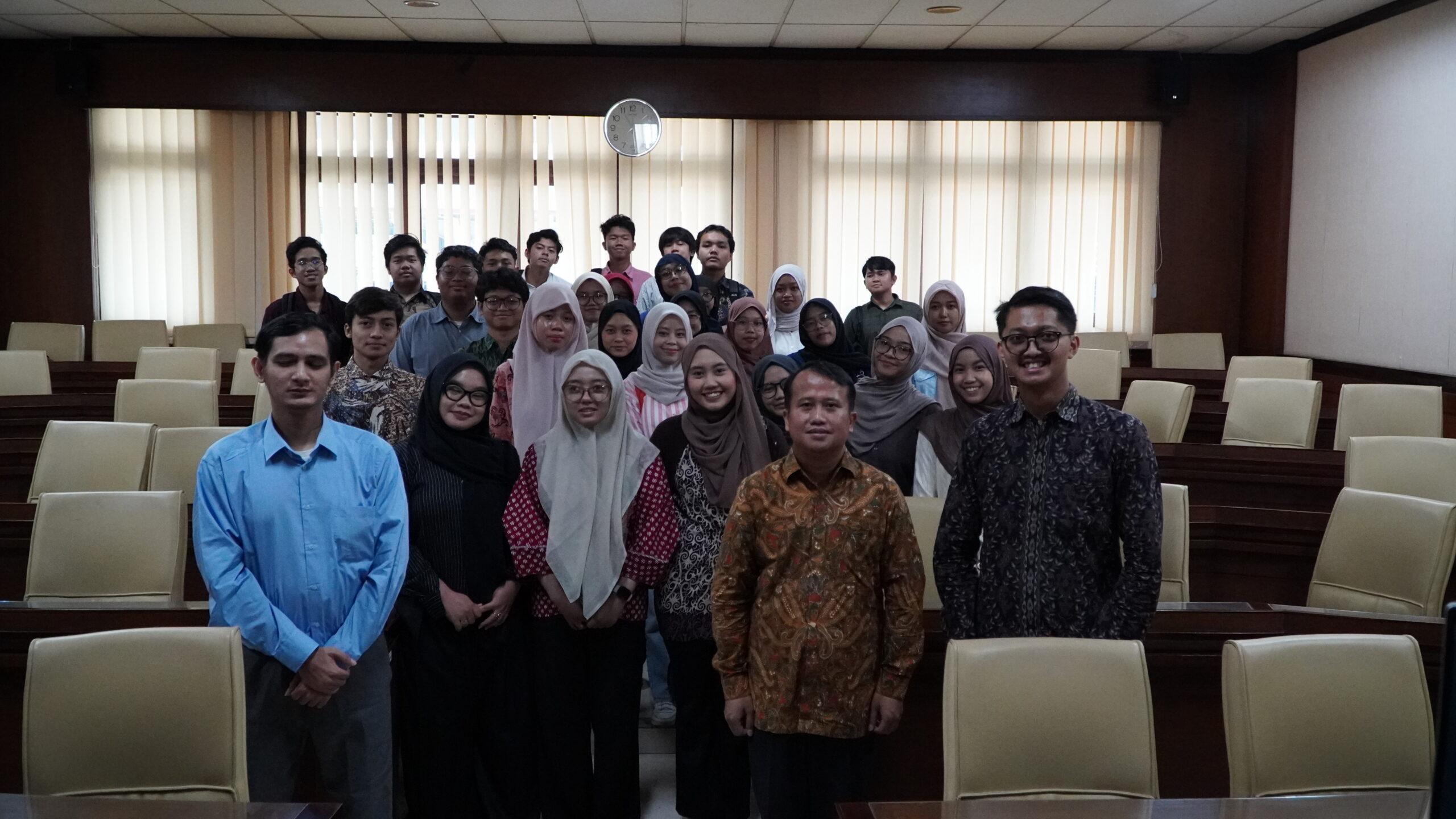
At the session, Dita Kusuma Elvia Putri, S.H., M.Kn., a PUSHIMAS Researcher, also introduced the Centre for Islamic Law and Society Studies as a new research centre that will accommodate research and study in the field of Islamic law for all FH UGM students. She affirmed that, beyond thematic discussions, PUSHIMAS will organize seminars, research activities, and other relevant events.
The Islamic Law and Society Discussion was organized as part of the realization of teaching and community service as a component of the Tri Dharma of Higher Education, while also contributing concretely to the achievement of SDG 4 (Quality Education) through the strengthening of critical legal literacy in addressing legal problems in society; and SDG 16 (Peace, Justice, and Strong Institutions) by fostering a deeper understanding of law and its developments in society, particularly in the realm of Islamic economic law.
Author : Mastri Imammusadin, S.H.
Editor: Public Relations