The discourse on children born outside of wedlock within the family law landscape of Indonesia remains a live and evolving topic, as legal dynamics in society continue to develop. Although Constitutional Court Decision No. 46/PUU-VIII/2010 has provided a new interpretation of the relationship between a child born outside of marriage and their biological father, opening the possibility of a civil relationship between them on the basis of scientific or other legally admissible evidence the divergence in court jurisdiction and the rights that children may obtain under Indonesia's family law pluralism can differ considerably. In the context of Islamic family law, a child born outside of a valid marriage may have their parentage formally established through a petition for the determination of a child's origins (penetapan asal-usul anak), so that the child may have a civil relationship with their biological father. On the basis of that judicial determination, the child may then seek maintenance for their daily needs, and may also obtain access to the biological father's estate through a compulsory bequest (wasiat wajibah). The procedures and rights of a child whose parentage is determined by a District Court may, however, yield a different judgment and different rights from those obtained through a petition to the Religious Court.
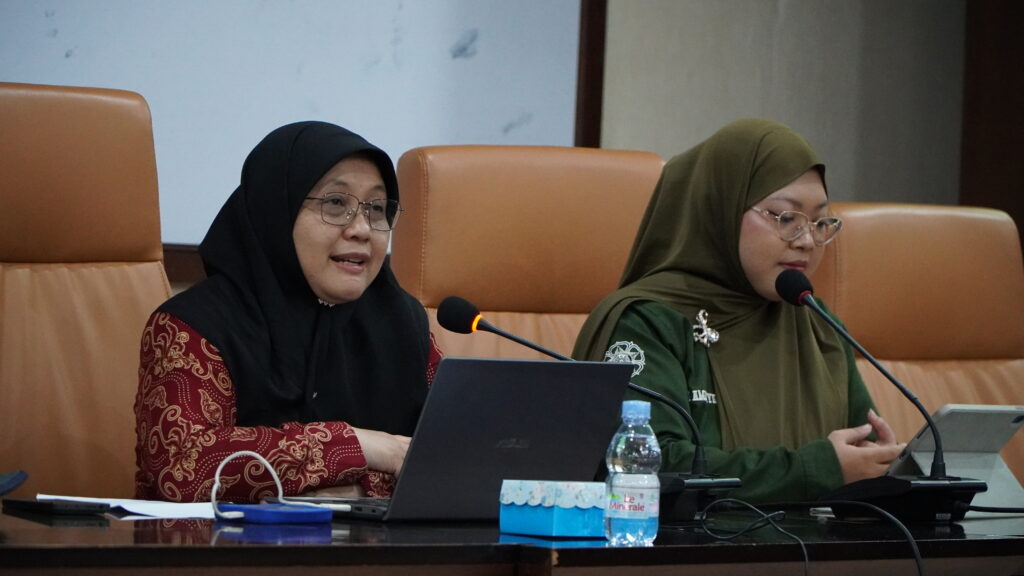
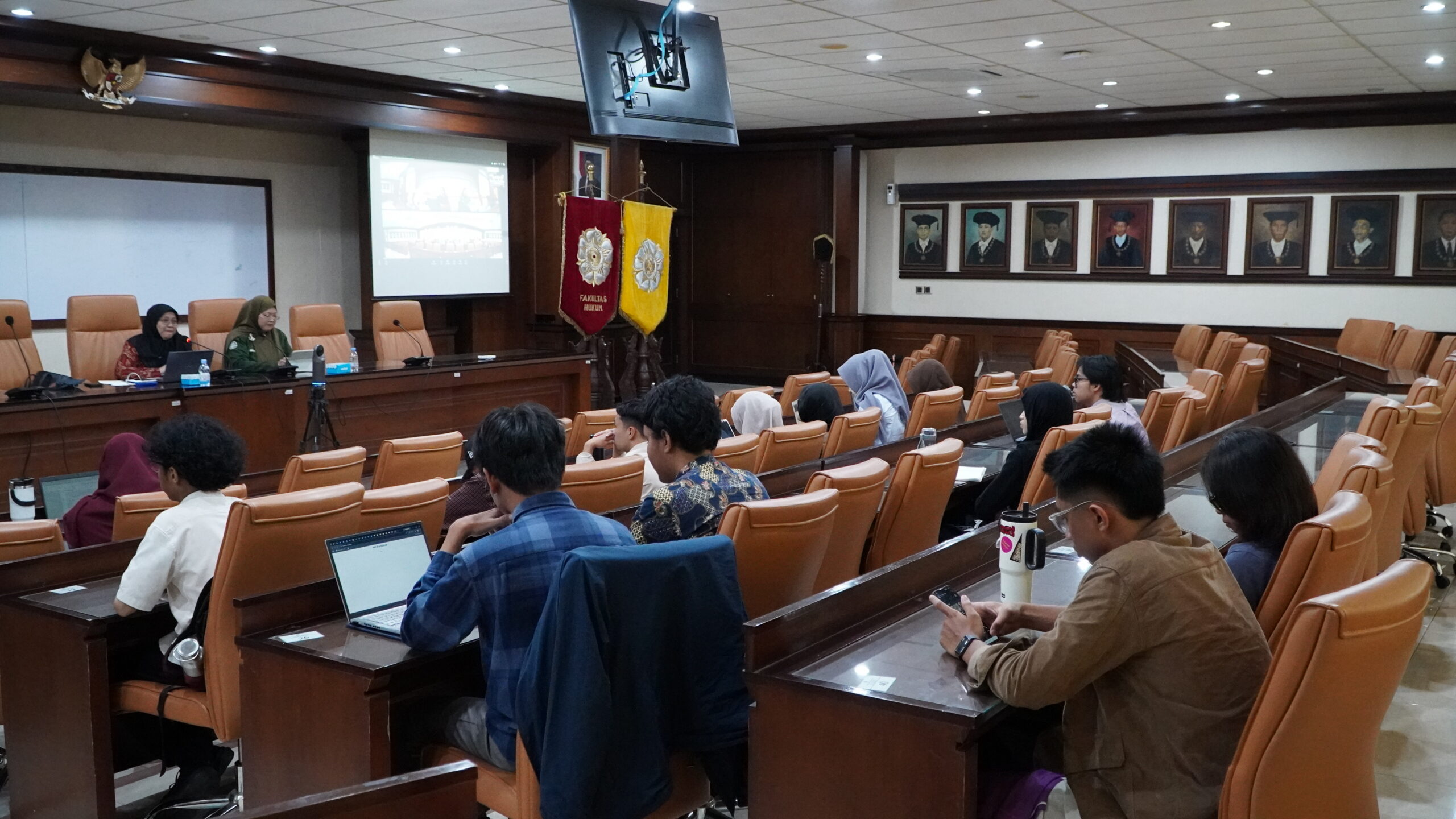
It was on this basis that PUSHIMAS organized the second Islamic Law and Society Discussion, carrying the theme "The Divergence of the Rights of Children Born Outside of Wedlock Under Indonesia's Legal Pluralism". The session featured Prof. Dr. Hartini, S.H., M.Si., Professor at FH UGM with expertise in dispute resolution in the field of Islamic law. The discussion was held on Friday, September 25, 2026, from 1:30 to 3:00 p.m. WIB, in a hybrid format in Room III.1.1, FH UGM, and via Zoom Meeting, moderated by Okta Amaliya, an undergraduate law student and Chair of the UGM Faculty of Law Muslim Students' Association (Keluarga Muslim Fakultas Hukum/KMFH). The session was attended by 20 in-person and 10 online participants comprising students, legal practitioners, academics, and members of the general public.
In her presentation, Prof. Hartini emphasized that there are conceptual differences in the regulation of children born outside of wedlock under Islamic law and the Civil Code (Kitab Undang-Undang Hukum Perdata/KUH Perdata) that need to be clarified so as not to cause confusion in the public. Islamic law unambiguously defines a child born outside of wedlock as a child born outside of a valid marriage. The Civil Code, by contrast, defines a child born outside of wedlock in the narrow sense as a child born outside of marriage from a relationship between a man and a woman neither of whom is bound in marriage to another party. An important nuance to note is that under the Civil Code, a child born outside of wedlock in this narrow sense can be lawfully acknowledged by the father, as regulated under Article 280 of the Civil Code. Under Islamic law, it is affirmed that a child born outside of wedlock as a result of an illicit sexual relationship (zina) only has a lineage relationship (nasab) with the mother and the maternal family as regulated under Article 100 of the Compilation of Islamic Law (Kompilasi Hukum Islam/KHI). Another important distinction is that Islamic law differentiates between a lineage relationship (hubungan nasab) and a civil law relationship.
Nonetheless, in order to guarantee the principle of the best interests of the child (the best interest of the child) as regulated under Article 2 of Law No. 23 of 2002 on Child Protection, as amended by Law No. 35 of 2014, Islamic law permits the formal establishment of a child's origins in three situations: for a child born from an unregistered marriage (nikah siri) where a judicial confirmation of the marriage (isbat nikah) has been successfully filed; for a child born outside of wedlock from an unregistered marriage where no isbat nikah was filed; and for a child born outside of wedlock as a result of an illicit sexual relationship. For children whose parents' marriage has been successfully confirmed through isbat nikah, the child's status may be legitimated through a judicial validation, establishing a lineage relationship with the father. For a child born outside of wedlock where no isbat nikah was filed, the child's rights will differ from those of a child whose parents' marriage was confirmed. Similarly, for a child born from an illicit relationship, the child's rights will be determined by whether the petition for the determination of origins is granted or rejected. If granted, the child's rights may be comparable to those of a child from an unregistered marriage that was not confirmed. If the petition is denied, the child will have no civil relationship of any kind with the biological father.
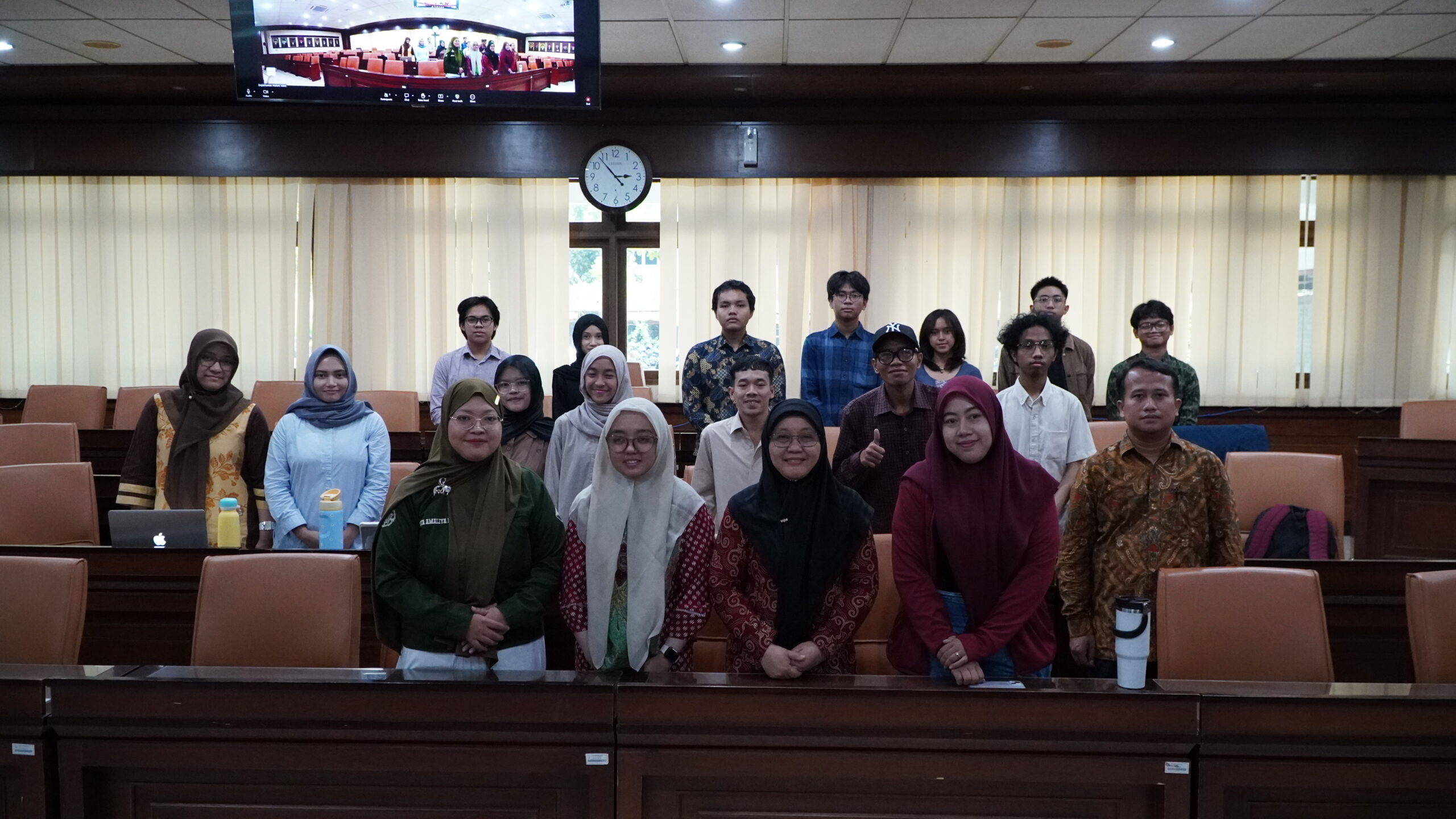
Participants engaged enthusiastically throughout the presentation and actively raised questions during the Q&A session. The strong enthusiasm among participants reflects the high level of student interest in examining Islamic law and social issues which lie at the heart of PUSHIMAS's academic focus.
The organization of this discussion is also part of the realization of teaching and community service as components of the Tri Dharma of Higher Education, contributing concretely to SDG 4 (Quality Education) by improving legal literacy in keeping with the dynamics of contemporary society; and SDG 16 (Peace, Justice, and Strong Institutions) by fostering a deeper understanding of Islamic family law particularly in the area of the protection of the rights of children born outside of wedlock.
Author : Dita Elvia Kusuma Putri, S.H., M.Kn.
Editor: Public Relations