
The UGM Faculty of Law, in collaboration with the Civil and Administrative Law Division (Datun) of the Yogyakarta Special Region High Prosecutor’s Office, held an in-person legal outreach session on drafting the Wukirsari Village Regulation on the Management of Household Waste and Waste Similar to Household Waste. The event took place on Wednesday (September 10, 2025), in the Research Center Room at the UGM Faculty of Law, as part of the support for the “Bantul Clean of Waste 2025” program.
During the discussion forum, Anggita Mustika Dewi, S.H., M.Kn., a lecturer in the Department of Agrarian Law and a researcher at the Center for Natural Resource Governance Studies, provided several recommendations to refine the draft village regulation. The discussion focused on aligning the draft with the provisions of laws and regulations as stipulated in Law No. 12 of 2011 and its amendments, as well as harmonizing its substance with relevant regulations and the social and institutional conditions of the community in Wukirsari Village.
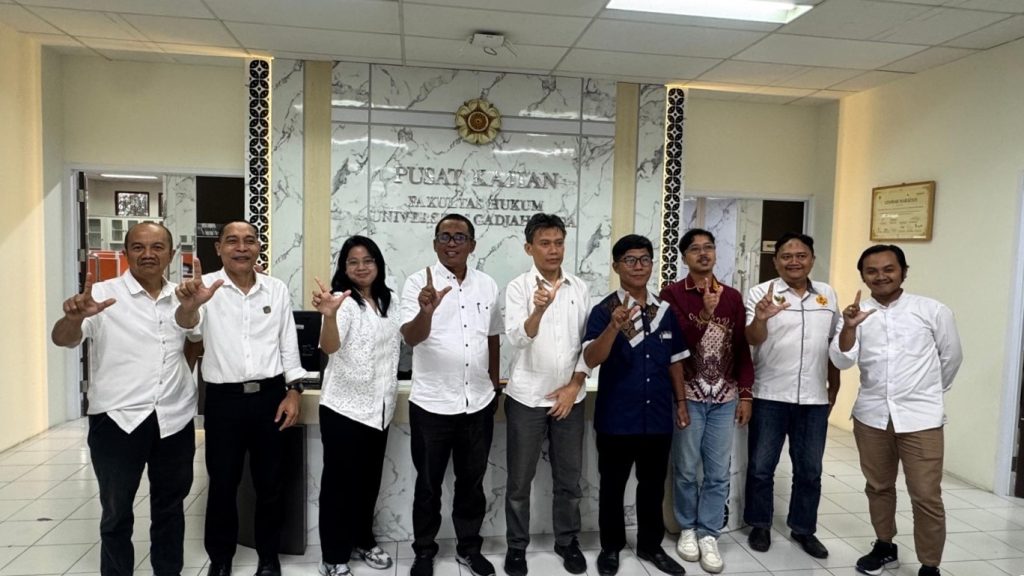
The Wukirsari Village Government emphasized that this Village Regulation serves not only as a legal framework but also as a tool to foster collective community awareness in protecting the environment. The regulation is expected to strengthen a more structured and sustainable waste management system and support the achievement of the “Bantul Free of Waste 2025” target.
Through this initiative, the UGM Faculty of Law reaffirms its commitment to supporting the achievement of the Sustainable Development Goals (SDGs). First, it contributes to SDG 16: Peace, Justice, and Strong Institutions, particularly by promoting inclusive access to justice and strengthening legal institutions that are responsive to vulnerable groups. Second, it supports SDG 10: Reduced Inequalities by encouraging equal access to legal services for persons with disabilities. Furthermore, the protection of vulnerable groups, especially women with disabilities, is also linked to SDG 5: Gender Equality. This mentoring program contributes to SDG 3 (Good Health and Well-being) by strengthening regulations on the management of household waste and similar types of waste, SDG 4 (Quality Education) through legal education related to regulatory drafting, and SDG 17 (Partnerships for the Goals) through collaboration among academics (lecturers from the UGM Faculty of Law), law enforcement officials (the Legal Affairs Division of the Yogyakarta Special Region High Prosecutor’s Office), and village government officials (Wukirsari Village). It is hoped that these efforts will promote the realization of inclusive village governance while providing tangible benefits to the community.
Author: Administrator of the Department of Agrarian Affairs and NRGs