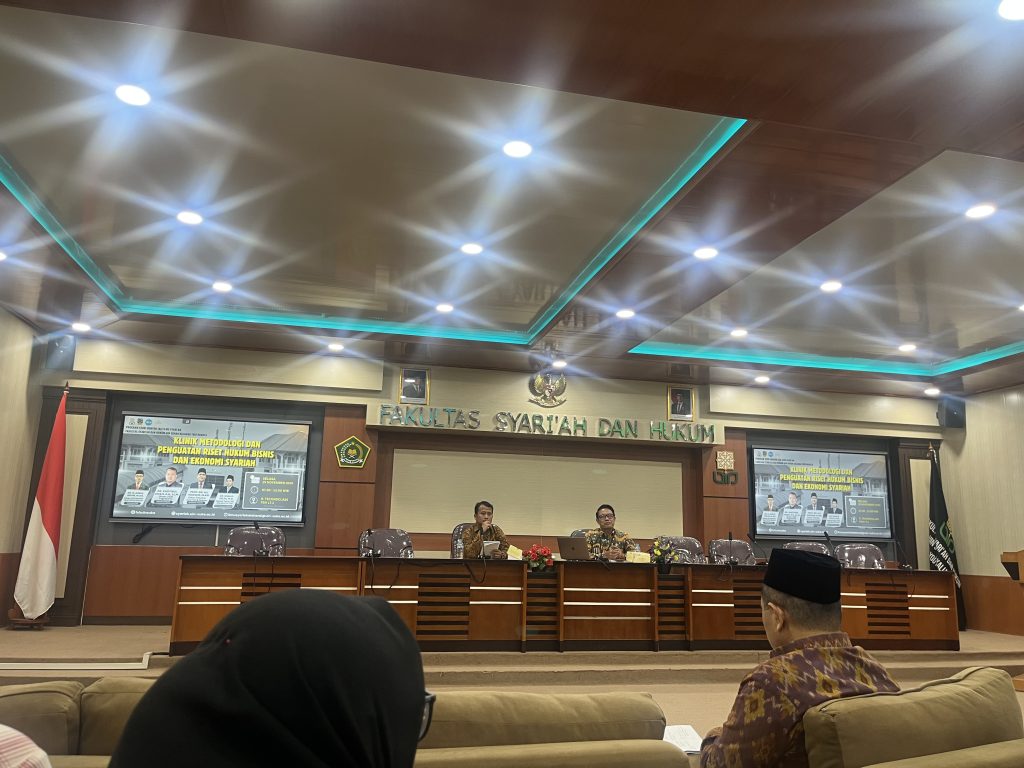
On Tuesday (November 25, 2025), Dr. Khotibul Umam, S.H., LL.M., a lecturer in the Department of Islamic Law at the UGM Faculty of Law, served as a guest speaker at the “Methodology and Research Strengthening Clinic for Sharia Business and Economic Law.” This event was organized by the Doctoral Program (S3) in Sharia Studies, Faculty of Sharia and Law, UIN Sunan Kalijaga Yogyakarta. The event took place in the Technoclass Room on the 1st floor of the FSH building and was attended by master’s students, doctoral students, and academics in the field of Sharia economic law.
The event began with a welcoming speech by Dr. Kholid Zulfa, M.S.I., Head of the Doctoral Program (S3) in Sharia Studies at UIN Sunan Kalijaga Yogyakarta, and an opening speech by Prof. Dr. Ali Sodiqin, M.Ag., Dean of the Faculty of Sharia and Law at UIN Sunan Kalijaga Yogyakarta. In the opening remarks, it was stated that the purpose of organizing the methodology clinic was to strengthen students’ research capacity through a comprehensive understanding of methodology, particularly in the fields of business law and Islamic economics. This clinic also serves as a platform for direct guidance to help students refine their methodological approaches in their theses and dissertations, thereby producing scholarly works relevant to current academic needs and issues in Islamic economics.
This methodology workshop was moderated by Dr. Abdul Mughist, M.Ag., a doctoral faculty member at the Faculty of Sharia and Law at UIN Sunan Kalijaga. During the presentation session, Dr. Khotibul Umam, S.H., LL.M., delivered a presentation titled “The Development and Challenges of Research on Sharia Business and Economic Law in the Era of Economic Digitalization.” He emphasized the importance of understanding the methodological framework in legal research, including the three main layers of legal science—dogmatic law, legal theory, and legal philosophy—and how these three serve as the foundation for formulating critical and relevant research questions.
This session also comprehensively covered the various types of legal research, approaches to legal research, the hierarchy of theories in legal research, and the Islamic economic law ecosystem. He also discussed contemporary legal issues in Islamic economics, such as the legal aspects of fintech and digitalization, regulations on crypto assets and non-fungible tokens (NFTs), the application of Environmental, Social, and Governance (ESG) principles in Islamic finance, mechanisms for harmonizing Sharia regulations, and developments in dispute resolution through BASYARNAS and LAPS SJK. Dr. Khotibul Umam, S.H., LL. M. also provided tips and tricks for finding research ideas, such as observing current legal phenomena through various sources, identifying the latest laws and regulations or policies related to legal issues of interest, actively participating in study groups focused on specific interests, and ensuring the availability of data and the willingness of sources or respondents for empirical research. The question-and-answer session was also interactive.
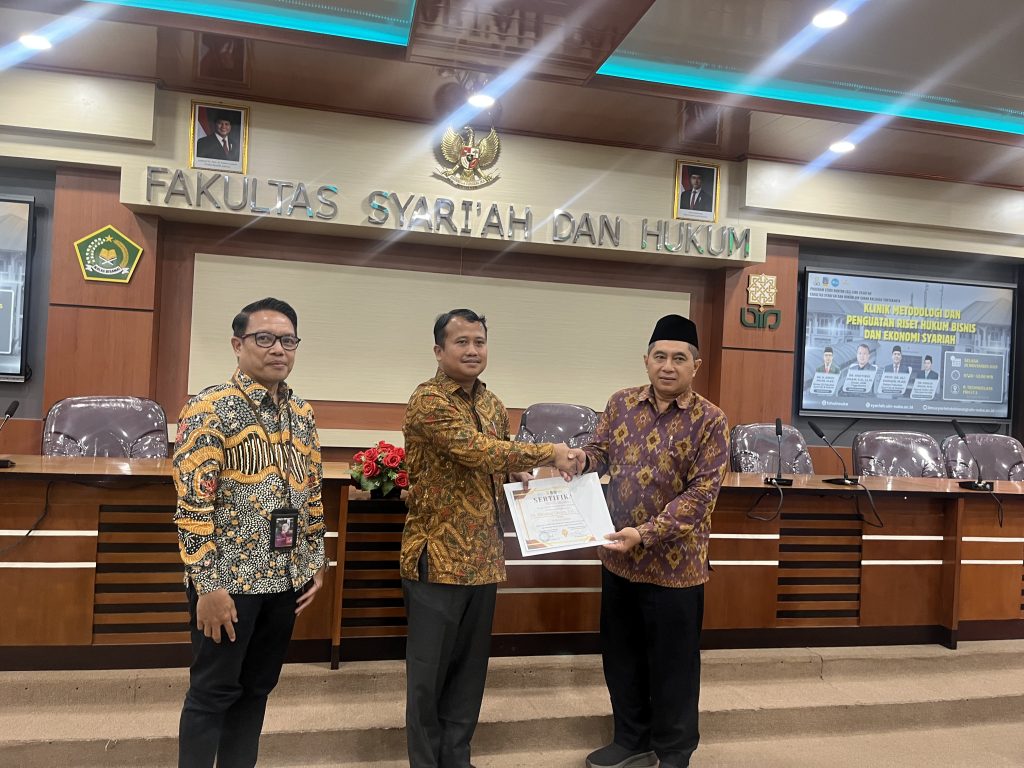
This event makes a tangible contribution to achieving the Sustainable Development Goals (SDGs), particularly SDG 8 (Decent Work and Economic Growth), by enhancing the quality of Islamic economics research, fostering innovation in digital financing, and improving Islamic financial literacy. Through the participation of UGM Faculty of Law faculty members as speakers, this event exemplifies the synergy between UGM and UIN Sunan Kalijaga in strengthening the quality of research and expanding academic contributions to the development of Islamic business law and economics in Indonesia.
Author: Dita Elvia Kusuma Putri (Instructor, Department of Islamic Law)