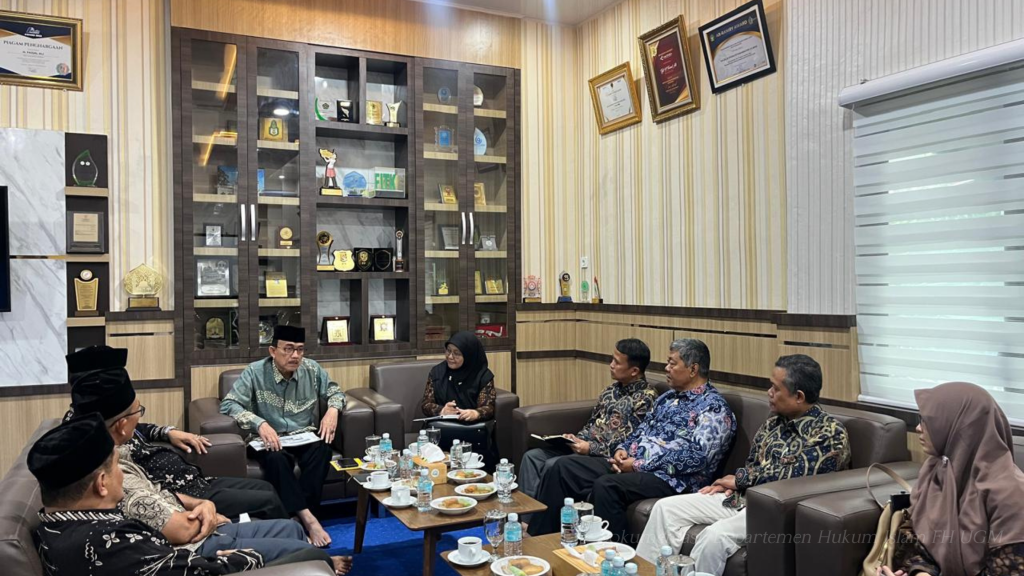
In her remarks, Prof. Dr. Hartini, S.H., M.Si., stated that Aceh Province has a special status in implementing Islamic law within Indonesia’s national legal system. This distinctiveness is reflected not only in regulatory and institutional aspects but also in the practice of discovering and developing Islamic law, which involves various strategic institutions, including the Aceh Ulama Consultative Assembly (MPU Aceh). As an institution responsible for providing considerations, advice, and fatwas on various religious and social issues, MPU Aceh plays an important role in the dynamics of Islamic law implementation in Aceh.
In her remarks, Prof. Dr. Hartini, S.H., M.Si., stated that Aceh Province has a special status in implementing Islamic law within Indonesia’s national legal system. This distinctiveness is reflected not only in regulatory and institutional aspects but also in the practice of discovering and developing Islamic law, which involves various strategic institutions, including the Aceh Ulama Consultative Assembly (MPU Aceh). As an institution responsible for providing considerations, advice, and fatwas on various religious and social issues, MPU Aceh plays an important role in the dynamics of Islamic law implementation in Aceh.
Prof. Hartini explained that this activity was expected to become a constructive academic dialogue platform to understand the dynamics of Islamic law implementation in Aceh, the process of issuing fatwas, and institutional challenges in responding to various contemporary Islamic legal issues. In addition, the visit was also expected to serve as an initial step in establishing closer collaboration between FH UGM and MPU Aceh.
The Deputy Chairperson of the Aceh Ulama Consultative Assembly (MPU Aceh), Prof. Dr. Tgk. H. Muhibbuththabary, M.Ag., welcomed the academic visit and explained the position, duties, functions, and authority of MPU Aceh. He explained that MPU Aceh is an assembly consisting of ulama and Muslim scholars who serve as partners of the Aceh Government and the Aceh Regional House of Representatives (DPRA). In carrying out its role, MPU Aceh has the authority to issue fatwas on matters related to government, development, economy, socio-cultural affairs, and community issues, as well as provide guidance on differences of opinion in religious matters, both among Muslims and between different religious communities. Several important insights were also delivered by the Head of the MPU Aceh Secretariat, Mr. Zahrol Fajri, S.Ag., MH, along with other officials present at the forum.
In addition, MPU Aceh has the duty to provide input, considerations, and recommendations to the Aceh Government and DPRA in establishing policies based on Islamic law, supervise the implementation of government administration and regional policies, conduct research and development related to Islamic law, and carry out ulama regeneration programs. The session also explained the differences in authority and duties between provincial-level MPU Aceh and district/city-level MPU in supporting the implementation of Islamic law in Aceh.
The discussion session was conducted actively and interactively. Lecturers from the Islamic Law Department of FH UGM discussed various topics, including the differences between the position of MPU Aceh and the Indonesian Ulema Council (Majelis Ulama Indonesia/MUI), the methods of ijtihad used in formulating fatwas, the existence of dispute resolution institutions other than the Sharia Court (Mahkamah Syar’iyah), and the relationship between the Fatwas of the National Sharia Council of MUI (DSN-MUI) and MPU Fatwas when differences in substance occur. The discussion also covered the process of qanun formation in Aceh, its position within the national legal system, and the extent to which MPU recommendations influence regional policymaking processes.
Responding to these questions, MPU Aceh explained that the institution holds a unique position within Aceh’s governmental system and plays a role in providing religious considerations for various policies related to the implementation of Islamic law. Fatwas and recommendations issued by MPU serve as important references in the process of establishing qanun and regional policies based on Islamic law. In addition, the discussion also addressed the institutional relationship between MPU and regional governments, as well as various aspects related to the implementation of Islamic law within Aceh’s legal system.
The discussion took place in a constructive atmosphere and produced valuable insights for both institutions. Through this activity, participants gained a deeper understanding of the uniqueness of Aceh’s legal system, particularly regarding the relationship between fatwas, qanun, and public policy. The exchange of ideas also opened opportunities for broader academic collaboration between the Islamic Law Department of FH UGM and MPU Aceh.
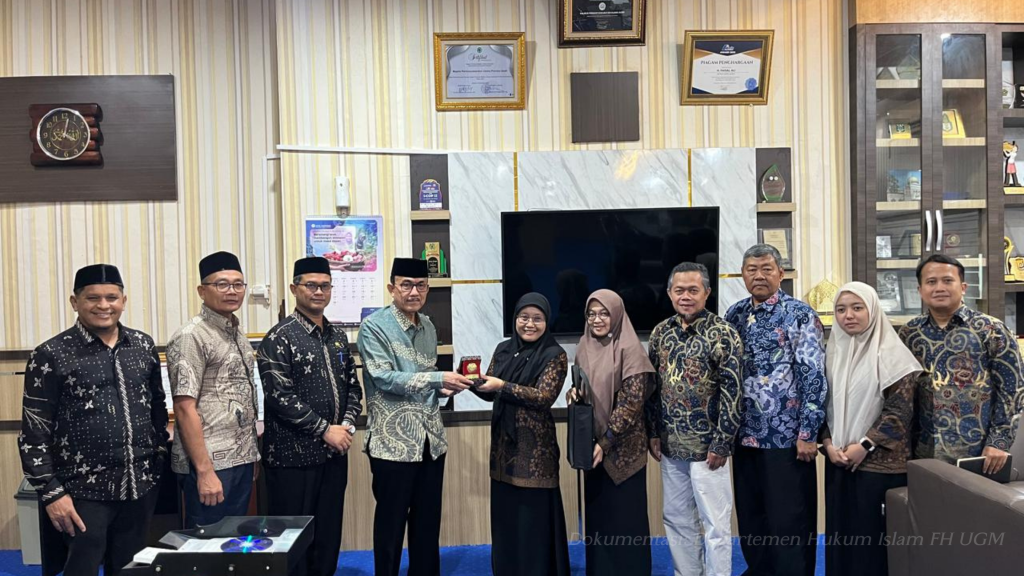
Sebagai tindak lanjut, kedua institusi berkomitmen untuk menjajaki penyusunan Perjanjian Kerja Sama (PKS) antara FH UGM dan MPU Aceh dalam rangka pelaksanaan Tri Dharma Perguruan Tinggi. Inisiatif ini diharapkan dapat memperkuat sinergi antara perguruan tinggi dan MPU Aceh dalam mendukung pengembangan ilmu pengetahuan, peningkatan kualitas sumber daya manusia, serta penguatan jejaring akademik yang berkelanjutan. Kegiatan studi banding ini mendukung pencapaian UN Sustainable Development Goals (SDGs) poin 4: Quality Education melalui penguatan kapasitas akademik, pertukaran pengetahuan, dan peningkatan literasi hukum Islam. Selain itu, kegiatan ini juga sejalan dengan SDGs poin 17: Partnerships for the Goals melalui pengembangan jejaring dan penjajakan kerja sama strategis antara Fakultas Hukum UGM dan MPU Aceh dalam bidang pendidikan, penelitian, dan pengabdian kepada masyarakat.
Penulis: Dita Elvia Kusuma Putri (Dosen Pendamping Departemen Hukum Islam).