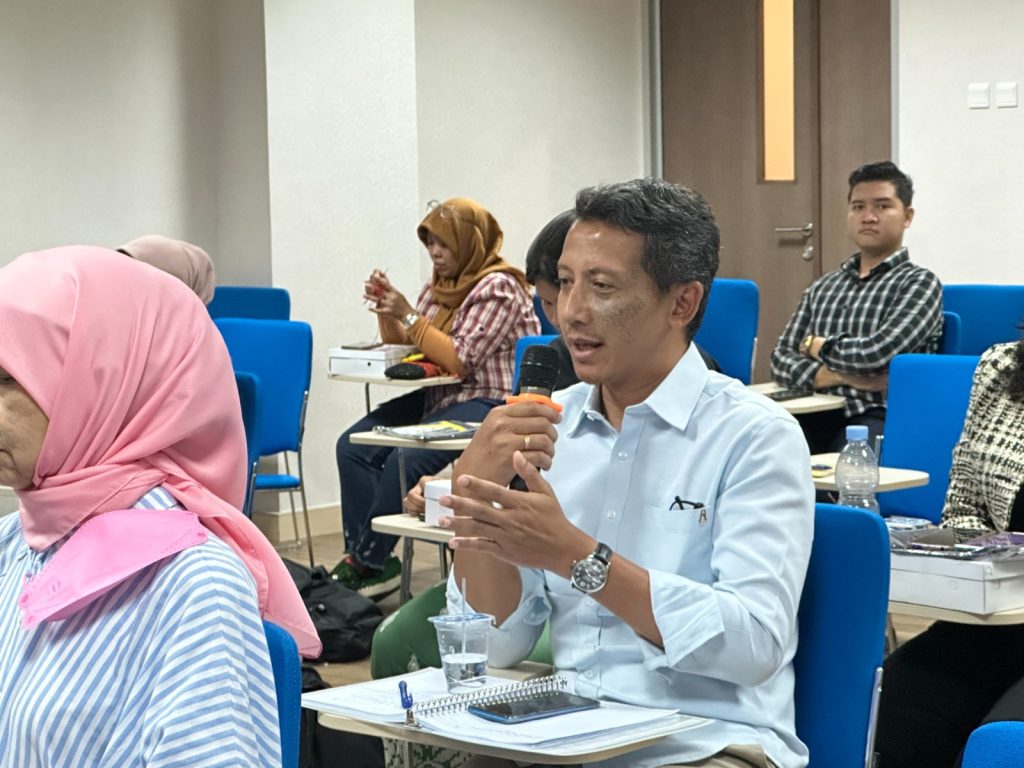
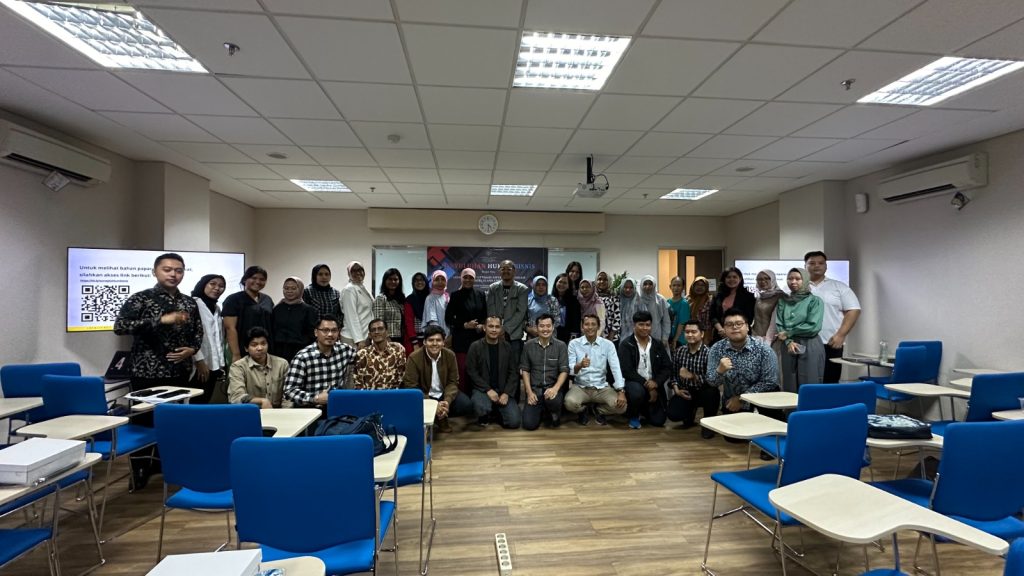
The Master of Laws Program at the Jakarta Campus held a legal outreach session for micro, small, and medium-sized enterprise (UMKM) owners on Saturday, October 28, 2023. The session, held at the UGM Jakarta Campus building, carried the theme "Legal Scale-Up: Optimizing Legal Aspects in UMKM Management."
This activity was organized because a significant proportion of UMKM owners are not yet fully familiar with the business regulations set out in applicable legislation. This can hinder the growth of UMKM businesses and may even give rise to the potential for legal violations. This outreach session represents an implementation of the Tri Dharma of Higher Education, as well as support for the Sustainable Development Goals (SDGs) - specifically Goal 1 (No Poverty) and Goal 8 (Decent Work and Economic Growth).
Understanding of legality among UMKM owners is also supported by a government initiative establishing Presidential Regulation No. 98 of 2014 on Licensing for Micro and Small Enterprises, which aims to provide legal certainty and a means of empowerment for Micro and Small Enterprise Owners (PUMK) in developing their businesses. As such, this understanding of legality is critically important for UMKM owners. It can also build confidence among customers, business partners, and investors that an UMKM owner's business is being run with integrity and in accordance with established standards. Furthermore, business legality and distribution permits can protect the rights of the business, the owner, and consumers alike.
Dr. R.A. Antari Innaka T., S.H., M.Hum., the session's presenter, addressed the importance of contract drafting for UMKM owners. "A contract is a document that governs the rights and obligations of the various parties in a business agreement," explained Antari. She further highlighted the validity requirements for an agreement, including the consent of the parties involved.
Antari explained that the purpose of a contract is to formulate the wishes of the parties, protect their interests, and help them achieve their intended objectives. She also discussed the characteristics of a contract, including consensualism, freedom of contract, pacta sunt servanda, good faith, and personality. She also addressed the importance of understanding the validity requirements of an agreement and the debtor's role in fulfilling contractual obligations - including instances of breach of contract (wanprestasi), which may take the form of non-performance, defective performance, or delayed performance.
Beyond this, Antari also explained the condition of overmacht (force majeure). Force majeure occurs when a contract cannot be performed due to unforeseen or unforeseeable circumstances that prevent the debtor from fulfilling their obligations. Antari closed her presentation by explaining the structure or anatomy of a private deed (akta di bawah tangan), encompassing the title, the introductory section, the comparition (komparisi), the recitals (premisse akta), the substantive content, and the closing section of the deed.
The outreach session continued with a presentation by Dwi Haryati, S.H., M.H., who addressed basic business licensing aspects. Dwi explained that UMKM play an important role in Indonesia's economic growth. The government has accordingly sought to simplify the business licensing system through the Online Single Submission (OSS) Risk-Based Business Licensing platform.
Dwi highlighted the benefits of business licensing, including legal recognition for the business, legal protection, access to financing, and access to government assistance programs. She also explained that business risk is classified according to the relevant business sector, with the type of licensing required depending on the level of risk. Low-risk UMKM only need a Business Identification Number (Nomor Induk Berusaha/NIB), while those with higher risk require additional permits.
Dwi also explained that the business licensing process can now be carried out easily through the official Risk-Based OSS website, managed by the OSS Institution (under the Ministry of Investment/BKPM). This system is hoped to create an ecosystem that supports investment and is more efficient than the previous licensing system.
Penulis: MIH Kampus Jakarta
Editor: Public Relations