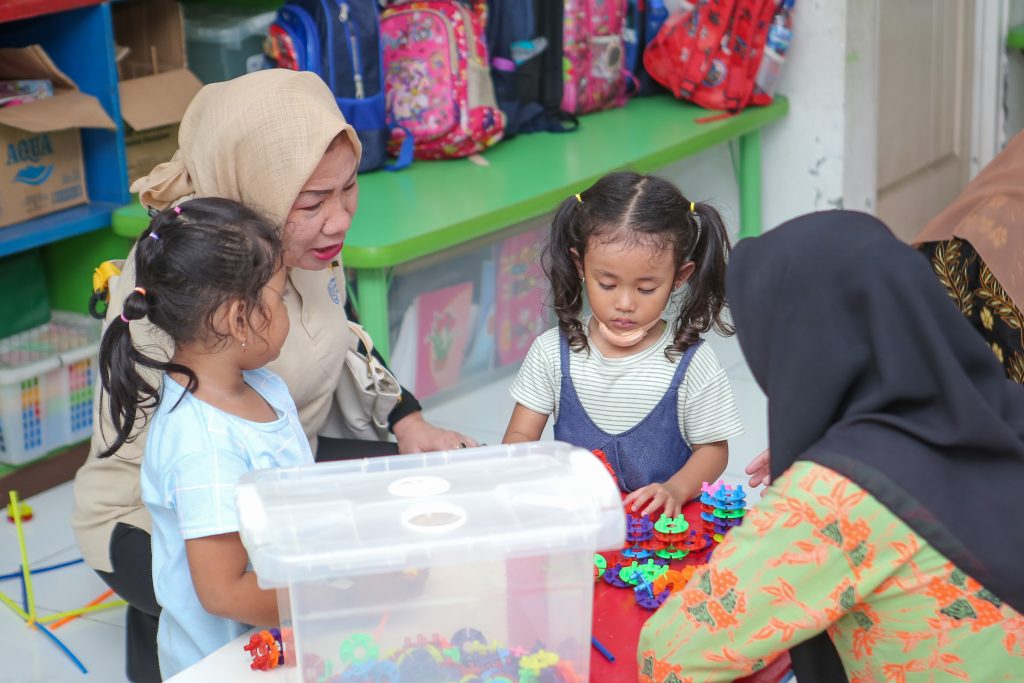
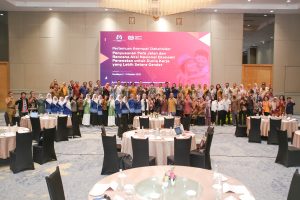
The Center for the Study of Law, Gender, and Society (LGS) at the Faculty of Law, UGM, together with the International Labor Organization (ILO) and various stakeholders, conducted an observation visit and stakeholder meetings from Monday (October 2, 2023) through Tuesday (October 3, 2023) in Surabaya. The observation visit took place at a daycare center under the theme “Various Childcare Models for Workers with Family Responsibilities.” This was followed by the Fourth Stakeholder Meeting on “Developing a Roadmap and National Action Plan for the Care Economy Toward a More Gender-Equal Workplace.”
This event aligns with Sustainable Development Goal (SDG) 4—Quality Education—and SDG 5—Gender Equality.
This event was attended by representatives from the Ministry of Women’s Empowerment and Child Protection (KPPPA), the Ministry of Education, Culture, Research, and Technology (Kemdikbud), the Ministry of Manpower (Kemnaker), the Ministry of National Development Planning of the Republic of Indonesia/National Development Planning Agency (Kementerian PPN/Bappenas), labor unions, the Indonesian Association of Early Childhood Educators and Support Staff (HIMPAUDI), the Indonesian Employers’ Association (APINDO), and various other stakeholders. This initiative successfully identified four types of daycare centers in Surabaya: community-based, industry-based, private-sector-based, and university-established daycare centers. These four types differ in terms of funding sources, facilities, affordability, childcare activities, and the number of educators and caregivers.
Various stakeholders recommend that the government support the funding for the establishment and operation of daycare centers, at least in terms of facilities and wages for caregivers and educators. This is intended to ensure that daycare centers are accessible to people from all walks of life and can provide decent wages and rights for caregivers and educators. In addition to the government, this meeting also encouraged companies to allocate corporate social responsibility (CSR) funds toward the establishment and operation of daycare centers. Similarly, universities, as educational institutions, were encouraged to establish daycare centers and allocate personnel expenses as a primary need for these centers on campus.
Daycare, or child care services, is one of seven issues promoted by the KPPPA in collaboration with the ILO within the framework of the care economy. The other six issues are long-term care services for the elderly; services for people with disabilities; recognition and protection of care workers; maternity protection; paternity leave; and social security in the care economy.
The output of this activity is a roadmap that will be integrated into the 2025–2045 National Medium-Term Development Plan (RPJPN) along with its supporting documents. There are three RPJPN agendas aligned with promoting policies related to the care economy: Agenda 1, “Realizing Social Transformation,” specifically under point IE3 regarding “Adaptive Social Protection”; Agenda 2, Realizing Economic Transformation, specifically in point IE4 regarding Science and Technology, Innovation, and Economic Productivity; and Agenda 3, Social, Cultural, and Ecological Resilience, specifically in point IE14 regarding Quality Families and Gender Equality.
Penulis: Law, Gender, and Society
Editor: Public Relations