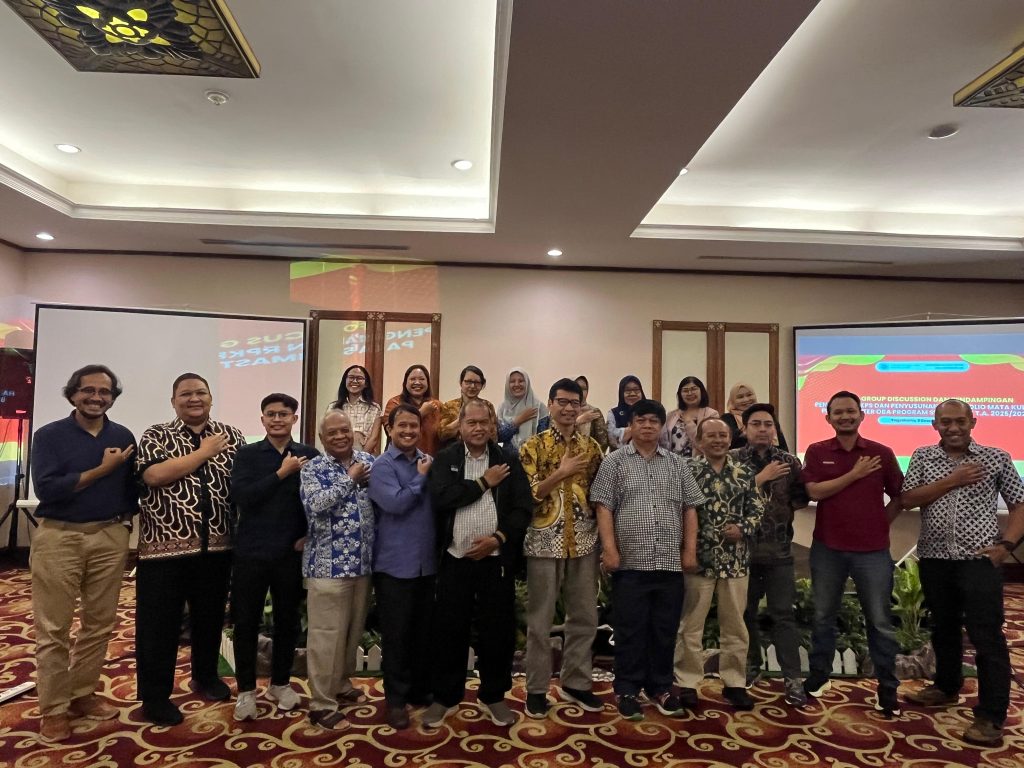
On Wednesday (December 3, 2025), the Master’s Program in Business and Public Law (MHBK) at the Faculty of Law, Gadjah Mada University (UGM), successfully held a Focus Group Discussion (FGD) and provided guidance on completing the Semester Learning Activity Plan (RPKPS) and compiling course portfolios using the Simaster Outcome-Based Assessment (OBA) Simaster system for the 2025/2026 academic year. The full-day event, held from 8:30 a.m. to 3:00 p.m. WIB at the Loman Park Hotel in Yogyakarta, was attended by faculty members, the Quality Assurance and Academic Innovation Unit (JAMIA), the Dean’s Office, as well as resource persons and facilitators from the Directorate of Academic Studies and Innovation (DKIA) at UGM. This event was essentially designed as a strategic step to improve the quality of learning and ensure compliance with evolving national higher education standards.
Furthermore, this event serves as a concrete response to the provisions contained in Ministry of Education, Culture, Research, and Technology Regulation No. 39 of 2025 on Quality Assurance in Higher Education and UGM Rector’s Regulation No. 23 of 2024 on Education. These FGDs and mentoring sessions not only provide an understanding of Outcome-Based Education (OBE) but also equip faculty members with practical skills in operating the OBA Simaster system to establish a standardized and high-quality learning documentation system.
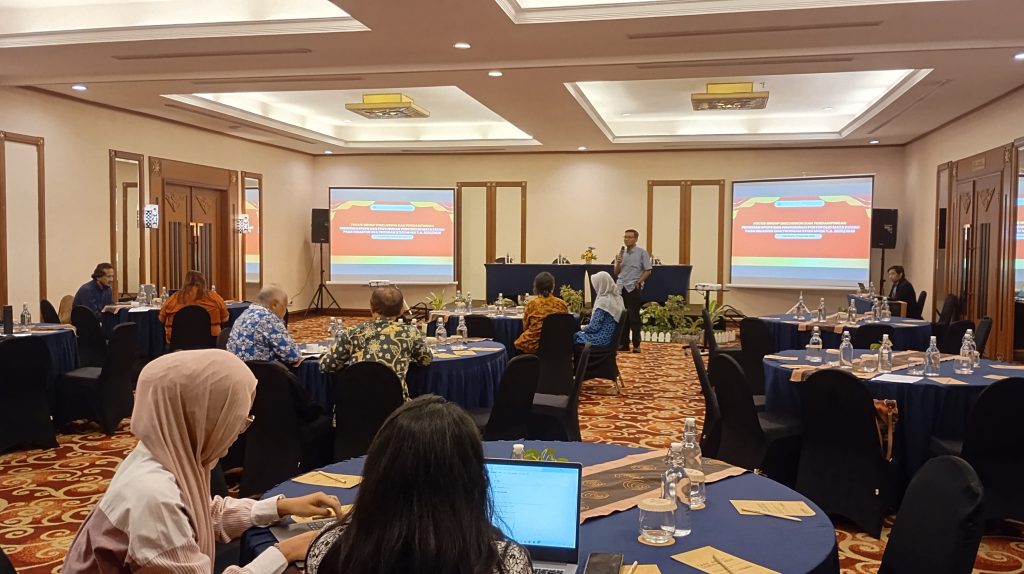
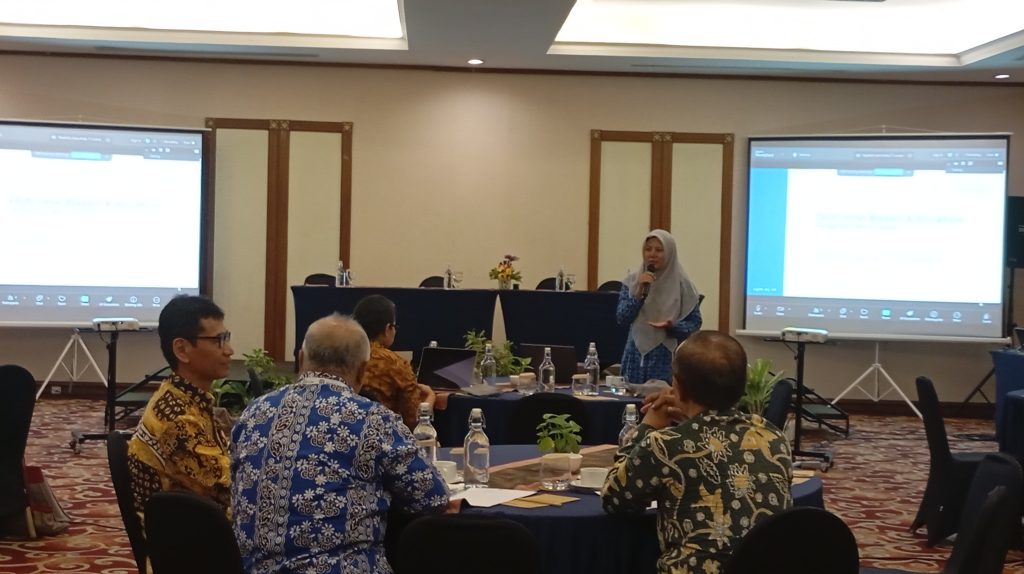
The event began with participant registration, an opening by the Master of Ceremonies, followed by remarks from Prof. Adrianto Dwi Nugroho, S.H., Adv.LL.M., LL.D., Vice Dean for Academic Affairs, Student Affairs, and Cooperation at the UGM Faculty of Law. Next, the event continued with a presentation on the main topics delivered by a speaker from DKIA UGM, Dr. Ngadisih, S.T.P., M.Sc. The topics covered included Outcome-Based Education (OBE), Graduate Learning Outcomes, as well as the technical aspects of filling out the RPKPS and compiling course portfolios through the OBA Simaster system. This session also included an interactive discussion and Q&A, providing participants with the opportunity to clarify various technical aspects related to the OBA system.
The event continued with an intensive mentoring session led by facilitators from DKIA UGM. The first mentoring session took place from 10:30 a.m. to 12:00 p.m. WIB and focused on filling out the RPKPS in the Simaster system, including the identification of CPLs and the mapping of the assessment system. Related activities continued during the second mentoring session, held from 1:00 PM to 3:00 PM WIB. During both mentoring sessions, DKIA facilitators provided direct technical guidance and helped participants overcome various technical challenges they faced.
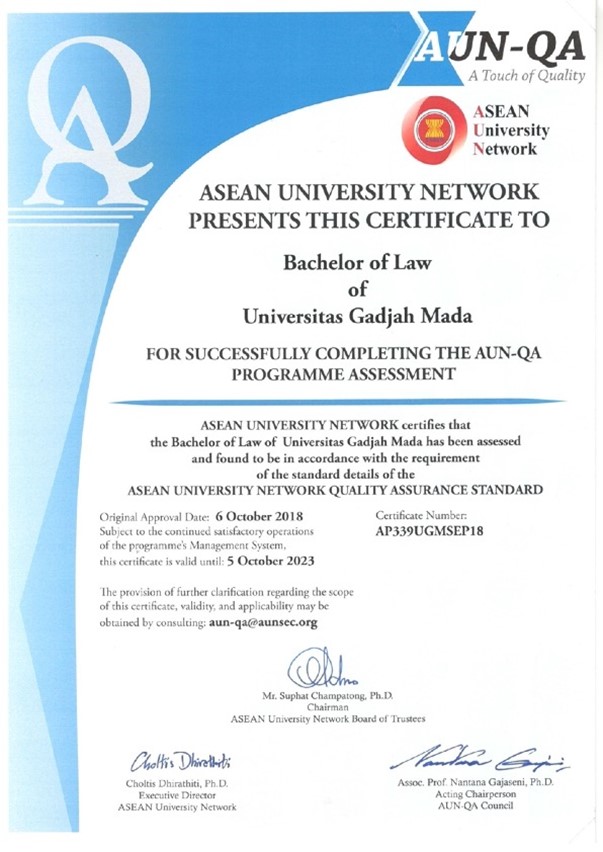
Through this activity, the MHBK Study Program achieved several important milestones. All participating faculty members gained an understanding of the OBE concept, learned to operate the Simaster OBA system, successfully mapped the relationships between CPL, CPMK, and Sub-CPMK in the courses they teach, and designed assessment systems aligned with the relevant learning outcomes. This activity also enhanced the MHBK Study Program’s readiness to prepare international accreditation documents through the availability of standardized and well-documented RPKPS and course portfolios.
These FGDs and mentoring activities are inherently aligned with efforts to achieve the Sustainable Development Goals (SDGs), particularly Goal 4 on Quality Education, through the improvement of a standardized, transparent, and competency-based learning process. By implementing the OBE system and structured learning documentation, the MHBK Study Program ensures that every graduate achieves the established and well-measured competencies. Furthermore, these activities also contribute to Goal 17 on Partnerships for the Goals through close collaboration between the MHBK Study Program and DKIA UGM in establishing a sustainable educational quality assurance system.
With the holding of these focus group discussions and mentoring sessions, the MHBK Study Program is optimistic that it can continuously improve the quality of learning, meet national higher education standards, and thoroughly prepare its international accreditation documents. Through these efforts, the MHBK Study Program is playing a role in building a strong foundation to produce graduates who are competent, adaptable, and ready to contribute to the professional world.
Author: Nazwa Adlina N (MHBK)