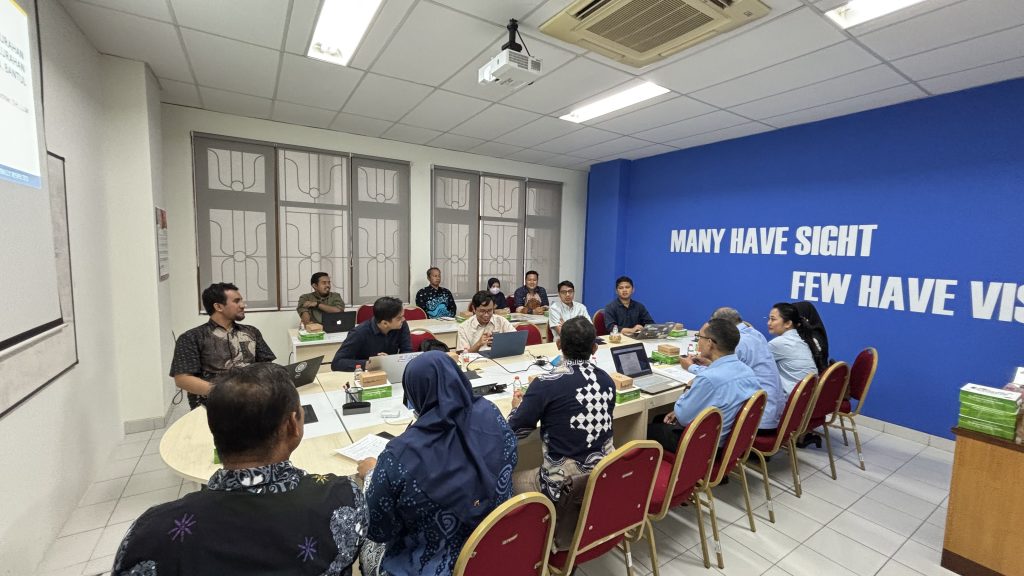
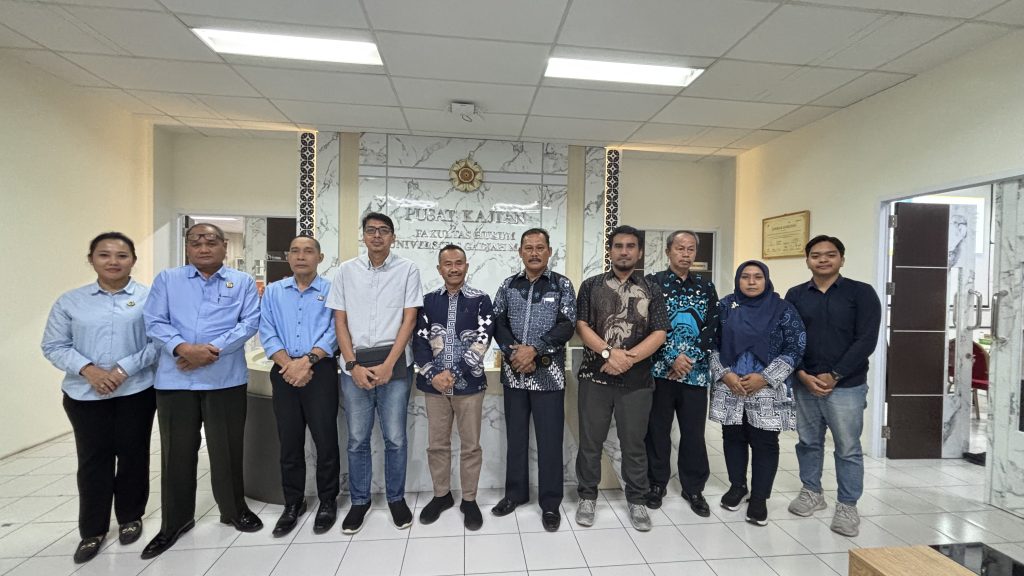
PKBH at the Faculty of Law, UGM, in collaboration with the DIY High Prosecutor’s Office, held a legal outreach session for the Timbulharjo Village Government in Bantul. This session focused on the drafting of a village regulation regarding fees. The event took place on Thursday (September 11, 2025) at the UGM Faculty of Law Research Center and was attended by village officials, representatives from the DIY High Prosecutor’s Office, and academics from the UGM Faculty of Law.
The event aimed to provide legal guidance to the village government in formulating regulations that meet the village’s needs while remaining in line with national legal provisions. Faculty members from the UGM Faculty of Law reviewed the draft village regulations and provided academic input.
During the forum, Dr. Zainal Arifin Mochtar, S.H., LL.M., a lecturer at the UGM Faculty of Law, served as a reviewer and emphasized that regulations regarding levies at the village level must be handled with care. “If not properly structured, this could potentially overlap with local taxes or local fees. In fact, it is possible that their implementation could drag village officials into legal proceedings,” Zainal asserted.
Furthermore, the review examined several key aspects that must be considered in drafting village regulations, including the legal basis for levies, to avoid legal issues and ensure compliance with the latest legislative developments. The objects of village levies must align with DIY Governor Regulation No. 24 of 2024 and Bantul Regent Regulation No. 59 of 2022, which stipulate that levies may only be imposed on business services. The levy obligations must clearly specify who is subject to the levy, whether individual residents or legal entities such as limited liability companies (PT) or foundations. The payment mechanism must clearly distinguish between cash deposits to the village treasury and transfers to the BUMKal account, in order to maintain transparency and accountability. Reductions and exemptions from levies must be established based on clear and measurable procedures to prevent abuse of authority.
In addition, the discussion also highlighted the importance of improving transparency and accountability at every stage of fee management. According to Zainal, good governance will protect the village from legal risks while strengthening the legitimacy of the village government in the eyes of the community. He also urged that the term “fees” be considered for replacement with another term more in line with the scope of the village’s authority, in order to prevent regulatory overlap.
Input from the DIY High Prosecutor’s Office further enriched the discussion, particularly from a law enforcement perspective. This collaboration underscores the importance of synergy among academics, law enforcement officials, and village governments in developing sound regulations.
This initiative is expected to strengthen financial governance at the village level, provide legal certainty, and prevent potential abuse of authority. Thus, village regulations can serve as instruments of public accountability, rather than becoming new legal issues.
The legal outreach program organized by the PKBH FH UGM in collaboration with the DIY High Prosecutor’s Office aligns with the Sustainable Development Goals (SDGs), particularly SDG 16: Peace, Justice, and Strong Institutions. Providing guidance in drafting village regulations related to levies is a concrete step toward strengthening transparent, accountable, and law-based village governance. This effort not only provides legal certainty for village governments and the community but also prevents potential abuse of authority that could undermine public trust. The synergy between academics, law enforcement officials, and village governments reflects the importance of cross-sectoral collaboration in developing fair and sustainable regulations. Thus, this initiative directly contributes to the achievement of the SDGs by creating village institutions that are stronger, more transparent, and more responsive to community needs.
Author: Syahrindra Restu Rahmadhani (Research Assistant to Dr. Zainal Arifin Mochtar)