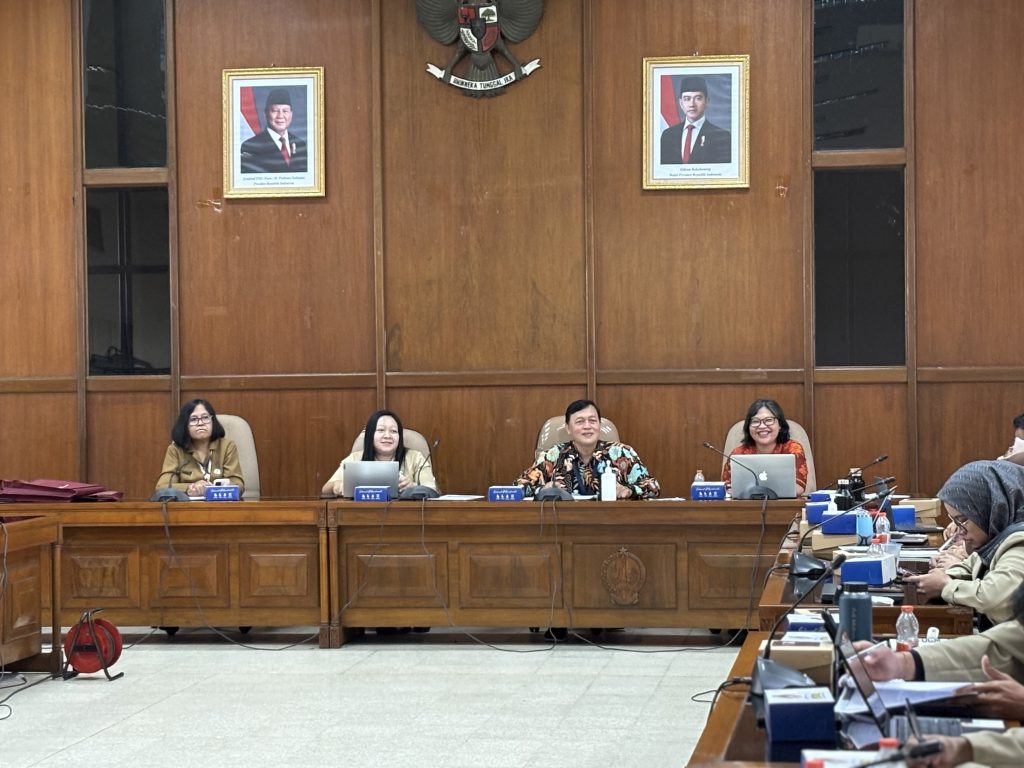
The Master of Law (MIH) program at the Faculty of Law, Gadjah Mada University, organized a field trip to the Regional People’s Representative Council (DPRD) of the Special Region of Yogyakarta (DIY). The event took place on Monday (November 17, 2025) as part of the “Law and Politics” and “Law and Politics” courses. The event, which took place at the DIY Regional People’s Representative Council building, featured guest speakers from the DIY Regional People’s Representative Council—Yudi Ismono, S.Sos., M.Acc., and Siska—and was moderated by Sri Wiyanti Eddyono, S.H., LL.M.(HR)., Ph.D., the course instructor. The visit aimed to strengthen students’ understanding of the dynamics of law as a product of politics, the functions of legislative bodies, and the challenges to integrity in the public policy-making process.
In her presentation, Siska explained the structure of the DIY Regional People’s Representative Council (DPRD), ranging from legislative rights—such as the right to conduct inquiries, interpellations, and the right to express opinions—to the functions of drafting regional regulations and overseeing the implementation of public policies. She also highlighted the distinctive character of DIY as a special region, which grants the DIY DPRD the authority to draft Special Regional Regulations (Perdais)—a power not held by other regions. Explanations regarding the budgeting process, oversight mechanisms, and political dynamics among factions provided a concrete picture of how political and bureaucratic interests influence the quality of legislation.
Meanwhile, Yudi Ismono discussed the challenges of drafting Academic Papers (NA) and the importance of incorporating credible academic studies into every process of local regulation formulation. He emphasized that the quality of Academic Papers is often suboptimal because they are drafted by third parties who do not always possess adequate expertise, as well as due to a lack of meaningful public participation. Students were also encouraged to understand budgetary constraints, challenges related to information transparency, and the importance of strengthening public participation through the use of information technology.
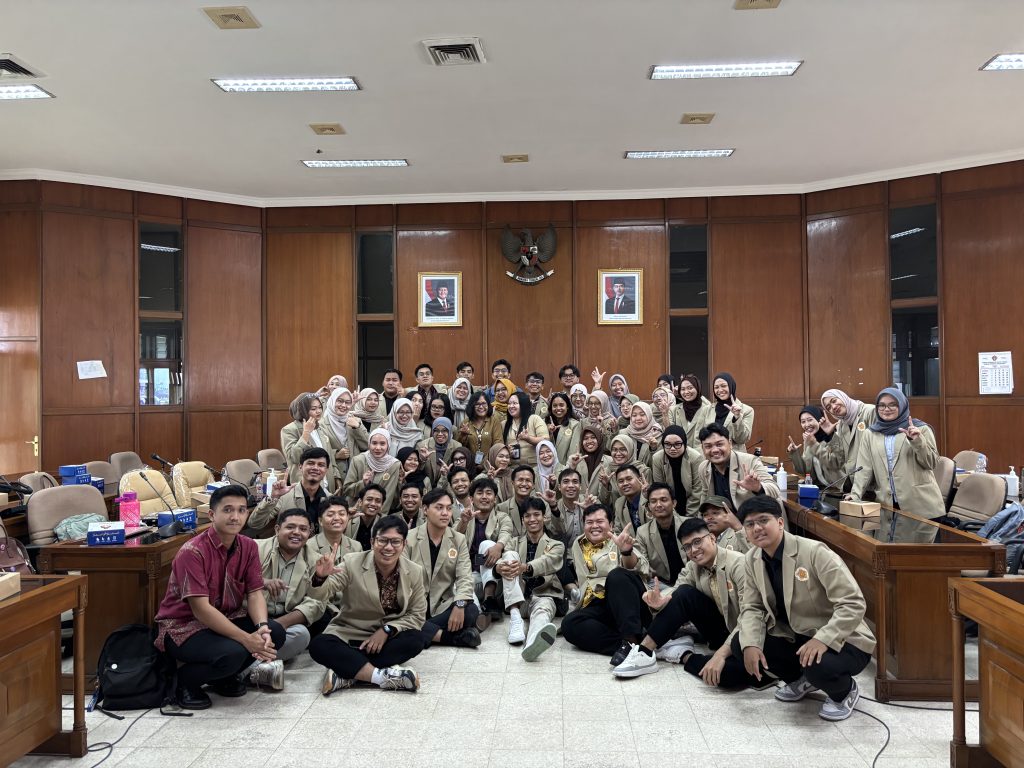
This event also served as an interactive forum for students to explore key issues regarding local politics, the Sultanate’s special status within the Yogyakarta Special Region (DIY) government, mechanisms for overseeing the executive branch, and debates on public representation and the role of NGOs in the legislative process. Through these discussions, students gain firsthand insight into how the Regional People’s Representative Council (DPRD) functions as a mechanism for checks and balances and how the values of integrity, transparency, and accountability are tested in day-to-day political practice.
From a sustainable development perspective, this activity makes a tangible contribution to the Sustainable Development Goals (SDGs). This initiative supports SDG 4 (Quality Education) by providing law students with contextual and real-world, experience-based learning. Additionally, discussions on oversight functions, anti-corruption integrity, and information transparency align with SDG 16 (Peace, Justice, and Strong Institutions), which emphasizes the importance of public institutions that are transparent, accountable, and responsive to the public. Furthermore, the involvement of the Regional People’s Representative Council (DPRD) and academics in the dialogue on public policy reflects SDG 17 (Partnerships for the Goals), which promotes inter-institutional collaboration to strengthen governance and the quality of legislation.
Through this visit, the UGM MIH Program reaffirmed its commitment to integrating legal theory and practice into the curriculum, honing students’ analytical skills, and fostering critical awareness regarding the relationship between law, politics, and democracy. This activity is expected to equip students with a deeper understanding of the legislative process and local politics, as well as prepare them to play an active role in strengthening the legal system and public institutions in Indonesia.
Author: Master of Laws Program, Universitas Gadjah Mada