UGM’s Faculty of Law Holds an Afternoon Discussion on the Impact of the Palm Oil Industry on Indigenous Communities in Southern Papua and West Kalimantan

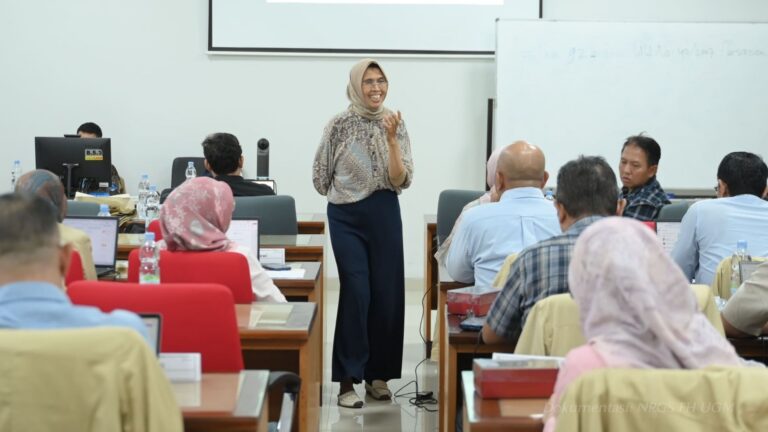
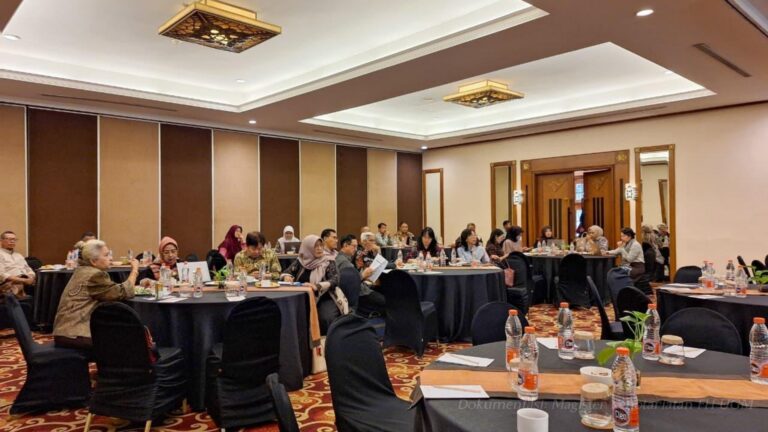
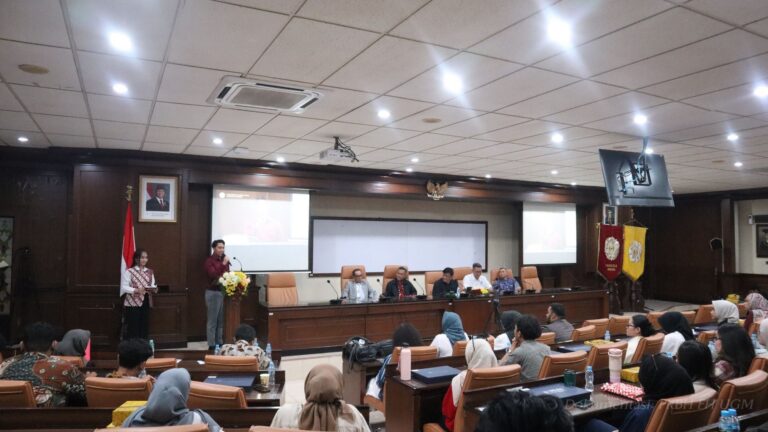
The Djojodigoeno Center for Customary Law Studies at the Faculty of Law, Gadjah Mada University (FH UGM), held the first “Bincang-Sore” discussion on the lobby of Auditorium Building B on Friday (August 29, 2025). The discussion focused on the theme “The Impact of the Palm Oil Industry on Social, Economic, and Ecological Conditions in South Papua and West Kalimantan.”

This event featured the authors of the book “Indigenous Communities in the Grip of Forced Labor: The Impact of Oil Palm Plantations in Merauke and Boven Digoel”—Almonika C.F. Sari, Nailul Amany, Ramadani S.D. Nicholas, and Kharisma Muhammad, who shared their encounters with palm oil plantation workers—indigenous Papuans who had relinquished their ancestral lands to make way for palm oil plantations. The panelists highlighted how forced labor practices continue to persist in new forms that affect indigenous communities, alongside the entry of transnational corporations and the relinquishment of ancestral lands for palm oil plantations.

Grounded in ILO Conventions and the national legal framework, this discussion also examined how indigenous communities are being displaced from their traditional livelihoods and forced to become laborers under grueling working and living conditions, trapped in a cycle of debt, and restricted in their movement within the oil palm plantations. Landscape changes and the loss of living space for communities due to this industrial expansion are seen as creating layered social and economic vulnerabilities.

In addition to South Papua, oil palm plantation expansion is also occurring in West Kalimantan. Muhammad Fahmi Rafsanjani, an undergraduate student in the Department of Anthropology at UGM and a speaker at this event, explained that the ongoing oil palm replanting (rejuvenation) in plasma plantations in Sanggau Regency has not been free from conflict and violence. This finding is crucial as a learning tool for communities in South Papua.

In the context of sustainable development, this discussion is relevant to several Sustainable Development Goals (SDGs). Issues regarding workers’ rights and decent working conditions are directly linked to SDG 8 (Decent Work and Economic Growth), while indigenous peoples’ struggles over land and their livelihoods are closely tied to SDG 10 (Reduced Inequalities) and SDG 16 (Peace, Justice, and Strong Institutions). On the other hand, the ecological impacts of palm oil expansion intersect with SDG 15 (Terrestrial Ecosystems), as the loss of forests and traditional living spaces threatens the sustainability of ecosystems.

This event, which is open to the public, is expected to serve as a space for both reflection and advocacy in the effort to protect the rights of indigenous peoples in Indonesia, as well as to raise awareness of the importance of fair, inclusive, and sustainable industry governance.

Editor: Almonika Cindy Fatika Sari (Lecturer and researcher at Puskaha Djojodigoeno)

TAGS :  

Latest News

Fakultas Hukum UGM Terima Kunjungan SMA Budi Mulia Dua

Fakultas Hukum Universitas Gadjah Mada (FH UGM) menerima kunjungan edukatif dari SMA Budi Mulia Dua dalam rangka kegiatan Faculty Visit pada Rabu (15/7/2026). Kegiatan ini …

Pengajian Bulan Muharram 1448 H dan Mangayubagyo Kepulangan Jemaah Haji Fakultas Hukum UGM

Fakultas Hukum Universitas Gadjah Mada (FH UGM) menyelenggarakan Pengajian Bulan Muharram 1448 H yang dirangkaikan dengan acara Mangayubagyo Kepulangan Jemaah Haji Warga Fakultas Hukum UGM …

UGM Faculty of Law Strengthens Sustainable Governance through UI GreenMetric and THE Impact Rankings Workshop

Fakultas Hukum Universitas Gadjah Mada (FH UGM) menyelenggarakan Rapat Koordinasi Program Sustainability Campus Action 2026 sekaligus Workshop Pengisian Borang UI GreenMetric dan Times Higher Education …

Scroll to Top