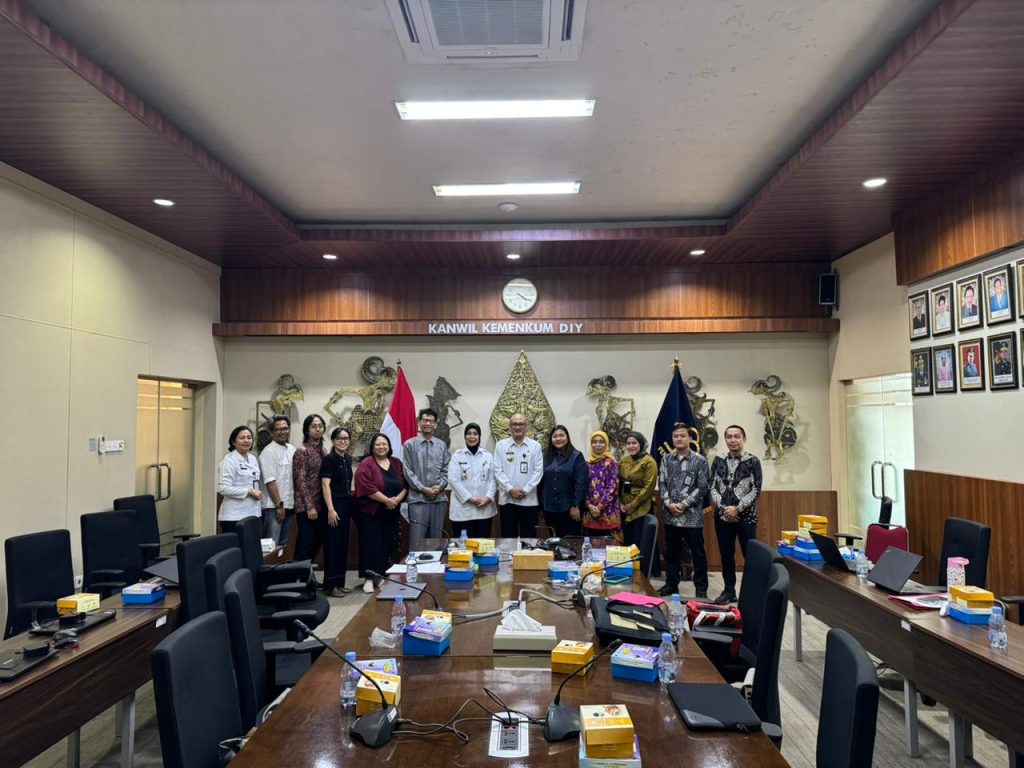
In an effort to strengthen Indonesia’s copyright legal framework, lecturers from the Department of Business Law at Universitas Gadjah Mada (UGM) participated as speakers in a public discussion on the Draft Law on Copyright (RUU Hak Cipta). The event, held by the House of Representatives of the Republic of Indonesia (DPR RI) through the Center for Legislative Drafting in the field of Politics, Law, and Human Rights (PUU Polhukham), took place from July 14 to 16, 2025, and aimed to gather academic input for the preparation of the Academic Paper and the draft amendment to the current Copyright Law.
The panel of experts included notable academic figures such as Prof. M. Hawin, S.H., LL.M., Ph.D., Laurensia Andirini, S.H., LL.M., Ph.D., and Dina W. Kariodimedjo, S.H., LL.M., Ph.D. Their participation underscored the critical role of academic insight in the legislative process, particularly in the proposed revision of Law Number 28 of 2014 on Copyright.
This event aimed to test conceptual frameworks and gather academic and practical input from the Business Law faculty members in the process of preparing the Academic Manuscript and Draft Bill on the Amendment of Law Number 28 of 2014 on Copyright. Their involvement provided both academic and practical perspectives on copyright regulation, thereby contributing to the development of legal certainty in the forthcoming amendment of the Copyright Law.
UGM’s involvement in this legislative process reflects its commitment to the United Nations Sustainable Development Goals (SDGs), especially Goal 4: Quality Education, by expanding the role of academic expertise in shaping national legal issues, and Goal 17: Partnerships for the Goals, through collaboration between higher education institutions and legislative bodies. This engagement highlights the role of universities not only as centers of knowledge but also as key contributors to policy-making that is inclusive, transparent, and evidence-based.
Authors: Aika Fatiha Azhar & Nabiel Harits Pratama (Part-Time Students at the Department of Business Law)
Editor: Public Relations