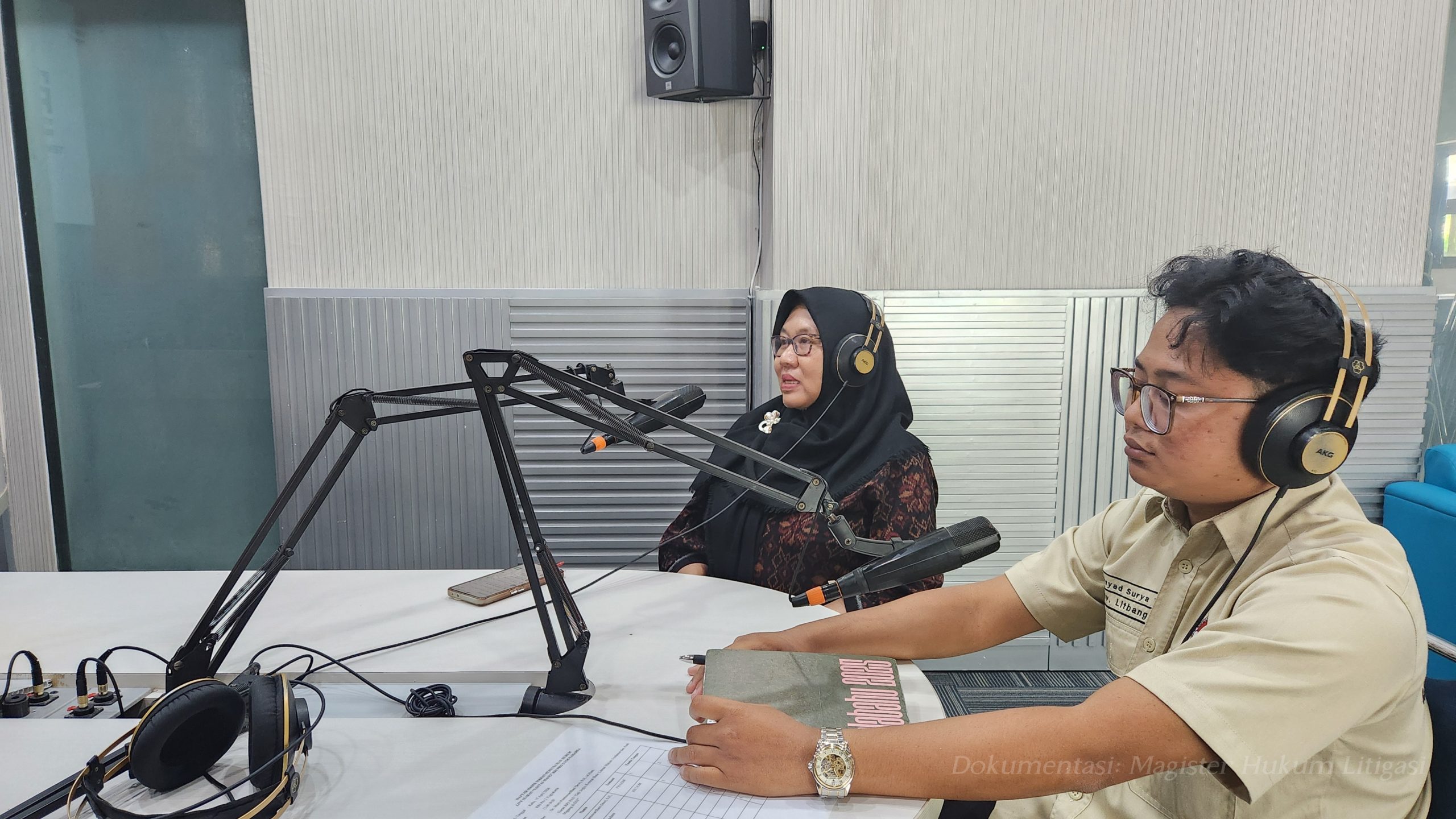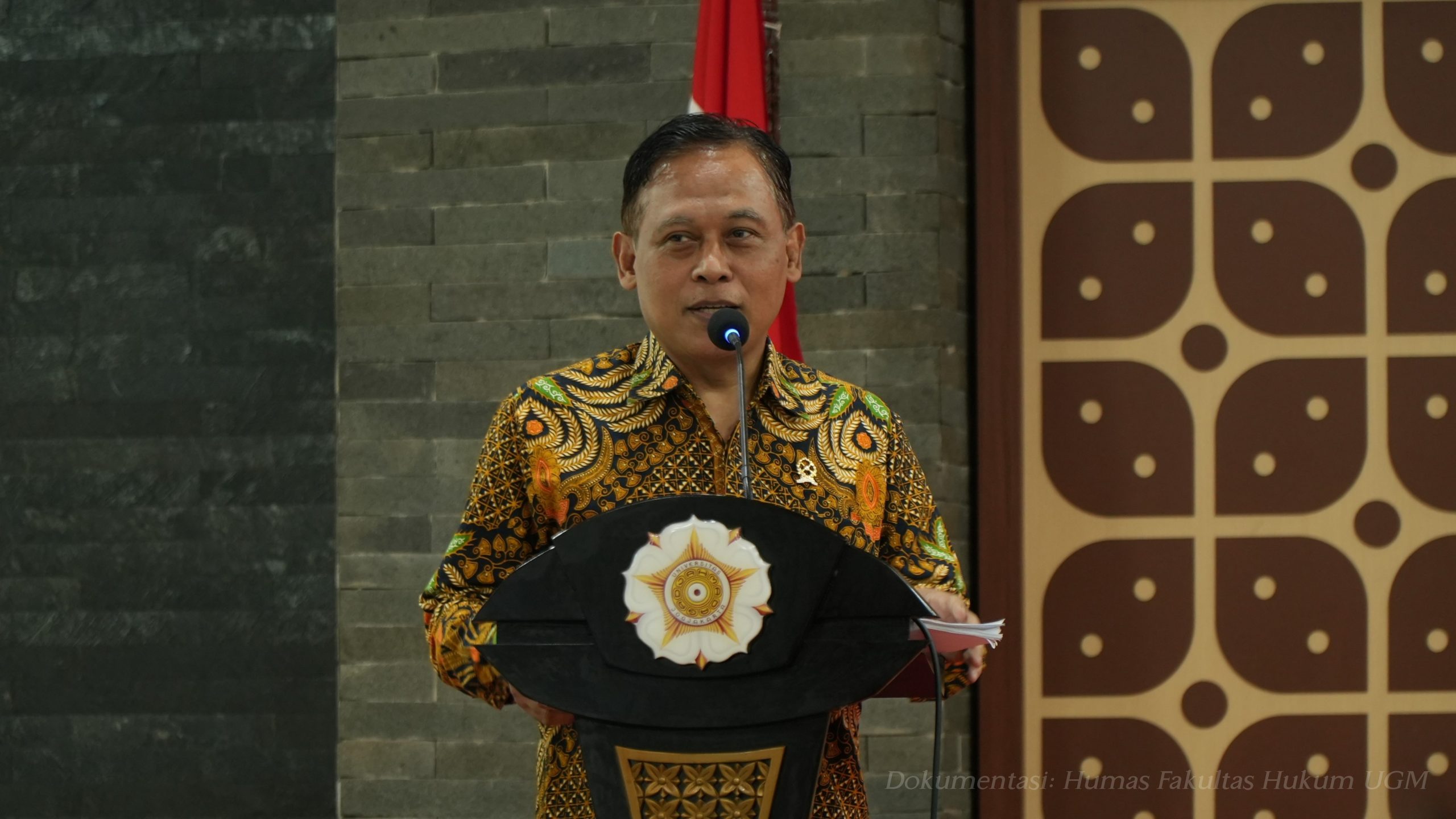

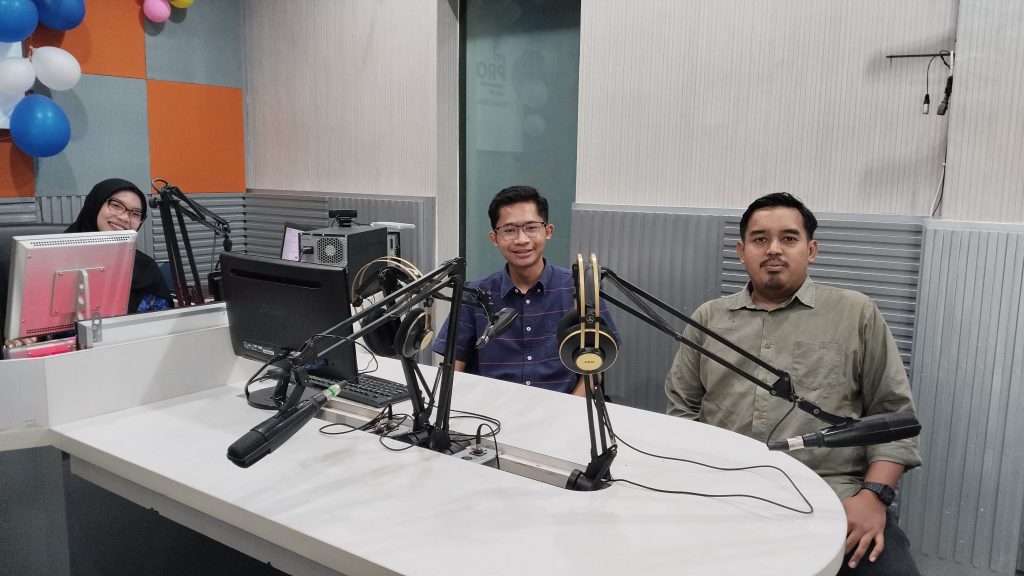
Yogyakarta, October 10, 2025 — The Constitutional Law Society of the Faculty of Law, Gadjah Mada University (CLS FH UGM) has conducted legal outreach activities through the Santai Siang program broadcast on Radio Republik Indonesia (RRI) Pro 2 Yogyakarta. This activity is part of a community service grant from the Legal Consultation and Assistance Center of the Faculty of Law UGM, aimed at educating the public about existing legal issues. The broadcast program was initiated by Ratnadewi Gastiasih and Devina Elen Febriani, students of the Faculty of Law UGM class of 2023, who participated in the planning and implementation of the activity.
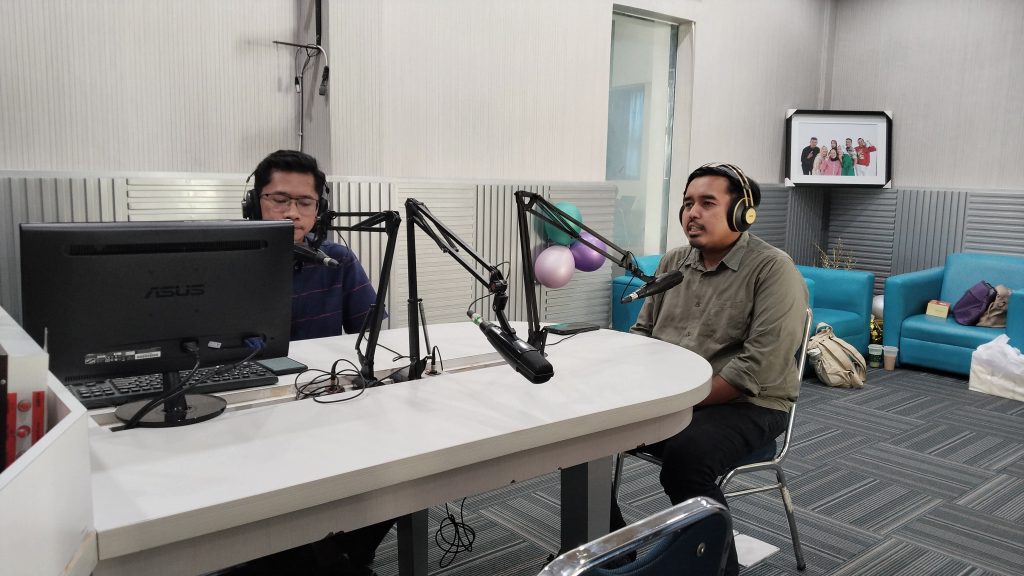
The broadcast entitled “The Dilemma of Party Funds: Between Public Interest and the Threat of Corruption” aims to open up public education on the importance of monitoring political party funds as a fundamental element of a healthy democracy. This legal information broadcast invited two outstanding speakers, namely Yuris Rezha Kurniawan, S.H., MPA. as an expert from the Caksana Institute and Ignasius Lintang Nusantara as a 7th semester student at the Faculty of Law, UGM, majoring in Constitutional Law. The broadcast, which focused on the central theme of the dilemma of party funding, was very important to support the optimal functioning of democracy.
In the context of sustainable development, the issue of political party financing is closely related to several Sustainable Development Goals (SDGs), particularly SDG 16 (Peace, Justice, and Strong Institutions), SDG 10 (Reduced Inequalities), and SDG 17 (Partnerships for the Goals). Transparency and accountability in political financing are essential to building strong, just, and corruption-free democratic institutions. SDG 16 highlights the importance of establishing inclusive and accountable institutions as pillars of good governance. Meanwhile, SDG 10 underscores the need to reduce disparities in political and economic access that often arise due to unequal distribution of campaign funds among legislative candidates. SDG 17, on the other hand, calls for collaboration among government bodies, oversight institutions, political parties, and civil society to create an open and integrity-based political finance system. Therefore, political party funding reform is not merely a legal agenda but also an integral part of the global effort to build a fair, participatory, and sustainable democracy.
The speakers emphasized that although regulations on political party funding in Indonesia are quite comprehensive, the main problem lies in their suboptimal implementation. The lack of transparency in party fund management makes it difficult for the public to understand the flow of campaign and operational funds. When funds are not disclosed, there is a risk of hidden interests from donors that can shift the party's focus from the aspirations of the people to the interests of certain groups. This condition not only weakens public oversight, but also threatens fairness in political competition. Political party funding in Indonesia adopts a mixed model, with sources coming from member dues, donations from other parties, and state assistance through the state budget and regional budgets. Increasing the allocation of funds from the government is considered important to reduce dependence on corporate or individual funds that could influence party policy in an unhealthy manner. However, this step must also be balanced with structural reforms that ensure party financial accountability and transparency.
The biggest challenge faced is the political will of policymakers and political parties themselves to implement more transparent fund management. The public wants political funds to not become a means for hidden transactions or a source of oligarchic domination. Instead, the public hopes that parties will truly use funds to strengthen political education for party members and the public and improve the quality of political cadres who are capable of representing the interests of the people.
Criticism has also been raised regarding the uneven distribution of resources among legislative candidates in various regions, which has led to unequal competition. Unfair funding creates disparities, prompting some candidates to resort to money politics in order to win voters' hearts. Such practices pose a serious risk to the integrity of democracy and public trust, which are part of the SDGs' targets on strengthening institutions and political inclusiveness.The broadcast highlighted the need to strengthen audit and oversight mechanisms by independent institutions such as the Supreme Audit Agency (BPK) and the Corruption Eradication Commission (KPK) by involving civil society as participatory observers.
The broadcast highlighted the need to strengthen audit and oversight mechanisms by independent institutions such as the Audit Board of Indonesia (BPK) and the Corruption Eradication Commission (KPK), while involving civil society as participatory monitors. Political education for the public is also essential so that citizens can demand accountability and understand their rights and obligations in a democratic system. Digital transformation in political party financial reporting was emphasized as an innovative solution to promote greater transparency and accountability.
In conclusion, the party funding dilemma is a clear illustration of the challenge of maintaining a balance between the financial support needed by political parties and the risk of corruption that can weaken democratic institutions. The realization of SDGs related to good and strong governance requires comprehensive improvements to Indonesia's political party financing system. This requires a shared commitment from all elements of the state, political parties, and society to ensure that political funds become an instrument for empowering democracy, not a source of corruption.