The massive development of tourism in Komodo National Park (TNK) has evidently had an impact on the cultural and socioeconomic dynamics of the Ata Modo people, a local ethnic group from Komodo Village on Komodo Island. For example, the Komodo language—the native language of the Ata Modo people—is now nearly extinct due to the linguistic hegemony of outside languages introduced through tourism activities. In addition, there has been a shift in the Ata Modo tribe’s livelihoods: while they originally worked as fishermen, more than 70% are now employed in the tourism sector.
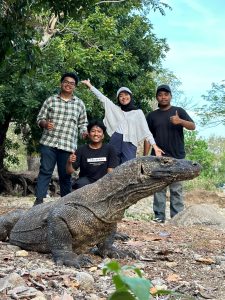
This phenomenon was subsequently studied by several UGM students participating in the Student Creativity Program (PKM). The research team consisted of Arif Putra Pratama (Faculty of Law, Class of 2021), Avicenna Elang (Faculty of Law, Class of 2021), An Nuur Khairune Nisa (Faculty of Cultural Sciences, Class of 2021), and Noor Risa Isnanto (Faculty of Cultural Sciences, Class of 2021). In this study, the research team was supervised by one faculty advisor, Dr. Dian Agung Wicaksono, S.H., LL.M.
“Our research team there actually wanted to observe firsthand and find out the answer to the question: to what extent will tourism impact Komodo National Park? This way, future tourism development in Komodo National Park will take into account and involve the local residents there—specifically, the Ata Modo tribe,” explained Arif Putra Pratama, Chair of the Research Team for the 2023 Student Creativity Program in Social and Humanities Research (PKM-RSH).
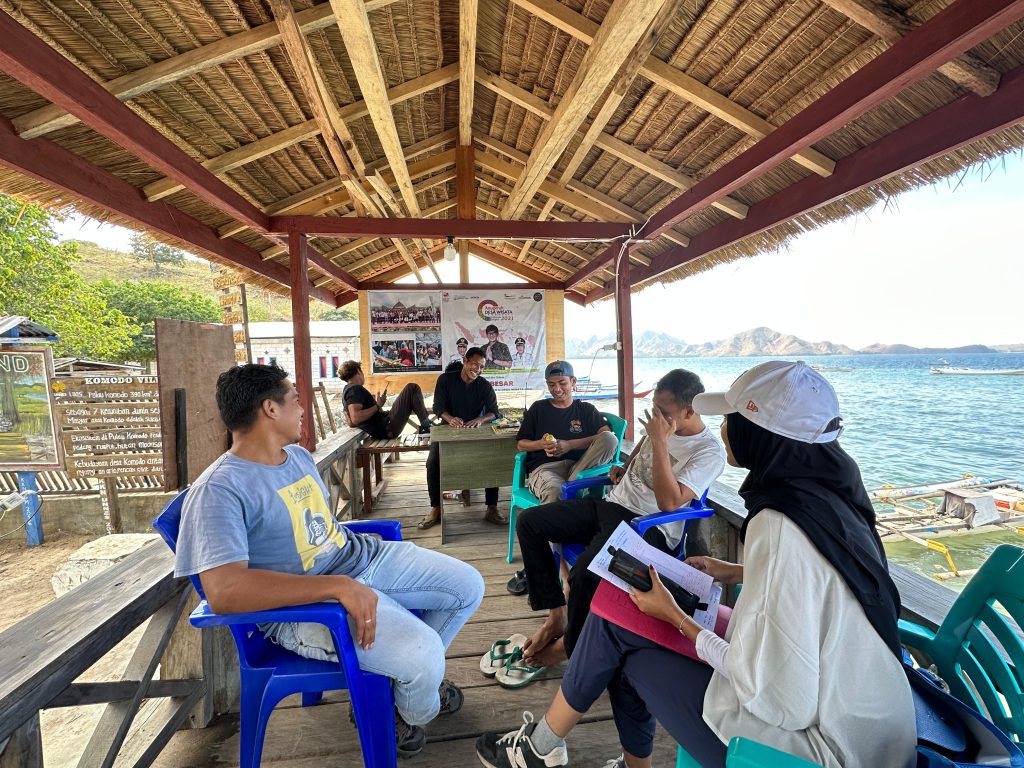
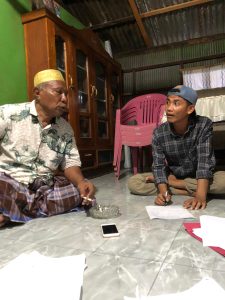
To address the research questions, the team conducted participatory field observations. The researchers also interviewed several key figures in Komodo Village. In addition, the team conducted secondary data research using various relevant literature and legal regulations. This research was conducted using a normative-empirical legal and ethnographic approach. Various primary and secondary data were compiled and analyzed to draw descriptive conclusions.
There are three research findings corresponding to each research question. First, the Ata Modo tribe possesses cultural potential in accordance with Koentjaningrat’s theory of the seven elements of culture, which consist of language, knowledge systems, social organization, technology, subsistence systems, belief systems, and the arts. Second, the lack of recognition and designation of the Ata Modo tribe as a unit of Customary Law Community through legal instruments at the regional level creates opportunities for conflicts of interest and undermines their customary rights. Third, the Ata Modo tribe has undergone a coercive transformation due to the existence of TNK tourism. Regulations established as a means of conserving TNK have driven this coercive transformation of the Ata Modo tribe’s culture.
Therefore, through this study, the members of the PKM-RSH team hope that the findings will provide insight and serve as a basis for consideration by stakeholders regarding the development of tourism in TNK. In this context, the Ata Modo Tribe is the focus of attention and must be actively involved as part of efforts to protect the local heritage and culture of the Ata Modo Tribe. This is also in line with Sustainable Development Goal (SDG) 11—sustainable cities and communities—as the Ata Modo tribe is a community that has inhabited Komodo Island since before the establishment of Komodo National Park.
“After all, this tribe was here long before the establishment of Komodo National Park, so their presence must be acknowledged and respected. There should certainly be no talk of relocating this tribal community,” said Avicenna Elang.

Penulis: Anggota Tim
Editor: Public Relations