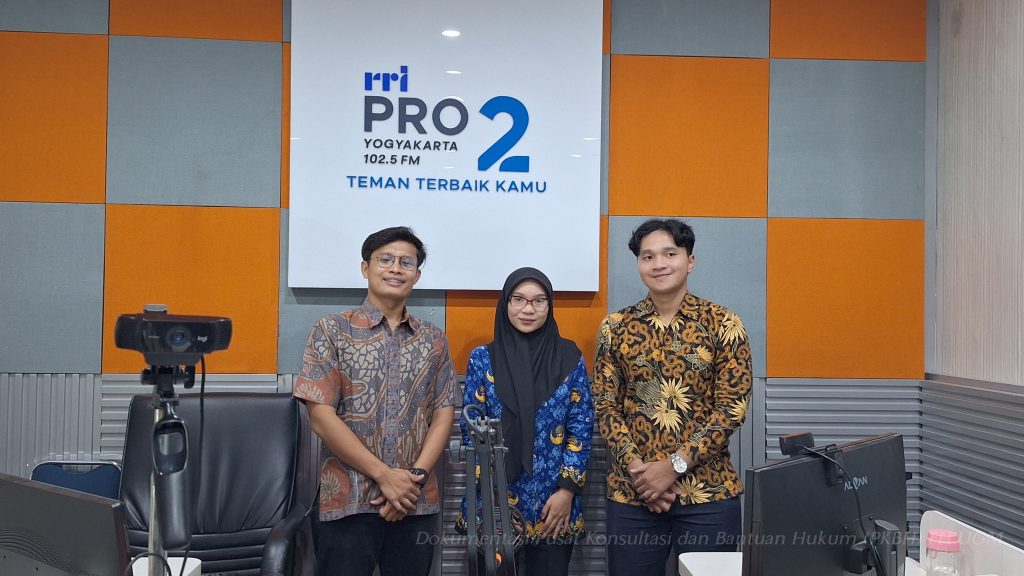
The Legal Consultation and Assistance Centre (Pusat Konsultasi dan Bantuan Hukum/PKBH) of the UGM Faculty of Law, in collaboration with Radio Republik Indonesia (RRI) Pro 2 Yogyakarta, successfully conducted a live legal education broadcast titled "Santai Siang: The Implications of Naturalization and Human Mobility in the Present Era — A Citizenship and Immigration Law Perspective". The broadcast was designed to provide the public with a deeper understanding of the implications of various forms of naturalization for different aspects of a person's life as a citizen and the rights attached to that status. The broadcast also addressed the increasingly widespread phenomenon of human mobility and its implications for the emergence of effectively borderless conditions in today's world.
The broadcast featured Virga Dwi Efendi, S.H., LL.M., Secretary of the PKBH FH UGM, and Haryo Putro Dirgantoro, S.H., LL.M., an academic and graduate of the University of Glasgow and a 2024/2025 Chevening Scholar, as the main resource persons. The discussion was interactive and engaging, centering on the significant increase in mobility that has given rise to phenomena of citizenship transfer and dual citizenship.
Both resource persons emphasized that citizenship should not be understood merely as an administrative status — it is a fundamental bond connecting individuals to their state. With reference to the Universal Declaration of Human Rights, they affirmed that every individual has the right to a nationality, and that the rights attached to that status must be guaranteed by the state. The resource persons further noted that the procedures for granting and relinquishing citizenship status must be carried out in a manner that integrates the principles of human rights and international law — to ensure that the rights of citizens, as well as those of individuals affected by changes in citizenship status, remain protected in a fair and proportionate manner.
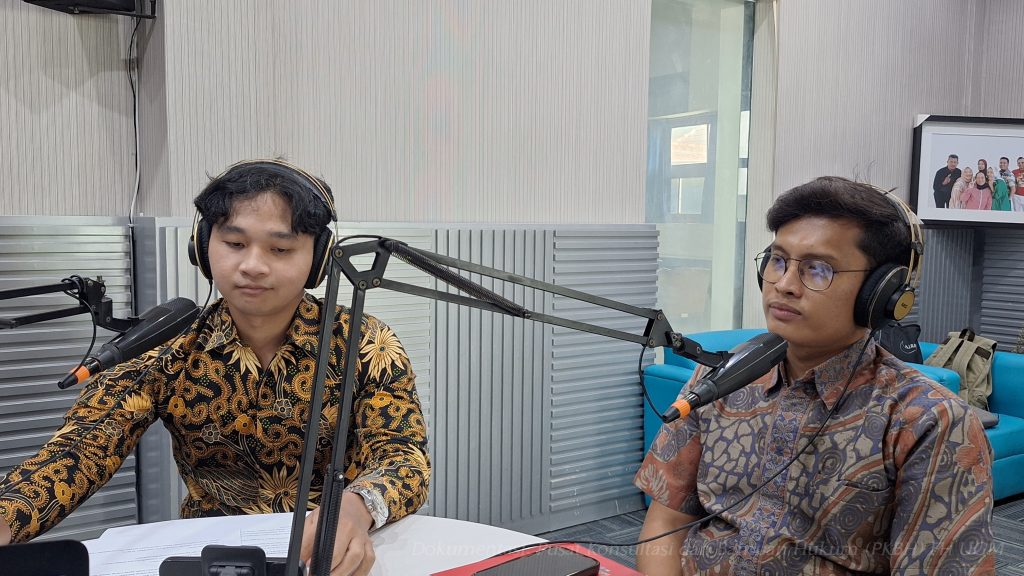
"In this process, the protection of former Indonesian citizens must remain a priority. At the same time, we must recognize the principle of non-refoulement in international law, which prohibits a state from expelling or returning a person to another country if there is a risk of danger or threat to their person."
This was Haryo Putro Dirgantoro's response to a question from the broadcaster. This legal education broadcast represents a concrete expression of community service that supports the Sustainable Development Goals (SDGs). It contributes directly to SDG 10 (Reduced Inequalities), by working to reduce discrimination — including on the basis of citizenship status; SDG 16 (Peace, Justice and Strong Institutions), by promoting peace, justice, and inclusive institutions; and SDG 17 (Partnerships for the Goals), through the strategic partnership built in pursuit of sustainable development.
Author: Meirhina Elnanda Puan Bidari (PKBH FH UGM)