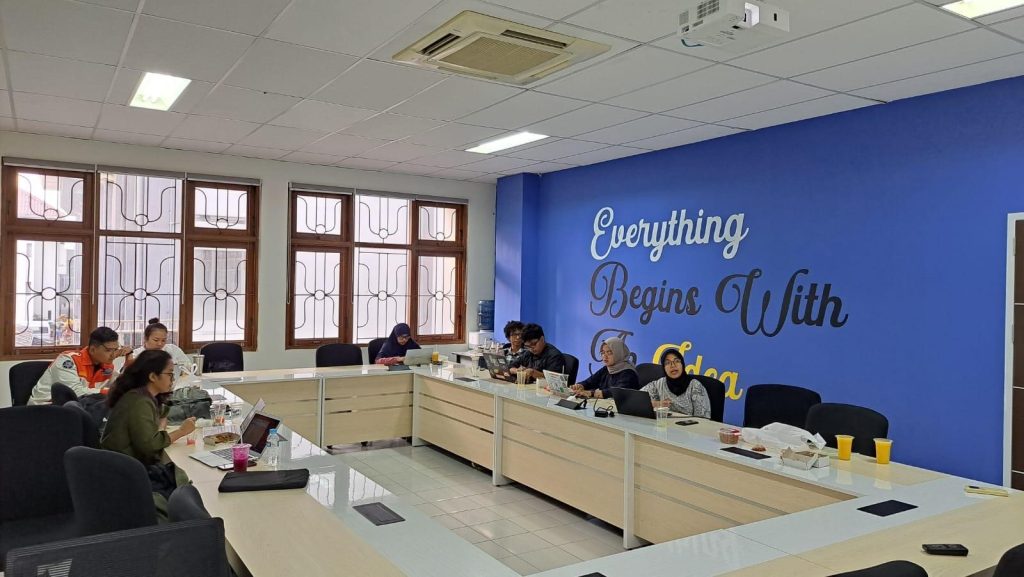
The Djojodigoeno Center for Customary Law Studies (Puskaha Djojodigoeno) held a public discussion on Thursday (November 9) in the Conference Room of the UGM Faculty of Law’s Research Center. The discussion addressed the important issue of the dynamics of land tenure derived from customary law. This topic is part of the amicus curiae brief submitted by Puskaha Djojodigoeno on behalf of Gregorius Jeramu, Case No. 10/Pid.sus-TPK/2023/PT Kpg. This legal opinion was submitted to assist the panel of judges at the cassation level handling the case in strengthening the legal considerations regarding the recognition and protection of individual customary land tenure and the customary law governing it.
In Judgment No. 10/Pid/Sus-TPK/2023/PT Kpg, the panel of judges ruled that Gregorius Jeramu was proven guilty of a corruption offense involving the customary land he possessed because he did not hold a title deed for that land. Nevertheless, Gregorius had possessed and utilized the land for generations. This ruling is seen as negating the validity of customary law, including land tenure under customary law—commonly known as “hak ulayat.” This misunderstanding has the potential, in practice, to broaden the definition or scope of what is referred to as “state land.”
There are two main points in the legal opinion presented by Puskaha Djojodigoeno. First, land parcels that have been distributed or are controlled by individual members of the customary law community—and where customary law still applies to those lands—remain customary lands (ulayat). Second, lands that are not or have not yet been registered do not automatically become state lands.
The discussion was attended by students from the UGM Faculty of Law. The students showed great enthusiasm for developments regarding customary land issues. Participants exchanged ideas and shared a variety of perspectives. Through this discussion, Puskaha Djojodigoeno contributes to supporting the Sustainable Development Goals or SDGs Goal 4 (quality education) and Goal 15 (life on land). The Puskaha Djojodigoeno Amici Curiae Brief can be accessed at the following link: http://ugm.id/AmiciPutusan10PidSusTPK2023PTKpg .
Author : Pusat Kajian Hukum Adat Djojodigoeno