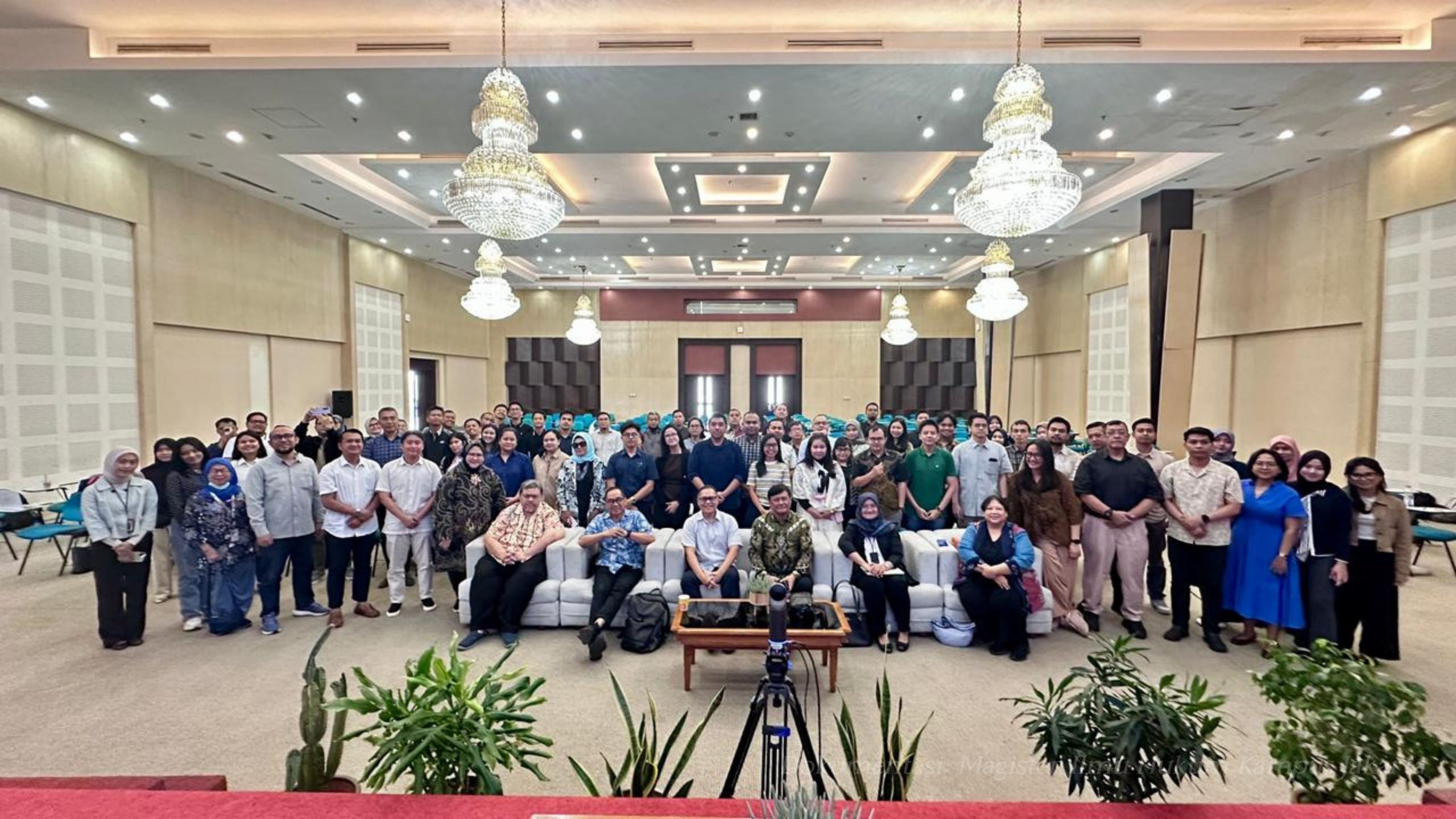

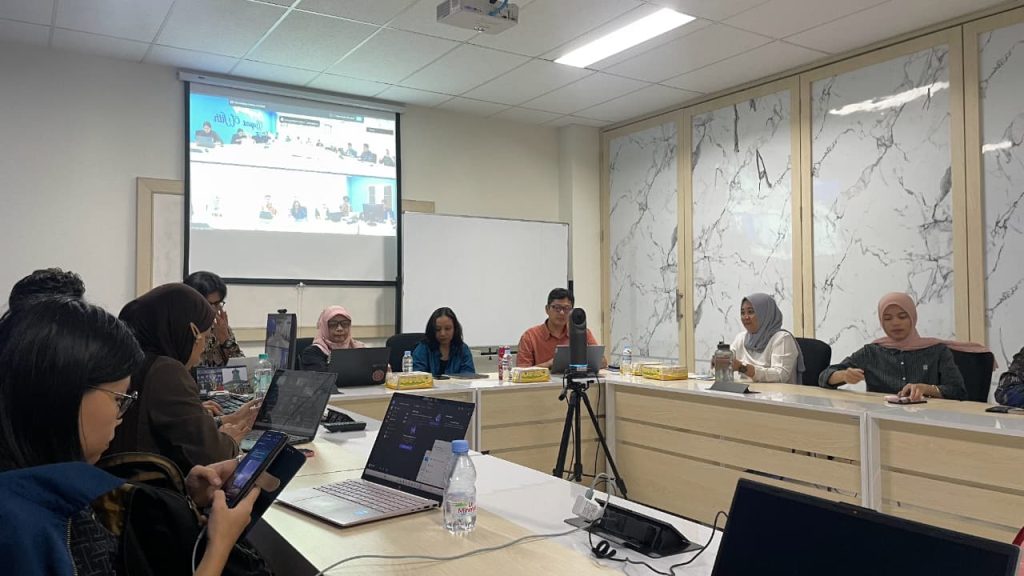
The Center for the Study of Democracy, Constitution, and Human Rights (PANDEKHA), Faculty of Law, Universitas Gadjah Mada, held a public discussion entitled “Dissect the Problematics of Free Nutritious Meals: Between Policy Utopia and Implementation Dystopia.” The discussion took place on Friday, 7 November 2025, from 13:00 to 15:10 in a hybrid format at the Centre for the Study and via Zoom Meeting, and was attended by approximately 80 participants, including students and civil society members with an interest in the Free Nutritious Meals program.
The discussion aimed to examine the ideal implementation of the Free Nutritious Meals (MBG) program while ensuring respect for human rights, optimizing nutritional value, and accurately targeting beneficiaries. To that end, the event featured three principal speakers: Herlambang Perdana Wiratraman (Lecturer, Department of Constitutional Law, Faculty of Law, Universitas Gadjah Mada), Yeni Prawiningdyah (Clinical Nutrition Specialist, JIH Hospital Yogyakarta), and Gernatatiti (Volunteer and Social Issues Advocate, “Ibu Berisik”).
Yeni Prawiningdyah opened the discussion on the Free Nutritious Meals program by emphasizing the need to balance nutritional adequacy, food affordability, and food safety before serving target groups. She argued that the Nutritional Service Unit (Satuan Pelayanan Pemenuhan Gizi, SPPG) is obliged to observe age-specific nutrient adequacy standards and to comply with SPPG criteria established by the National Nutrition Agency. She also stressed that MBG menus should prioritize local foods rather than rely on ultra-processed products.
Yeni offered several reasons for prioritizing local foods in the MBG menu. First, local foods better align with the dietary preferences and customary eating practices of the target groups. Second, reliance on local produce can more reliably ensure long-term availability of foodstuffs. Third, the use of local ingredients can reduce programme costs. Finally, to ensure food safety, she recommended daily food-safety testing before distribution and urged that students be taught to recognise simple indicators that food is no longer safe for consumption.
Herlambang Perdana Wiratraman then argued that the Free Nutritious Meals (MBG) programme, as a National Strategic Project, risks crowding out the fulfilment of other fundamental rights, such as the rights to health and education. He noted that the term advancement (Pemajuan) in Article 28I of the 1945 Constitution (UUD 1945) implies a duty of Progressive Realization: the incremental fulfilment of fundamental rights by maximising limited resources and prioritising the most needy. He emphasised that if the MBG programme is implemented without clear data and measurable steps — for example, reliable figures on the number of students who are malnourished and thus should be prioritised as beneficiaries — it could be said to violate human rights, since substantial budgetary resources that might otherwise meet other basic needs are being allocated to finance the MBG programme.
Herlambang also identified governance shortcomings in the MBG programme that fail to meet the minimum core obligations standard — namely the State’s duties to respect, to protect, and to fulfil economic, social, and cultural rights as ratified in Law No. 11 of 2005.
Finally, Gernatatiti voiced the concerns of the parent group “Ibu Berisik” regarding MBG implementation, particularly in light of the recent spate of food-poisoning incidents. She argued that parents should be involved before the provision of MBG menus to their children, stating, “As parents, the state organisers should obtain our consent before providing food to our children at school.” She also criticised the absence of clear complaint mechanisms and accountability channels to address incidents such as food poisoning.
The public forum was expected to generate recommendations for improving and better targeting the MBG programme so that its implementation aligns with the Sustainable Development Goals (SDGs), particularly SDG 2 - Zero Hunger, which commits development efforts to ensuring that everyone has access to sufficient, safe, and nutritious food. The principle of progressive realization, frequently invoked during the discussion, is closely linked to SDG 12 - Responsible Consumption and Production, which emphasizes the need for efficiency in the use of limited resources to ensure sustainable consumption and production.
Written by: Aldi Amirullah (PANDEKHA)