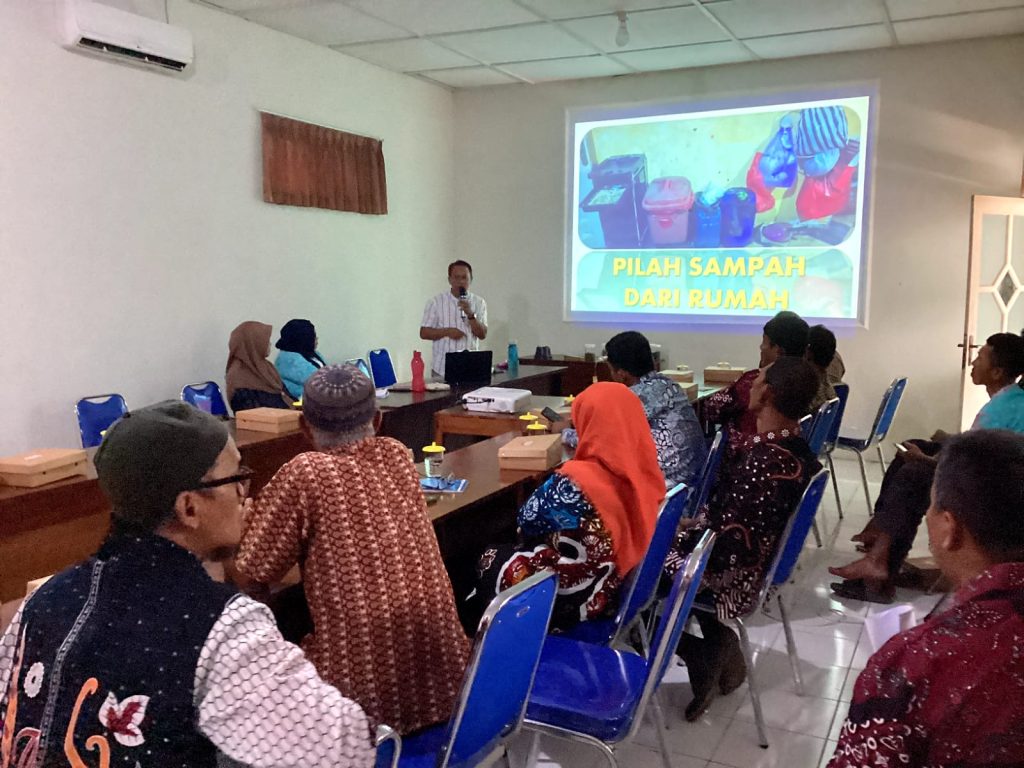
The Faculty of Law at Universitas Gadjah Mada held a legal outreach session on sustainable waste management at the Banjararum Village Hall, Kalibawang Sub-district, Kulon Progo Regency, on Wednesday, October 2, 2024, from 9:00 a.m. to 12:00 noon.
Two UGM Faculty of Law lecturers served as speakers: Dr. Fajar Winarni, S.H., M.Hum. and Dr. Rr. Dinarjati Eka Puspitasari, S.H., M.Hum. They were joined by waste management practitioner Farid Fakhrudin, S.S. Participants included local village officials and environmental activists involved in the area's waste bank (bank sampah) operations..
Banjararum Village has been growing rapidly in terms of its economy, social fabric, culture, and education and with that growth comes an increasing challenge in managing the waste that development generates.
At present, waste management at the local Transfer Depo (Tempat Penampungan Sementara/TPS) is not functioning optimally: most households still deal with their own waste by burning it on their premises. Even sorted plastic waste includes items deemed "unsaleable," which are also burned.
These practices carry significant health and environmental risks, including air pollution, and represent a missed economic opportunity. The outreach aimed to address these risks while exploring how waste can be turned into a source of income particularly from materials that currently have no commercial value.
The session is relevant to multiple SDGs, a series of goals established by the United Nations (UN) to achieve a better and more sustainable future for people around the world. Sustainable waste management plays an important role in supporting the achievement of the Sustainable Development Goals (SDGs), particularly : SDG 3 (Good Health and Well-Being), SDG 6 (Clean Water and Sanitation), SDG 8 (Decent Work and Economic Growth), SDG 12 (Responsible Consumption and Production), SDG 13 (Climate Action), SDG 14 (Life Below Water), and SDG 15 (Life on Land).
In relation to SDG 12, this goal seeks to ensure sustainable consumption and production patterns globally by emphasizing resource efficiency, waste reduction, and environmentally responsible production practices. Achieving the targets of SDG 12 requires the active participation and commitment of various stakeholders, including the government, private sector, businesses and industries, as well as the wider community
With proactive involvement from all parties, particularly through continuous outreach and public education on sustainable waste management, significant benefits can be achieved for the community. One tangible outcome is the increased public awareness regarding waste management, as community members have begun to understand and adopt the habit of separating organic and inorganic waste as an essential first step in implementing the 3R principles (Reduce, Reuse, Recycle).
Editor: Public Relations