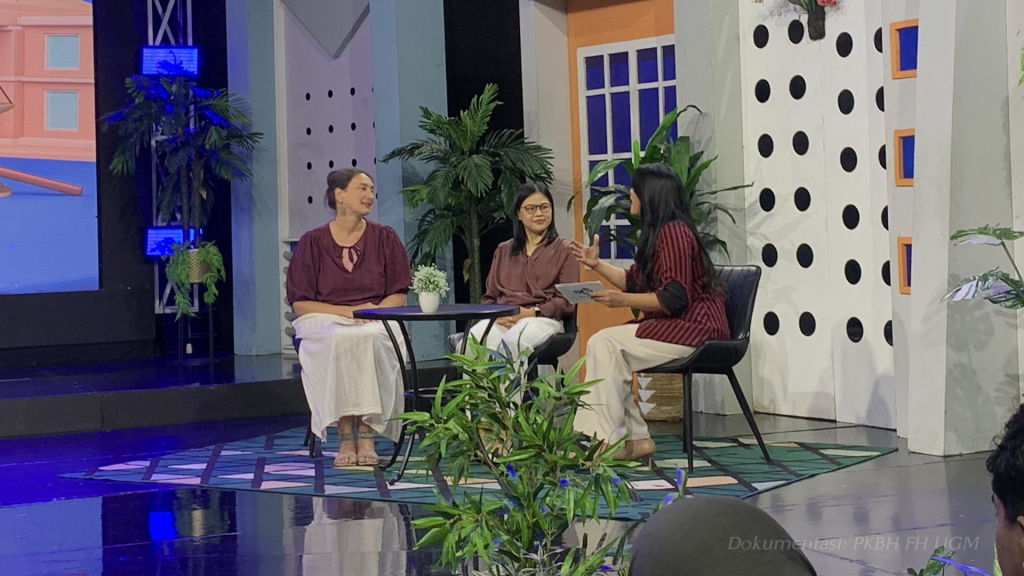
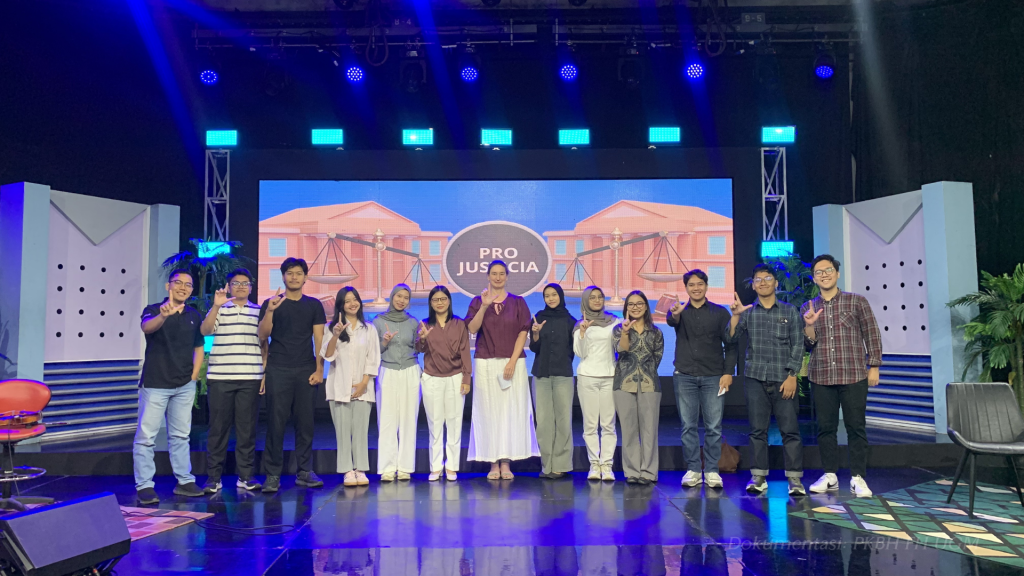
The Legal Consultation and Aid Center (PKBH) of the Faculty of Law, Universitas Gadjah Mada (UGM), in collaboration with TVRI Yogyakarta, organized another session of the Pro Justicia program. This episode featured the theme, "The Return of Indonesian Cultural Heritage Objects: A Step Toward Rediscovering National Identity." The program aimed to enhance public understanding of the importance of returning Indonesian cultural heritage objects currently held abroad as part of the effort to restore the nation's identity, while also providing legal education on the legal, diplomatic, and international cooperation frameworks that support this process.
The Pro Justicia program was broadcast on Tuesday, July 14, 2026, from 3:00 to 4:00 p.m. (WIB). The discussion featured speakers from the Faculty of Law, Universitas Gadjah Mada, and the University of Amsterdam. The invited speakers were Dr. Airin Liemanto, S.H., LL.M., a lecturer at the Department of Customary Law, Faculty of Law, UGM, and Dr. Barbara Titus, Associate Professor of Cultural Musicology at the University of Amsterdam, who has been actively involved in research and initiatives concerning the return of Indonesian cultural heritage from the Netherlands.
Throughout the discussion, the speakers emphasized that the return of Indonesian cultural heritage objects is far more than the transfer of historical artifacts from one country to another. Rather, it represents an effort to restore historical justice, preserve Indonesia's national identity, and reaffirm the right of the Indonesian people to reconnect with and inherit their cultural legacy. Although significant progress has been made in recent years regarding the return of various Indonesian cultural collections from the Netherlands, there is still no comprehensive international legal instrument that obliges former colonial powers to return all cultural objects acquired during the colonial period. Consequently, the success of these return efforts largely depends on political will, international diplomacy, and collaboration among various stakeholders.
During the program, Dr. Barbara Titus explored the historical journey of Indonesian cultural heritage objects that eventually became part of museum collections in the Netherlands. She also discussed how these collections are managed by Dutch cultural institutions, recent policy developments by the Dutch Government supporting the return process, and her own experience as a museum curator involved in several repatriation initiatives concerning Indonesian cultural heritage. Meanwhile, Dr. Airin Liemanto addressed the significance of returning cultural heritage objects from the perspective of international law, the challenges that continue to hinder the repatriation process, strategic measures that the Indonesian Government can pursue to strengthen cultural diplomacy, and the importance of preserving returned cultural heritage while encouraging active public participation—particularly among younger generations—in safeguarding Indonesia's cultural legacy.
In addition to discussing the legal and normative aspects, the speakers highlighted several relevant case studies, including the successful repatriation of the hoho sound archives of the Nias people from the Netherlands after nearly a century abroad. Through this example, the audience was encouraged to recognize that every cultural heritage object embodies significant historical, social, and cultural value, making its return not only the responsibility of governments but also a collective responsibility shared by society as a whole. The discussion was highly interactive and received enthusiastic participation from the audience. Participants raised various questions, ranging from the public's role in the repatriation process and the preservation of returned cultural heritage to the concept of cultural decolonization as an integral part of Indonesia's cultural heritage repatriation efforts.
Pelaksanaan acara ini diharapkan dapat mendukung terwujudnya Tujuan Pembangunan Berkelanjutan (UN Sustainable Development Goals/SDGs), khususnya Tujuan ke-4 (Pendidikan Berkualitas) melalui peningkatan literasi masyarakat mengenai warisan budaya dan hukum internasional, Tujuan ke-16 (Perdamaian, Keadilan, dan Kelembagaan yang Tangguh) melalui penguatan kerja sama dan kepastian hukum dalam pengembalian warisan budaya, serta Tujuan ke-17 (Kemitraan untuk Mencapai Tujuan) melalui kolaborasi antara perguruan tinggi, pemerintah, lembaga kebudayaan, dan mitra internasional dalam mendukung proses pengembalian dan pelestarian warisan budaya Indonesia.
Author: Sahl Radian Setyaki (PKBH)