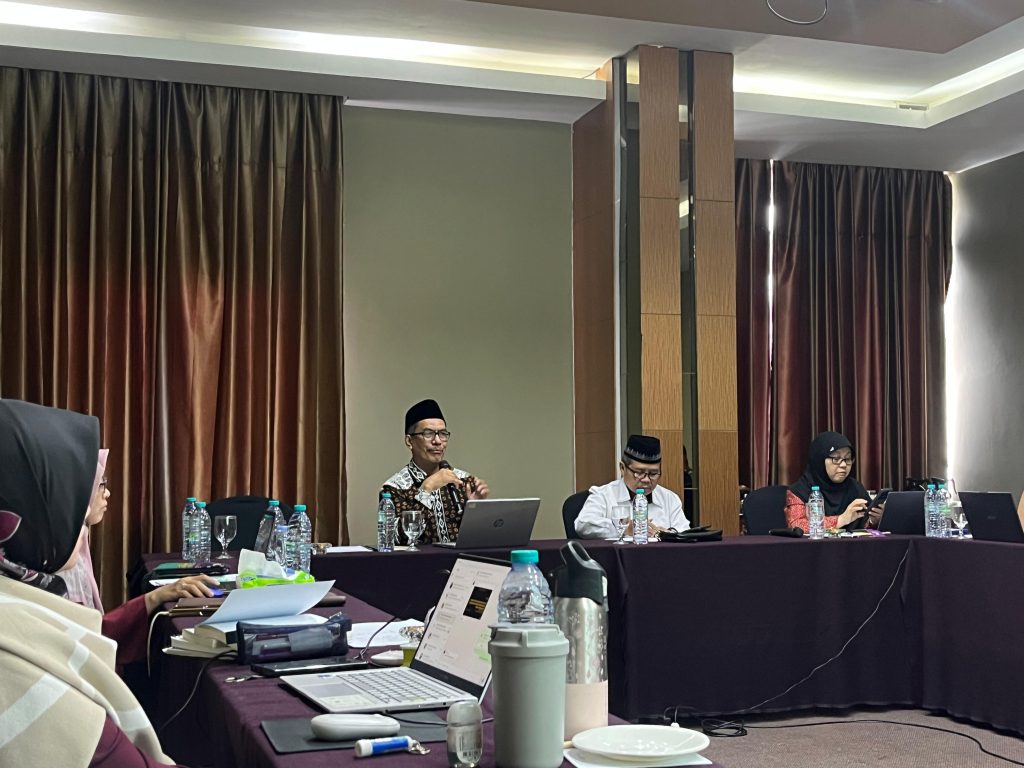
The Department of Islamic Law at the Faculty of Law, UGM, organized a workshop to gather information on contemporary issues and developments in Islamic law, featuring speakers from relevant stakeholders. The workshop was held at the Grand Tjokro Hotel in Yogyakarta on Thursday, August 7, 2025. The purpose of the workshop was to identify, evaluate, and gather input on contemporary issues and developments in Islamic family law, with the hope of accommodating societal changes, regulatory developments, and court rulings.
The first speaker was Dr. KH. Ahmad Zuhdi Muhdlor, S.H., M.Hum. He is a former judge at the Yogyakarta City Religious Court who currently serves as Deputy Chairman of the Indonesian Ulema Council (MUI) for the Special Region of Yogyakarta. During this session, Dr. Ahmad Zuhdi discussed developments in family law issues in practice and their enforcement. Among the topics discussed were marriage laws, such as the challenges faced by a wife whose husband has passed away—who must bear two obligations simultaneously, namely the iddah and ihdad—as well as the issue of marriage validation (itsbat nikah) following the issuance of Ministry of Home Affairs Regulation No. 108 of 2019 on the Requirements and Procedures for Population Registration and Civil Registration. Dr. Ahmad Zuhdi also elaborated on the Circular Letter of the Director General of Islamic Community Guidance No. P-005/Dj.III/Hk.00.7/10/2021, which states that the KUA is prohibited from marrying a man to another woman while his former wife is still in her iddah period. This is...
The second speaker was Dr. Halili, S.Ag., M.S.I., who serves as the Head of the Islamic Religious Affairs Division (Urais) at the Regional Office of the Ministry of Religious Affairs for the Special Region of Yogyakarta. Dr. Halili discussed the dynamics of enforcing Islamic law at the Ministry of Religious Affairs office. In his explanation, Dr. Halili provided a detailed overview of the dynamics of the practice of marriage law and waqf law at the religious affairs office, which serves as the frontline in various matters of Islam. One point he emphasized was the wide range of differing viewpoints among Marriage Registrars (PPN) at the KUA regarding various marriage-related regulations, such as issues concerning marriage while pregnant and guardianship for women born as a result of such marriages. This poses a unique challenge in efforts to enforce laws that are constantly evolving in response to the issues faced by the community.
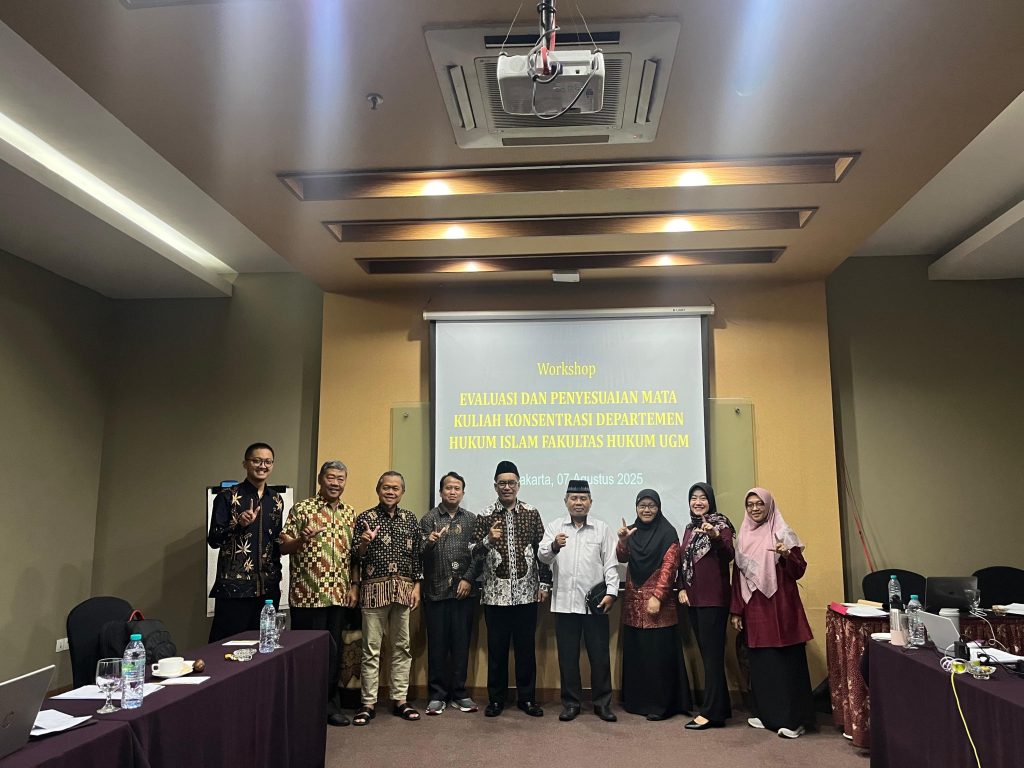
The workshop was attended by all faculty members of the Department of Islamic Law at the Faculty of Law, UGM, namely Prof. Dr. Hartini, S.H., M.Si., Dr. Muhaimin, S.H., M.Kn., Dr. Yulkarnain Harahab, S.H., M.Si., Dr. Destri Budi Nugraheni, S.H., M.S.I., Dr. Khotibul Umam, S.H., LL.M., and Haniah Ilhami, S.H., LL.M. The workshop began with an opening ceremony and an overview of the workshop’s agenda by the Chair of the Department of Islamic Law at the Faculty of Law, UGM, Dr. Hartini, S.H., M.Si. This was followed by presentations and discussions.
This workshop is also aligned with the Sustainable Development Goals (SDGs), particularly SDG 4 (Quality Education), through efforts to enhance the capacity of academics and legal practitioners to understand the dynamics of contemporary Islamic law. Furthermore, the discussion of issues related to family law, marriage, and waqf reflects a contribution to SDG 5 (Gender Equality), as it highlights women’s rights and protection within the Islamic family law system. Furthermore, this workshop supports SDG 16 (Peace, Justice, and Strong Institutions) by promoting fair, consistent, and ethical legal practices, as well as strengthening the institutional capacity of religious legal bodies to address societal issues. The collaboration between academics, religious scholars, and government officials also reflects the spirit of SDG 17 (Partnerships for the Goals) in addressing legal challenges in an inclusive and sustainable manner.
Author: Dita Elvia Kusuma Putri, S.H., M.Kn. Editor: Public Relations