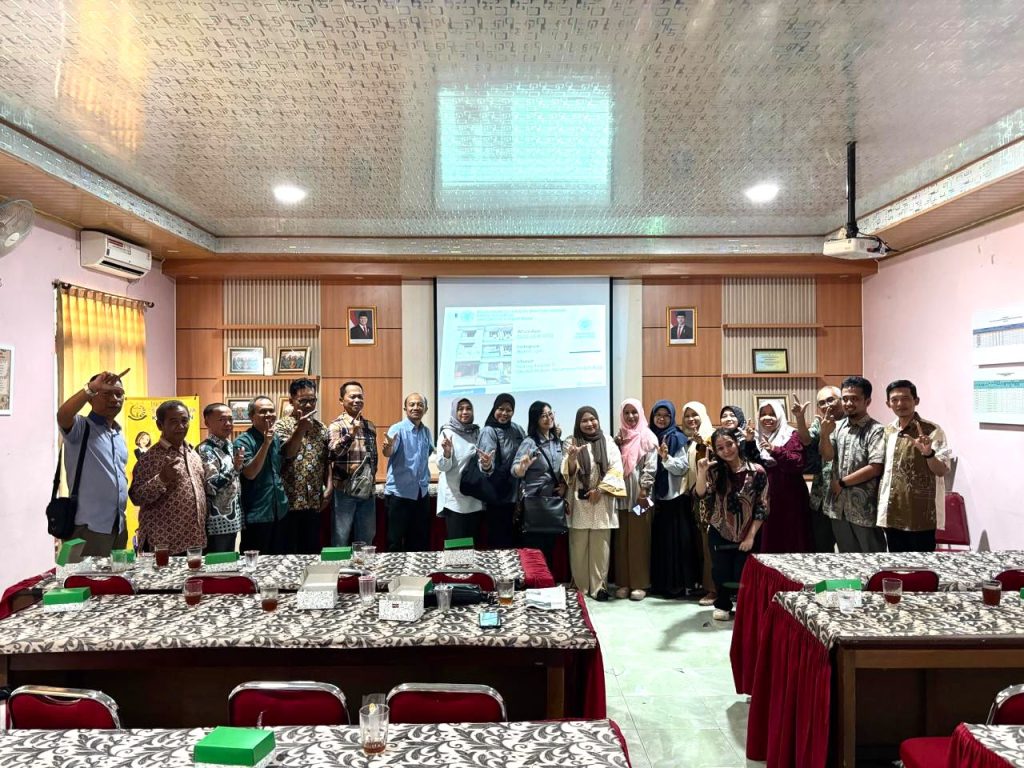
On Thursday, July 16, 2026, the Faculty of Law, Universitas Gadjah Mada (FH UGM), through its Legal Consultation and Aid Center (PKBH), in collaboration with the High Prosecution Office of the Special Region of Yogyakarta (Kejati DIY), successfully organized the "Suluh Praja" Legal Counseling Program at the Wirokerten Village Office, Banguntapan District, Bantul Regency. This program represents a continued synergy between FH UGM academics and Kejati DIY officials to enhance public legal awareness. The event commenced with warm welcoming remarks from the Head of Wirokerten Village, Mrs. Hj. Rakhmawati Wijayaningrum, S.E., marking the beginning of this collaborative initiative.
The event continued with a presentation on the Duties and Authorities of the Civil and State Administrative Division of the High Prosecution Office of the Special Region of Yogyakarta, delivered by the Kejati DIY team, namely Ms. Retno Tri Nurharjanti, S.H., Mr. Paulus Krisna Hadi, S.H., and Ms. Erli Sastria Falentina, S.H.
The core session featured Dr. Rr. Dinarjati Eka Puspitasari, S.H., M.Hum., who delivered an in-depth presentation on Waste Management. Dr. Rr. Dinarjati explained that waste management is not merely about discarding refuse, but a structured environmental law system regulating waste from source to disposal to prevent pollution. She elaborated on the three fundamental elements of waste management: Reduction (limitation, recycling, and reuse), Handling (sorting, collection, transportation, and final processing), and Environmental Impact (pollution risks to the ecosystem and citizen health). She emphasized the importance of collective awareness and compliance with environmental regulations in this process to maintain village ecological harmony.
The second session featured Dr. Raden Ajeng Antari Innaka Turingsih, S.H., M.Hum., who presented on Online Loans, Online Gambling, and Loan Sharks. In her presentation, she explained that illegal financial practices and cyber gambling are real threats that play a highly detrimental role as triggers for domestic financial instability and hinder public welfare. Dr. Raden Ajeng Antari outlined the legal framework for consumer protection, the mechanism for reporting online loan traps or predatory lending, and the importance of civic vigilance in utilizing digital technology as a tangible contribution to social resilience at the local level, particularly in Bantul Regency.
The third session featured Dr. Ninik Darmini, S.H., M.Hum., who presented on Inheritance Law. In her presentation, she explained that inheritance law is a property-related regulation governing asset transfer, which plays a crucial role as a legal foundation for estate settlement to support the livelihood of the heirs and promote familial justice. Dr. Ninik outlined the legal framework for inheritance applied in Indonesia (Islamic, Customary, and Civil Code systems), the mechanism for determining the shares of eligible heirs, and the importance of civic compliance in peaceful inheritance distribution as a tangible contribution to local legal order, particularly in Bantul Regency.
Following the presentations, the event continued with an interactive discussion and question-and-answer session. The Wirokerten village officials demonstrated great enthusiasm by raising various questions regarding localized waste management practices, handling citizens caught in online loan traps, as well as the calculation and distribution procedures of inheritance in their area. The speakers addressed these concerns comprehensively, referring to the applicable legal framework while providing practical perspectives relevant to challenges encountered at the village level.
Aligning with the United Nations Sustainable Development Goals, this initiative serves as a strategic legal empowerment initiative. By bridging the knowledge gap regarding environmental laws, financial security, and inheritance regulations, the program directly advances Quality Education (SDG 4), Decent Work and Economic Growth (SDGs 8) and Reduced Inequalities (SDG 10). Furthermore, by fostering transparent village asset management and strengthening governance at the local level, this effort contributes to Sustainable Cities and Communities (SDG 11) and the cultivation of Peace, Justice, and Strong Institutions (SDG 16). Through these tangible contributions, the Faculty of Law, Universitas Gadjah Mada continues to advance the implementation of the Tri Dharma of Higher Education, particularly through its commitment to community service.
Author : Rysma Nathania (PKBH FH UGM)