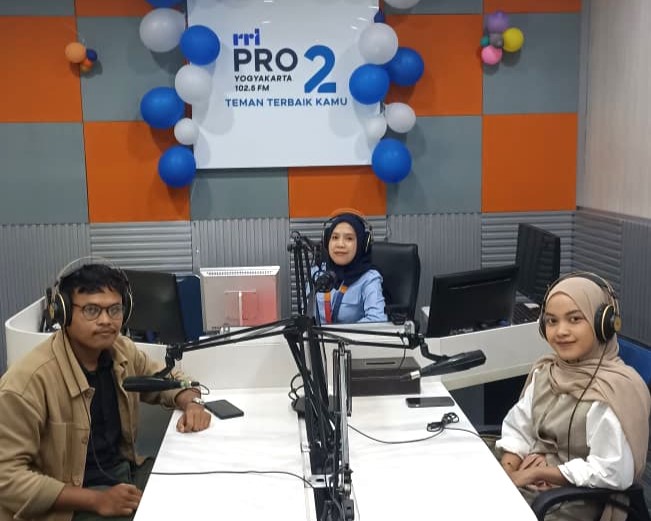
Legal Aid and Consultation Center (PKBH) (PKBH) Fakultas Hukum Universitas Gadjah Mada (UGM) bersama Constitutional Law Society (CLS) FH UGM dan Radio Republik Indonesia (RRI) Yogyakarta menyelenggarakan kegiatan penyuluhan hukum bertajuk “Waspada Deepfake: Menjaga Integritas Pemilu di Era Digital”. Kegiatan ini diinisiasi sebagai respons terhadap meningkatnya ancaman disinformasi berbasis kecerdasan buatan (AI) yang berpotensi merusak sendi-sendi demokrasi menjelang kontestasi Pemilihan Umum (Pemilu) di Indonesia.
The counseling session is scheduled to be broadcast live on RRI on Wednesday, 15 October 2025. This discussion features a collaboration of expert speakers such as Bangkit Adhi Wiguna as researcher from the Center for Digital Society (CfDS) with specialized expertise in AI and deepfakes, and Nasywa Anandhita Bilal, a Law Student with a keen interest for constitutional law.
This legal counseling is motivated by the phenomenon of misusing deepfake technology—a manipulation technique using "deep learning" to alter expressions, voices, and backgrounds in videos or images to produce highly realistic fake content. Data indicates that approximately 40% of deepfake misuse cases in Indonesia are politically motivated and target politicians.
The speakers emphasized that if left unaddressed, this structured manipulation of information could threaten the integrity of elections. Elections must be conducted based on the principles of being direct, general, free, secret, honest, and fair to ensure they remain a manifestation of democratic values.
During the legal review, the session analyzed the relevance of existing Indonesian regulations, such as Law No. 1 of 2024 (Second Amendment to the ITE Law) and Law No. 27 of 2022 on Personal Data Protection (UU PDP). While these regulations exist, speakers highlighted a legal vacuum, as there are no specific rules or mechanisms yet to specifically tackle the misuse of deepfakes. The inability of regulations to keep pace with technological advancement makes public education the most crucial first line of defense.
The program successfully engaged the audience through a structured discussion of real-world case studies, such as the digital manipulation of political figures and the use of AI to recreate historical personas for campaign purposes. By deconstructing these cases, the activity provided participants with practical "digital hygiene" skills, teaching them how to recognize subtle anomalies in AI-generated videos and verify information through official channels.
This legal counseling is closely linked to the achievement of the Sustainable Development Goals (SDGs), particularly SDG 16 (Peace, Justice, and Strong Institutions). By educating the public on deepfakes, the initiative contributes to, empowering legal awareness by quipping citizens to recognize legal violations, privacy breaches, and threats to free will during the electoral process, protecting democratic institutions by maintaining the credibility of elections as a pillar of democracy by preventing them from being undermined by false information, and preventing social conflict by reducing potential friction in society often triggered by political hoaxes and information accepted without verification.
Through the collaboration between PKBH FH UGM, CLS, and media partners, it is hoped that participants will gain critical skills in identifying manipulative content and will not easily fall prey to disinformation. Maintaining election integrity is not only the responsibility of organizers but also the result of the collective awareness of a digitally literate society.
Author : Constitutional Law Society (CLS)