Regulatory Inconsistencies Regarding Interfaith Marriages in Indonesia: Perspectives from Islamic Law, National Law, and Population Administration

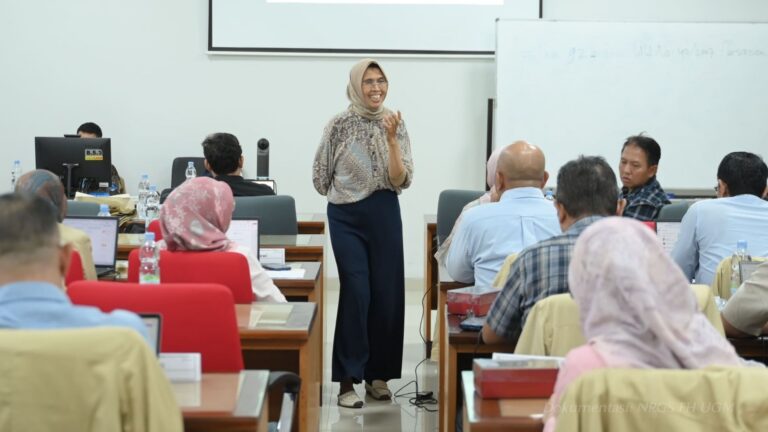
TVRI Yogyakarta, in collaboration with the Faculty of Law at Gadjah Mada University (UGM), once again presented the legal education program “Pro Justicia,” which this time addressed a sensitive and timely topic: “Developments in the Regulation of Interfaith Marriages in Indonesia and Their Implementation.” Featuring Prof. Dr. Hartini, S.H., M.Si., an expert in Islamic Law at UGM, the discussion highlighted the dynamics of regulations governing interfaith marriages—which are subject to frequent changes and have implications for validity, legality, and administrative aspects. This phenomenon is considered increasingly relevant given that the practice of interfaith marriages in society continues to rise, even though it still faces various legal and administrative obstacles.

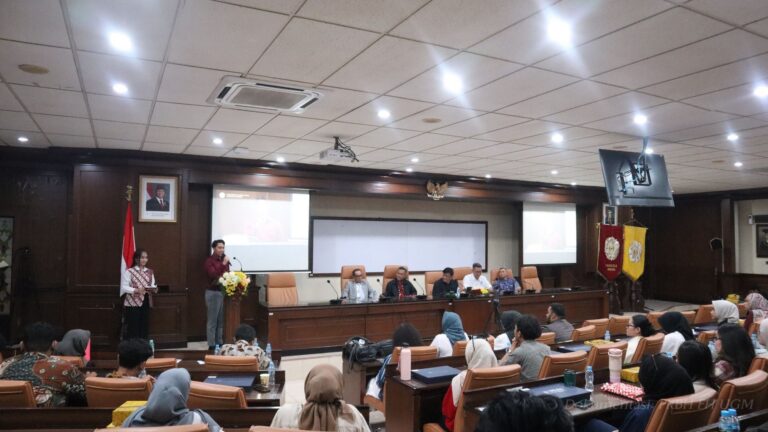
This Pro Justicia broadcast was held at TVRI Yogyakarta’s Studio 1 and aired on Tuesday, September 9, 2025, at 3:00 PM WIB on the TVRI Yogyakarta channel and via live stream on TVRI Yogyakarta’s YouTube channel. The legal education panelists included Prof. Dr. Hartini, S.H., M.Si., a lecturer in the Department of Islamic Law at the UGM Faculty of Law; M. Ismail Hamid, S.H., M.H., a judge at the Yogyakarta District Court; and Dra. Septi Sri Rejeki, Head of the Yogyakarta City Population and Civil Registry Office. In addition, this legal outreach session was also attended in person by students and members of the general public, who posed critical questions to the speakers.

In her presentation, Prof. Dr. Hartini, S.H., M.Si., emphasized that marriage is specifically regulated by the Marriage Law and that these provisions are of a lex specialis nature; therefore, the validity of a marriage is governed by the provisions of the Marriage Law, whereas marriage registration is governed by Law No. 23 of 2006 on Population Administration (Population Administration Law). However, regarding marriage registration, there is a discrepancy between the Explanatory Notes to Article 35 of the Population Administration Law, which allows for the registration of interfaith marriages through a court order, whereas Supreme Court Circular Letter (SEMA) No. 2 of 2023 states a “prohibition” against courts granting requests for the registration of marriages between individuals of different religions and beliefs. Therefore, the solution moving forward is the need for regulatory harmonization, specifically through amendments to Article 35 of the Population Administration Law, particularly its explanatory notes. The registration of interfaith marriages would be better handled by reverting to the regime of the Marriage Law prior to the enactment of the Population Administration Law of 2006, so that when individuals submit to the law, their marriages can be registered, since the object of marriage registration is the legal act and event itself, not their religion.

Meanwhile, M. Ismail Hamid, S.H., M.H., a judge at the Yogyakarta District Court, explained that in 2023 at the Yogyakarta District Court—prior to the implementation of Supreme Court Circular No. 2 of 2023—there were 4 applications for permission to register interfaith marriages, and 3 were granted based on Supreme Court Clerk’s Letter No. 231/PAN/HK. 05/1/2019, which stipulates that interfaith marriages are not recognized by the state and cannot be registered; however, if the marriage is conducted according to the religion of one spouse and the other spouse submits to their partner’s religion, then the marriage may be registered. Subsequently, with the enactment of SEMA No. 2 of 2023, it is stipulated that a valid marriage is one conducted in accordance with the laws of each spouse’s respective religion and belief, in accordance with Article 2(1) and Article 8(f) of the Marriage Law, and it instructs the courts not to grant requests for the registration of marriages between individuals of different religions and beliefs.

On the other hand, Dr. Septi Sri Rejeki, Head of the Yogyakarta City Population and Civil Registry Office, explained that the registration of interfaith marriages by the Population and Civil Registry Office will only be carried out if the couple has obtained a court ruling, in accordance with the provisions of Article 35 of Law No. 23 of 2006 on Population Administration. Upon registration of the marriage, a Marriage Certificate will be issued, and if the couple has children, a Birth Certificate will also be issued. 

The issue of interfaith marriage raised in the Pro Justicia broadcast is closely linked to the Sustainable Development Goals (SDGs). This topic supports SDG 5 on gender equality, as it highlights the protection of women’s rights—women who often bear social and administrative burdens due to the non-recognition of interfaith marriages. Furthermore, this initiative is also relevant to SDG 10 on reducing inequality, as it provides legal clarity that can minimize discrimination against couples and children born from interfaith marriages. Furthermore, this discussion helps advance SDG 16 on peace, justice, and strong institutions by promoting regulatory harmonization and strengthening access to justice for all citizens.

Author: Dita Elvia Kusuma Putri (Instructor, Department of Islamic Law)

TAGS :  

Latest News

UGM Faculty of Law and doctorSHARE Establish Partnership to Strengthen the Three Pillars of Higher Education and Community Service

Fakultas Hukum Universitas Gadjah Mada (FH UGM) dan Yayasan Dokter Peduli (doctorSHARE) resmi menandatangani Perjanjian Kerja Sama (PKS) tentang Penyelenggaraan Kerja Sama di Bidang Tri …

Legal Counseling on Online Transactions from the Perspective of Islamic Law, PBB-P2, and MSMEs in Timbulharjo Village, Bantul

Kamis (16/7/2026), Fakultas Hukum Universitas Gadjah Mada (FH UGM) melalui unit Pusat Konsultasi dan Bantuan Hukum (PKBH), bekerja sama dengan Kejaksaan Tinggi Daerah Istimewa Yogyakarta …

Legal Counseling on Waste Management, Online Loans, Online Gambling, Loan Sharks, and Inheritance Law in Wirokerten Village, Bantul

Kamis (16/7/2026), Fakultas Hukum Universitas Gadjah Mada (FH UGM) melalui unit Pusat Konsultasi dan Bantuan Hukum (PKBH), bekerja sama dengan Kejaksaan Tinggi Daerah Istimewa Yogyakarta …

Scroll to Top