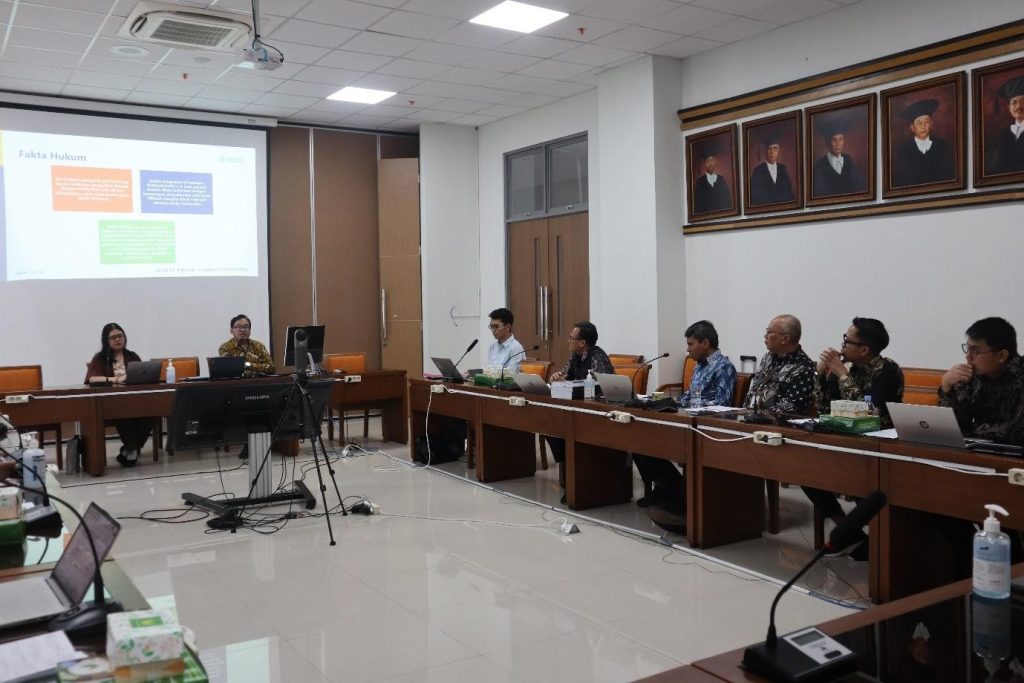
On Tuesday (December 3, 2024), the Examination Team of the Faculty of Law at Gadjah Mada University (FH UGM) held a focus group discussion (FGD) titled “Examination of the Corruption Court Ruling in the Case of Andri Wibawa.” The event took place in Room B.5.4 of Building B at the UGM Faculty of Law. The session began with a presentation of the examination findings by the UGM Faculty of Law examination team, namely Dr. Muhammad Fatahillah Akbar, S.H., LL.M., as Chair of the Examination Team, and Diantika Rindam Floranti, S.H., LL.M., as a Member of the Examination Team. The examination results addressed the fulfillment of the elements of Article 12(i) of the Law on the Eradication of Corruption Offenses (“Anti-Corruption Law”) regarding non-civil servant legal entities or state officials, the application of Article 15 of the Anti-Corruption Law, and the liability of private parties involved in unlawful procurement acts under the Anti-Corruption Law.
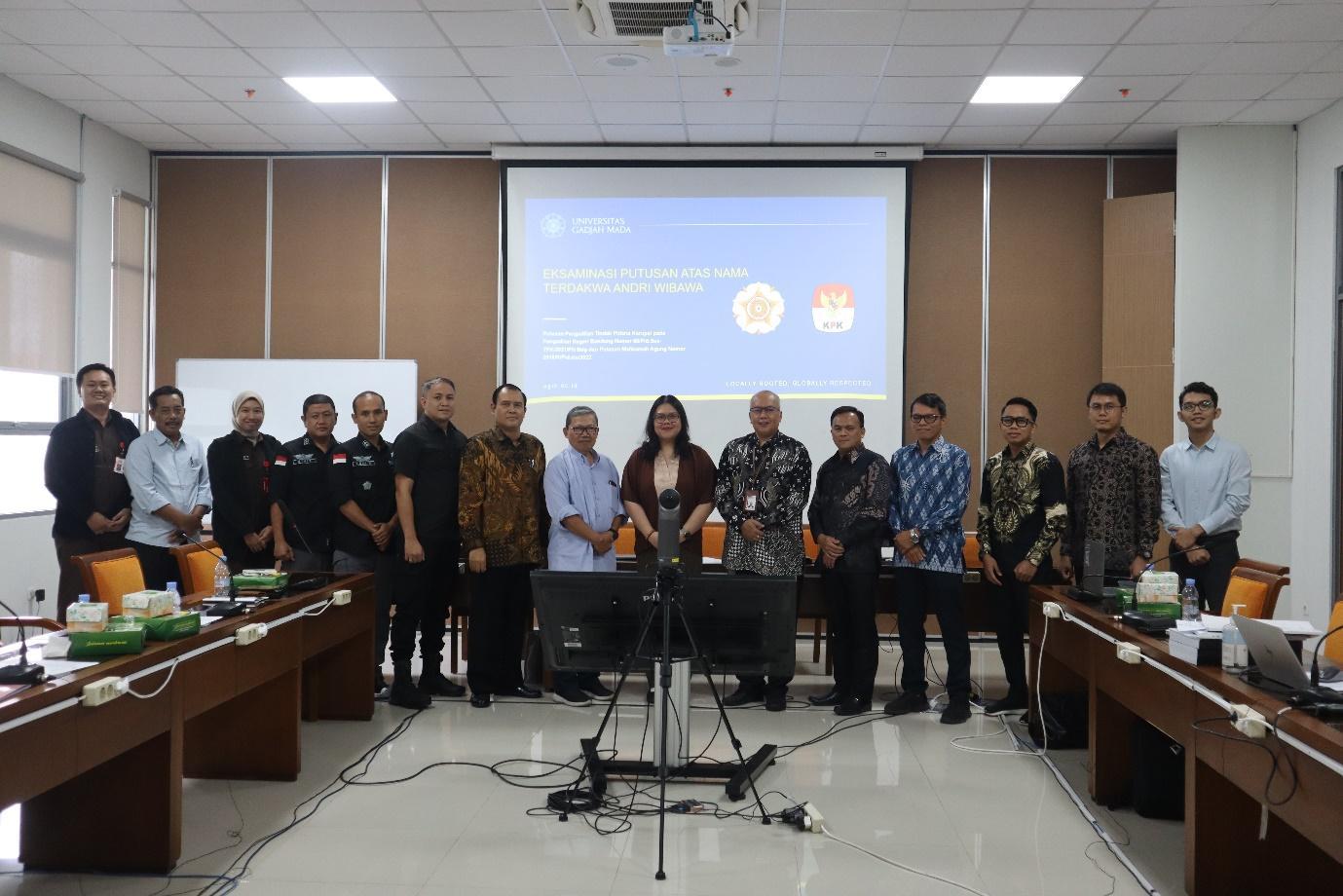
The FGD session continued with remarks from the attendees, namely Dr. Sigid Riyanto, S.H., M.Si., and Dr. Supriyadi, S.H., M.Hum., who are lecturers in the Department of Criminal Law at UGM, an inspector from the Corruption Eradication Commission (KPK), a representative from the Yogyakarta Special Region High Prosecutor’s Office, a representative from the Yogyakarta District Prosecutor’s Office, and a representative from the Sub-Directorate of Corruption Crimes of the Yogyakarta Special Region Police. The attendees each offered their own perspectives to analyze and provide feedback on the examination results based on principles of criminal law, legislation, and criminal legal practice. An exchange of ideas took place to foster a shared understanding of law enforcement—not with the intent to punish, but to ensure cases are handled in accordance with the law.
This FGD serves as a strategic step for the Examination Team to refine the Final Report and Recommendations on the Examination Results, which are expected to strengthen the analysis of the legal relationship between private legal entities and civil servants or state officials in relation to corruption offenses, provide a comprehensive review of specific regulations regarding aiding and abetting and criminal conspiracy in corruption offenses, and contribute to the spirit of combating corruption in Indonesia.
Furthermore, this FGD, as a form of collaboration between the Department of Criminal Law, the UGM Faculty of Law, and the KPK, plays a crucial role in achieving several points outlined in the UN Sustainable Development Goals (SDGs). First, SDG 4, which focuses on Quality Education, is reflected in the objective of this event as a means to improve the quality of legal education at the UGM Faculty of Law. Second, SDG 16, which focuses on Peace, Justice, and Strong Institutions, is reflected in the department’s efforts to build effective and accountable institutions in the legal field. Finally, SDG 17, which emphasizes the importance of Partnerships for the Goals, is reflected in the planned cooperation and collaboration the department will undertake with various stakeholders.
Authors: Diantika Rindam Floranti, S.H., LL.M., Lusia Rina Wulandari, and Bintang Ratu Excelluna Rohman Putri (Department of Criminal Law)