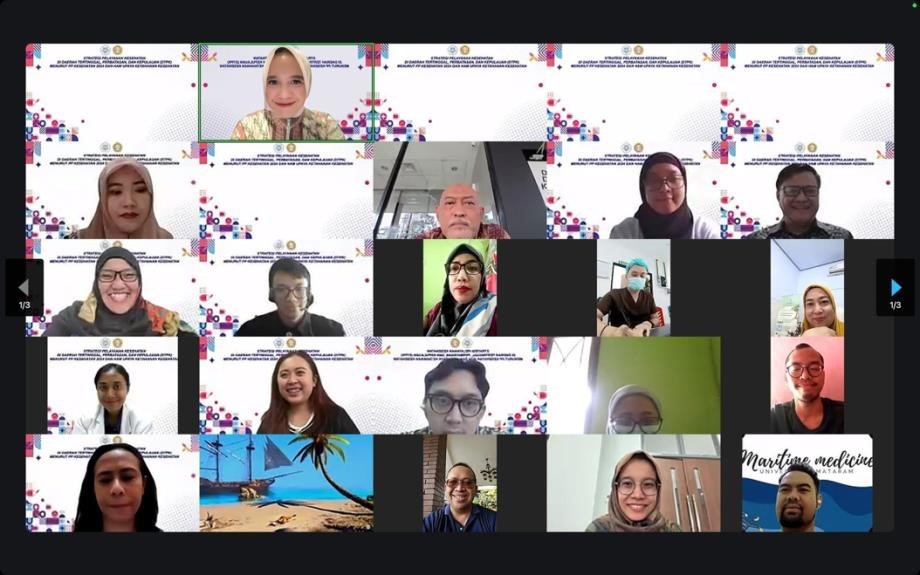
The Master’s Program in Health Law at Gadjah Mada University successfully held a national seminar titled “Health Care Strategies in Disadvantaged, Border, and Island Areas (DTPK) According to the 2024 Health Regulation and Human Rights: Efforts Toward Health Resilience.” The seminar, which took place on Saturday (December 21, 2024) from 8:00 AM to 11:00 AM WIB, was held online. The event was attended not only by students but also by doctors, faculty members, and experts from relevant ministries.
This seminar featured three speakers who are experts in their respective fields. The first speaker was the Head of the UGM Health Services Bureau, Dr. dr. Andreasta Meliala, M.Kes. The second speaker was the Associate Dean for Research, Community Service, and Information Systems at the UGM Faculty of Law, Dr. Heribertus Jaka Triyana, S.H., LL.M., M.A. The final speaker is the Director General of Accelerated Development of Disadvantaged Regions at the Ministry of Villages of the Republic of Indonesia, Drs. Nugroho Setijo Nagoro, M.Si. This national seminar is organized as part of the preparation for the Master of Health Law program in fulfilling the three pillars of higher education—namely, community service—and as a government recommendation for the equitable distribution of health services in Disadvantaged Regions (DTPK).
The uneven development of healthcare in Indonesia represents a failure to fulfill the right to health for the public, particularly those living in conflict-affected areas. The first speaker, Jaka, explained that people in conflict-affected areas have the right to receive optimal healthcare services. Legal protection for health workers serving in DTPKs and conflict-affected areas is essential to ensure the equitable distribution of health personnel. The second speaker, Dr. Andre, addressed key issues in health development. The equitable distribution of health personnel remains a priority concern. Meanwhile, Nugroho noted that the Ministry of Village, Development, and Transmigration’s PPDT is currently committed to and focused on advancing health in DTPKs.
The government issued the 2024 Health Regulation as part of its efforts to promote equitable health development. Collaboration among educational institutions, the Ministry of Health, the Ministry of Rural Affairs, and non-ministerial agencies is essential to achieving health resilience. The Master’s Program in Health Law is committed to carrying out community service at the DTPK as a concrete step toward achieving the Health SDGs and a healthy Indonesia.
Writer: KMMHkes