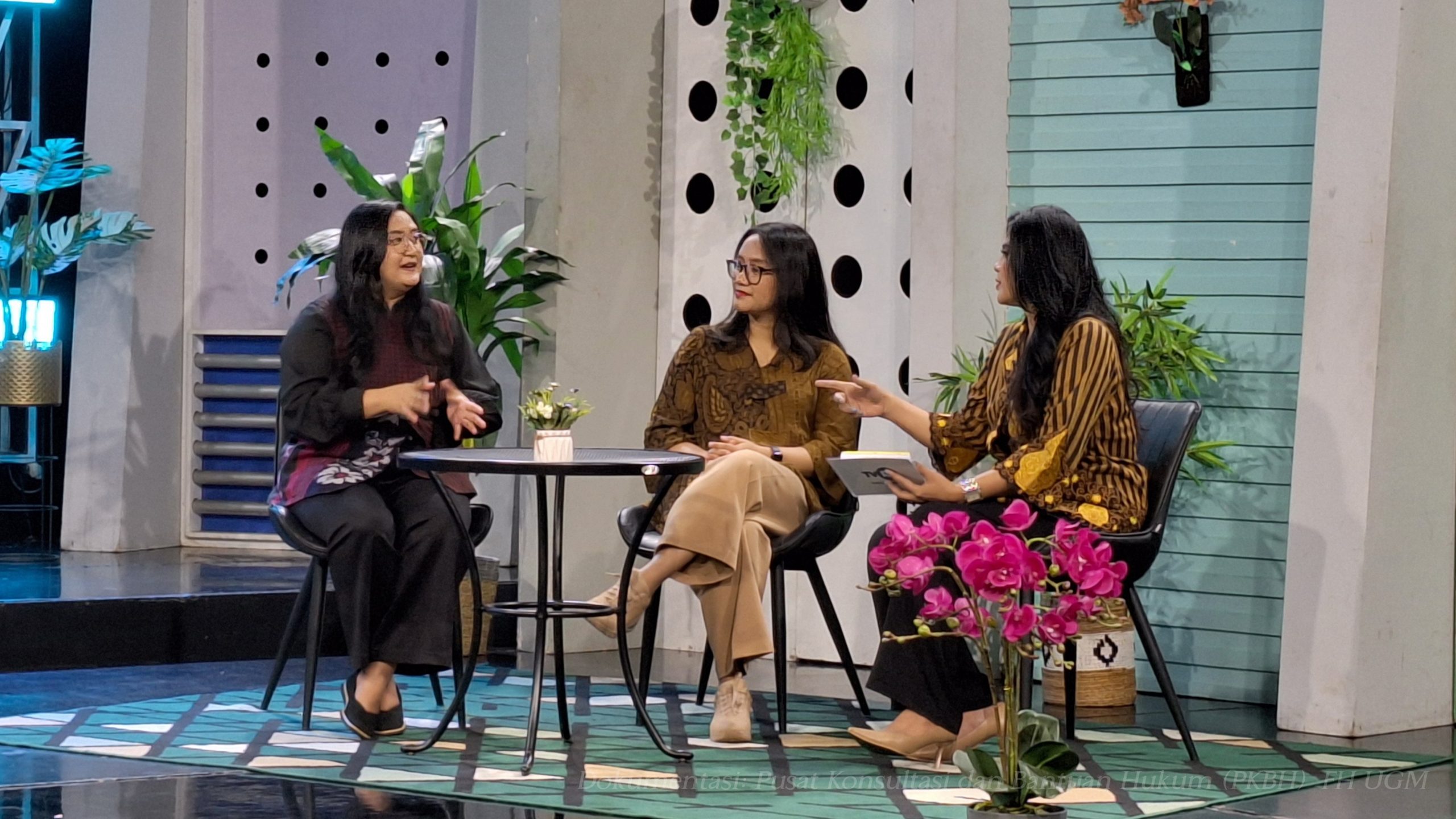

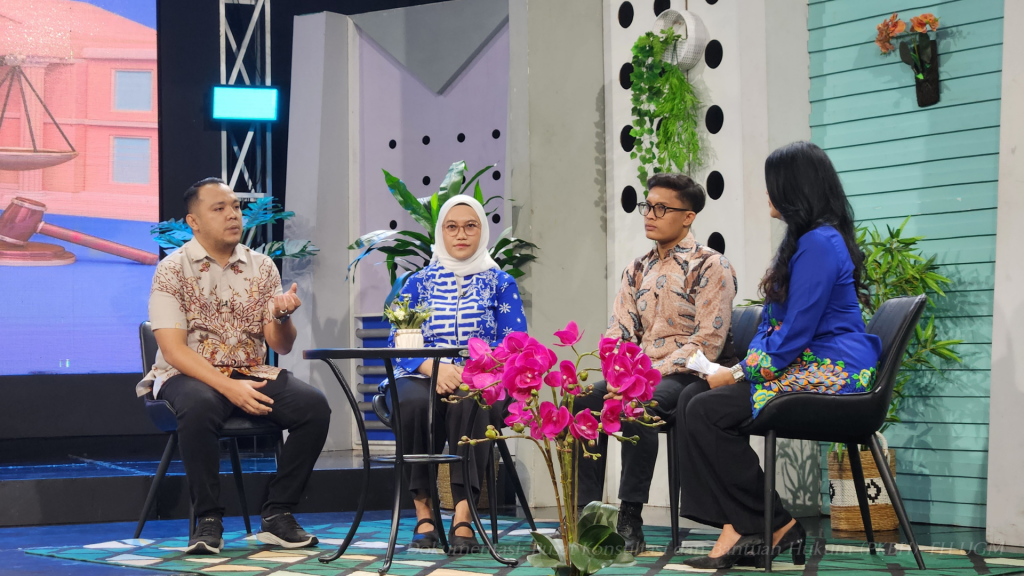
Yogyakarta, March 9, 2026 – The Faculty of Law at Universitas Gadjah Mada (FH UGM), through its Legal Consultation and Aid Center (PKBH), in collaboration with TVRI Yogyakarta, successfully broadcasted a legal education program titled "Pro Justicia: Implications of Naturalization and Human Mobility in the Modern Era: Perspectives on Citizenship and Immigration Law." This initiative aims to provide public insight into citizenship status amidst the rapid global movement of people. Running for 60 minutes, the broadcast highlighted the fulfillment of constitutional rights regarding citizenship and the necessary administrative requirements within the immigration context.
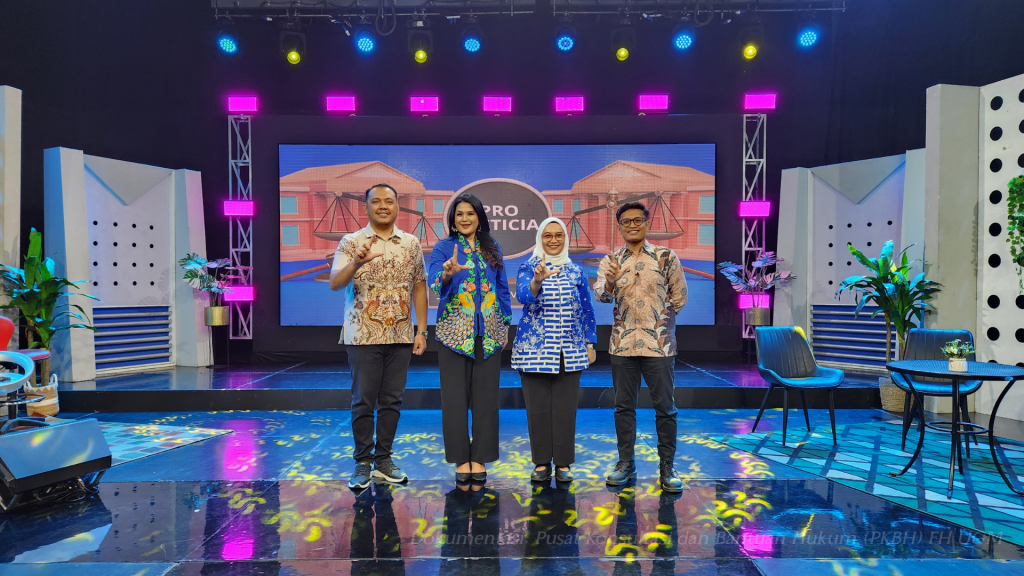
Featuring a panel of legal and immigration experts, the discussion was comprehensive and coherent, centering on the dynamics of citizenship law and modern immigration enforcement. The distinguished speakers included Virga Dwi Efendi, S.H., LL.M., Lecturer in State Administrative Law and Secretary of PKBH FH UGM; Chintia Dwi Putri, A.Md.Im., S.H., Associate Expert Immigration Analyst at the Class I Special TPI Immigration Office, Surabaya; and Sefta Adrianus Tarigan, A.Md.Im., S.H., M.Si., Head of the Intelligence and Immigration Enforcement Section at the Class I TPI Immigration Office, Yogyakarta. The panel emphasized that global human mobility drives various social phenomena, such as the increasing frequency of transnational mixed marriages, which directly impacts state policy adjustments regarding citizenship.
During the session, Virga Dwi Efendi specifically addressed Indonesia's citizenship policy under Law Number 12 of 2006 concerning Citizenship. He provided an in-depth explanation of the subjects of citizenship and naturalization processes, while highlighting various real-world case studies. Meanwhile, Chintia Dwi Putri discussed immigration frameworks, covering their constitutional and juridical foundations, global immigration challenges, and their broader implications. Furthermore, Sefta Adrianus Tarigan elaborated on the execution of intelligence and immigration enforcement duties concerning Foreign Nationals (WNA) in Indonesia, detailing the types of immigration violations and their corresponding administrative sanctions.
The execution of this legal education program serves as a concrete manifestation of community service, aligning with the Tri Dharma of Higher Education. This outreach also represents a direct contribution to the United Nations’ Sustainable Development Goals (SDGs). Specifically, it supports SDG 4 (Quality Education) by facilitating accessible legal education through digital broadcasting platforms; SDG 16 (Peace, Justice, and Strong Institutions) by promoting public awareness regarding the oversight and enforcement of immigration and citizenship laws; and SDG 17 (Partnerships for the Goals) by fostering institutional collaboration to ensure widespread and insightful information dissemination.
Author: Faizal Cahya Adhyaksa (PKBH FH UGM)