
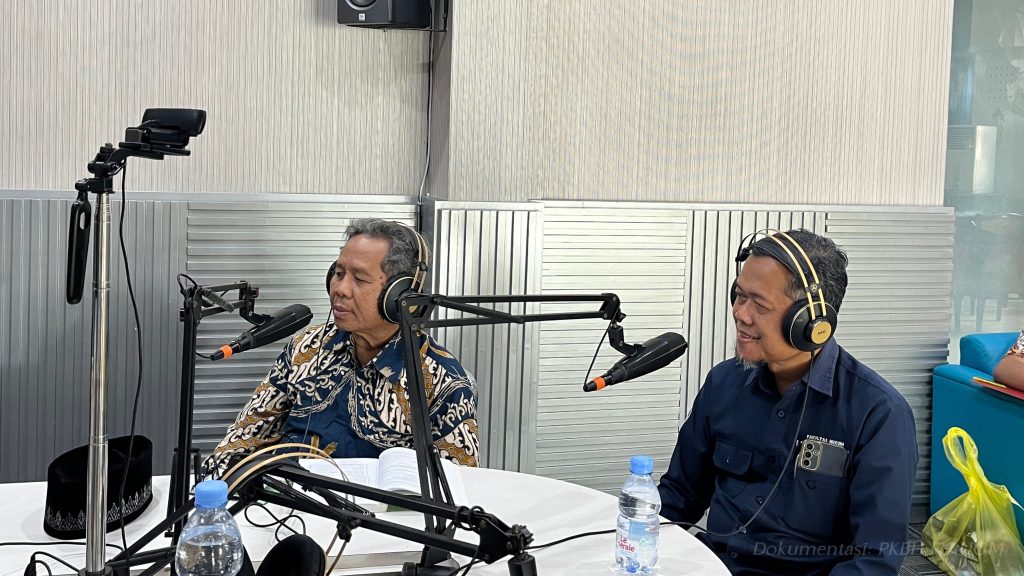
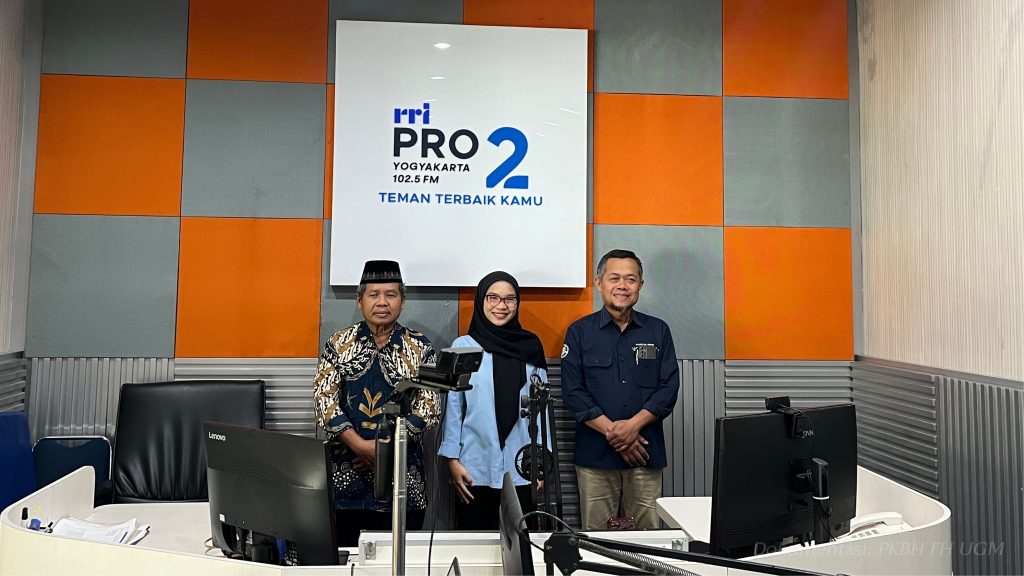
On February 4, 2026 he Faculty of Law at Universitas Gadjah Mada (FH UGM), through its Center for Consultation and Legal Aid (PKBH), successfully collaborated with Radio Republik Indonesia (RRI) Pro 2 Yogyakarta to broadcast a legal counseling session titled "Midday Relaxation: Case Resolution in Religious Courts" (Santai Siang: Penyelesaian Perkara di Pengadilan Agama). This broadcast aimed to provide the public with essential insights into the various types of cases that fall under the jurisdiction of the Religious Courts. The initiative represents a concrete step by PKBH FH UGM to educate the wider community regarding the absolute competency of these courts.
The session featured Dr. Yulkarnain Harahab, S.H., M.Si., Chairman of the Center for Consultation and Legal Aid at FH UGM, and Dr. Ahmad Zuhdi, S.H., an administrator for the Indonesian Ulema Council (MUI) DIY and a retired Religious Court Judge, as the primary speakers.
The discussion highlighted the critical role of the Religious Courts (PA) in resolving diverse legal matters. Dr. Yulkarnain Harahab outlined nine specific types of cases that can be resolved through the Religious Courts: marriage, inheritance, wills, grants, waqf, zakat, infaq, alms (shadaqah), and Sharia economics. Furthermore, Dr. Ahmad Zuhdi provided a detailed explanation of the procedural aspects of litigation. He covered technical details regarding eligible disputing parties, the flow of proceedings, the distinction between a husband's divorce application (cerai talak) and a wife's divorce suit (gugatan perceraian), the types of petitions granted by judges, and the potential for mediation.
Both speakers noted that marriage-related cases, particularly divorce and polygamy applications, remain the most common disputes handled by the Religious Courts. Dr. Ahmad Zuhdi also shared advice on choosing a partner to achieve a harmonious family life (sakinah, mawaddah, warohmah) and avoid divorce, stating, "Seek a partner based on their religious background, and you will find happiness."
This initiative serves as a tangible action supporting the Sustainable Development Goals (SDGs) and represents a form of dedicated community service. The activity contributes directly to SDG 4 (Quality Education) by improving legal literacy regarding dispute resolution. Additionally, it supports SDG 16 (Peace, Justice, and Strong Institutions) by disseminating legal understanding to foster a peaceful, just, and resilient society. Finally, the program aligns with SDG 17, which emphasizes collaborative synergy between institutions to achieve sustainable development objectives.
Author: Faizal Cahya Adhyaksa (PKBH FH UGM)