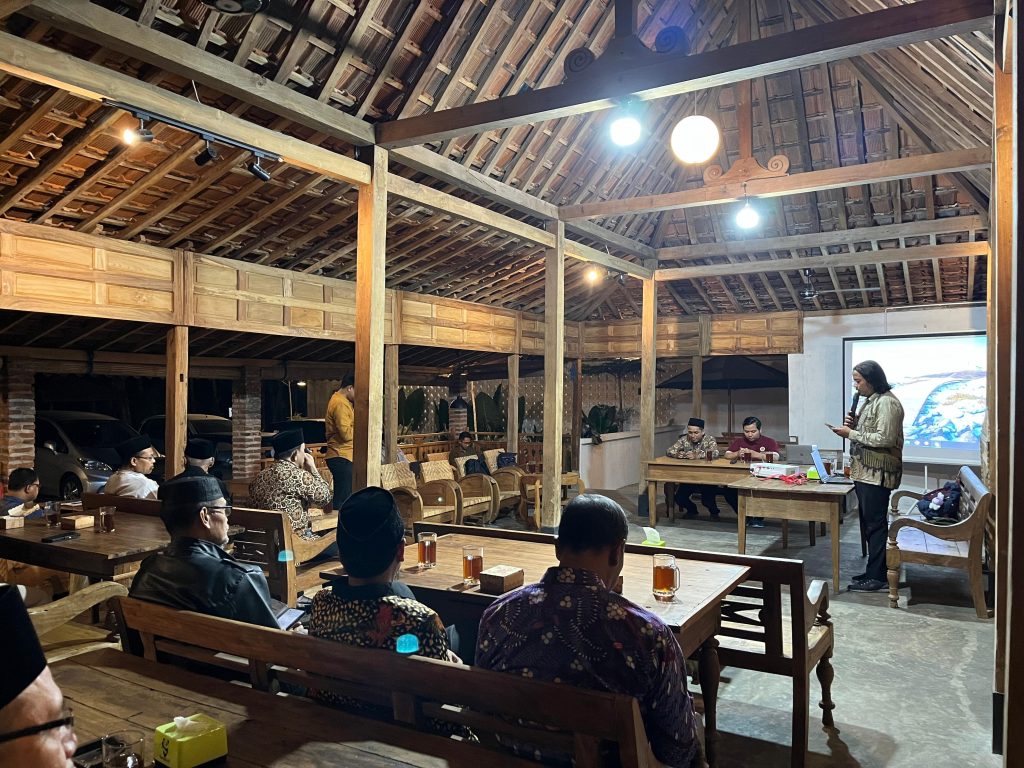
The Center for Democracy, Constitutional, and Human Rights Studies, Faculty of Law, Gadjah Mada University (PANDEKHA), in collaboration with the Ngemplak District Supervisory Committee (Panwascam), successfully held a legal briefing themed "Building Participatory Oversight for Clean and Democratic Elections" at Waroeng Bejo, Sleman, on Friday (September 27, 2024). The event was attended by representatives of religious leaders, members of the Interfaith Harmony Forum (FKUB), and the local community. The main objective of this activity is to encourage public participation in participatory oversight to achieve honest, fair, and money-free elections.
In this counseling, the Ngemplak Panwascam emphasized the importance of the role of religious figures as unifiers amidst differences in political choices and as the main drivers in creating a conducive and democratic environment.
"Religious leaders are crucial and play a central role because they easily encourage the public to do good," said the Panwascam representative. He hoped that religious leaders would encourage the public to actively participate in election oversight so that the democratic process in the 2024 Sleman Pilkada would proceed according to transparent and accountable principles.
Azmi, a representative from PANDEKHA, explained in his presentation that participatory oversight is key to maintaining democratic integrity. He highlighted that weak public control is one of the causes of the decline in the quality of democracy in Indonesia. "Democracy belongs to the people. However, when the public does not exercise oversight, democracy can become what is called a managed democracy, where the election process is controlled by those in power," Azmi explained.
In addition, Azmi also raised the issue of money politics that often occurs in various regions, which according to him, not only damages the integrity of elections, but also produces unqualified leaders and increases corruption.
The main issue raised in this outreach is the practice of vote buying, which is considered to undermine the foundations of democracy. The public is often unaware that gifts in the form of goods or political promises are also part of vote buying, which is prohibited by the Regional Election Law. This point was emphasized by PANDEKHA, who cited Article 73 of the Regional Election Law and Article 187A, which states that both the giver and recipient of vote buying are subject to criminal penalties.
As a follow-up to this outreach session, the Ngemplak District Election Supervisory Committee (Panwascam) stated that it has conducted a risk assessment in its jurisdiction, including at Polling Stations (TPS) deemed prone to violations. “We have coordinated with various parties to ensure that oversight at the grassroots level runs smoothly. Additionally, we are encouraging the public to actively report any violations occurring on the ground,” emphasized the Panwascam representative.
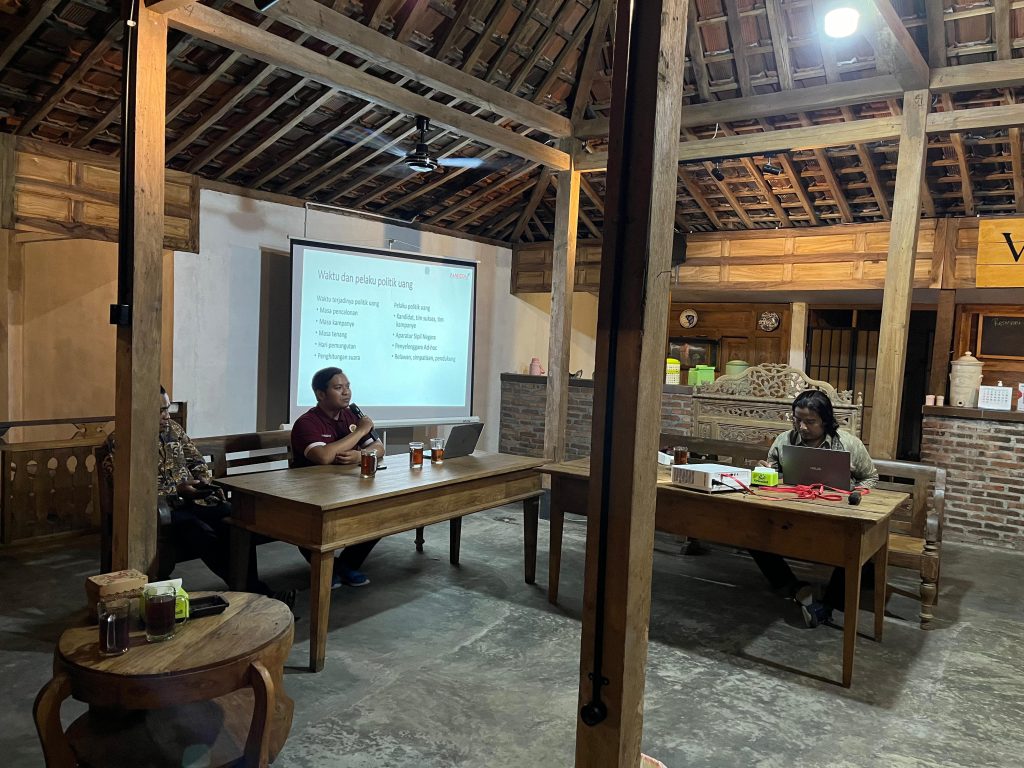
The discussion was interactive, with participants expressing various questions regarding weak law enforcement and election oversight. One participant from the FKUB highlighted that the main challenge in monitoring vote buying practices is the difficulty of gathering evidence for the general public. "When it comes to reporting, people often don't know where to report or don't have sufficient evidence. This is a major obstacle in combating vote buying," said Sukirno, a member of the FKUB.
In response, PANDEKHA emphasized the importance of legal education for the public to better understand their rights and procedures for reporting election violations. "We encourage universities to play a role in providing inclusive legal education and developing anti-money politics villages. This will be a strategic step to strengthen election oversight at the grassroots level," Azmi explained.
This legal counseling is in line with the objectives of the Sustainable Development Goals (SDGs), especially point 16 concerning Peace, Justice, and Strong Institutions (Perdamaian, Keadilan, dan Lembaga yang Tangguh).
Through this activity, PANDEKHA hopes to promote cleaner elections and a healthier democracy in the future. By strengthening participatory oversight and involving all elements of society, the hope of realizing free and fair elections becomes increasingly real.
Writer: Garuda Era Ruhpinesthi (PANDEKHA)
Editor: Public Relations