Community service is one of the main pillars of the Tri Dharma of Higher Education that must be carried out by all members of the university community, including students. Amid increasingly complex social and environmental challenges, community service is not only a form of social responsibility but also an embodiment of the humanistic values inherent in the academic community. DEMA Justicia of the Faculty of Law at Gadjah Mada University (UGM) serves as a driving force in efforts to foster awareness and concern for others through various sustainable community service programs that have a tangible impact.
As a faculty-level student organization, DEMA Justicia plays a strategic role in encouraging students’ active participation in social and community activities. Through various programs designed with a humanistic and participatory approach, DEMA Justicia invites the entire academic community of the UGM Faculty of Law not only to understand the theory of justice but also to implement it directly in society. The values of compassion, empathy, and tangible contributions are at the core of every activity organized.
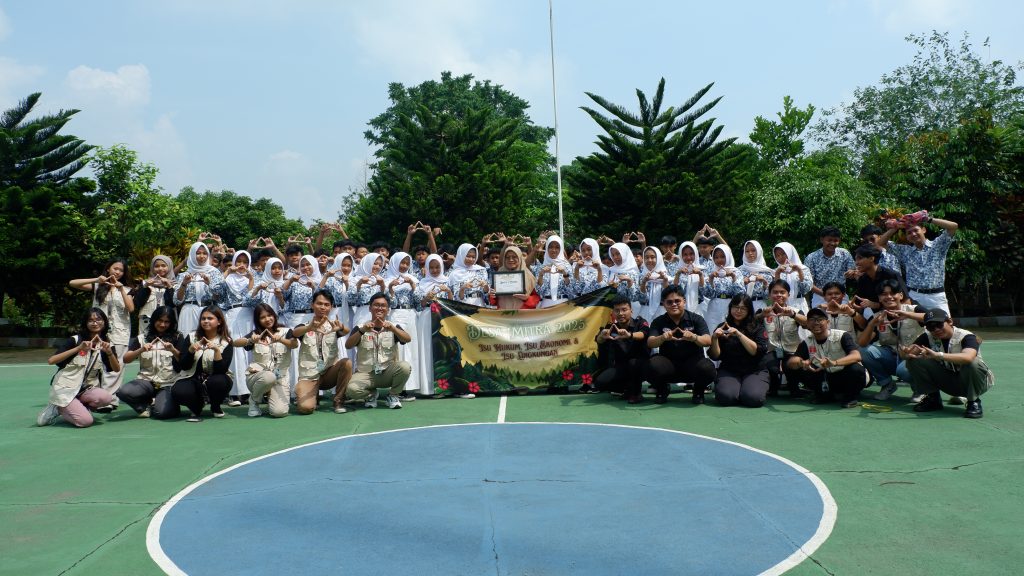
The programs implemented by DEMA Justicia reflect this commitment. Justicia Berbagi #1, for example, is a charitable initiative aimed at providing assistance to those in need. Meanwhile, Dema Mengajar serves as a tangible example of student involvement in education, specifically by providing instruction and recognition to students at SDN Merdikorejo. More than just a short-term activity, Desa Mitra serves as a sustainable collaboration initiative with the community of Merdikorejo Village, focusing on three main issues: law, economy, and the environment. Furthermore, to raise awareness of the importance of humanitarian action, DEMA Justicia also organized a Red Cross Day commemoration in collaboration with the Indonesian Red Cross (PMI) Klaten chapter. These programs demonstrate that community service does not have to be on a large scale; what matters most is sustained presence and care.
DEMA Justicia continues to innovate by designing programs that are relevant and responsive to the community’s needs. Among these is a plan for regular visits to the Village Head of Merdikorejo to directly identify community issues and aspirations. Additionally, there is the Ecovasi Kampus program, designed to raise environmental awareness through critical education and training. There is also the Pink Fest, which features a series of events such as the Pink Run and Pink Walk, in collaboration with Love Pink Indonesia to raise awareness about breast cancer.
All of the community service initiatives carried out by DEMA Justicia are in line with the UGM Faculty of Law’s commitment to supporting the achievement of the Sustainable Development Goals (SDGs). Through the “Dema Mengajar” program and partnerships with elementary schools, the organization contributes to SDG 4 (Quality Education) by providing children with access to education. The Ecovasi Kampus program supports SDG 13 (Climate Action) through environmental awareness education, while the Pink Fest, which focuses on breast cancer, also contributes to SDG 3 (Good Health and Well-being). Furthermore, student involvement in building partnerships with the community in Desa Mitra also strengthens SDG 17 (Partnerships for the Goals). Thus, every community service initiative undertaken not only has a tangible impact on the community but also aligns with the global agenda for sustainable development.
Through all these programs, DEMA Justicia aims to instill the understanding that community service is not just about giving, but also about empowering. Community service is a process of learning together with the community, understanding existing realities, and taking on the role of agents of change. With a collective spirit and a sense of social responsibility, the academic community of the UGM Faculty of Law is expected to continue contributing to building a just, inclusive, and sustainable society.
Author: DEMA Justicia (Virya Sankara Cabinet)