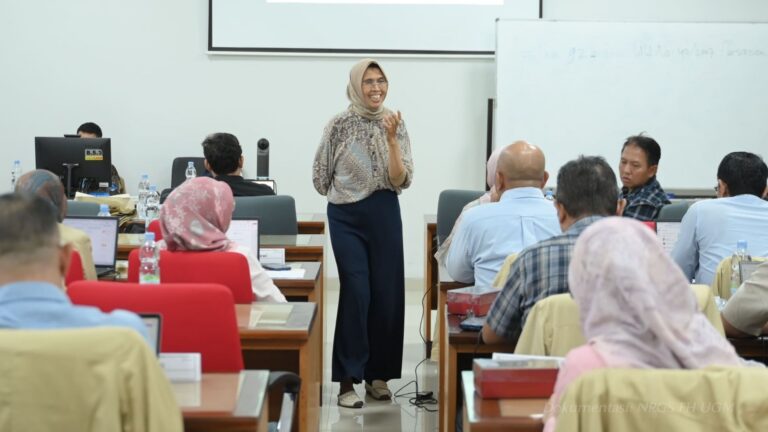
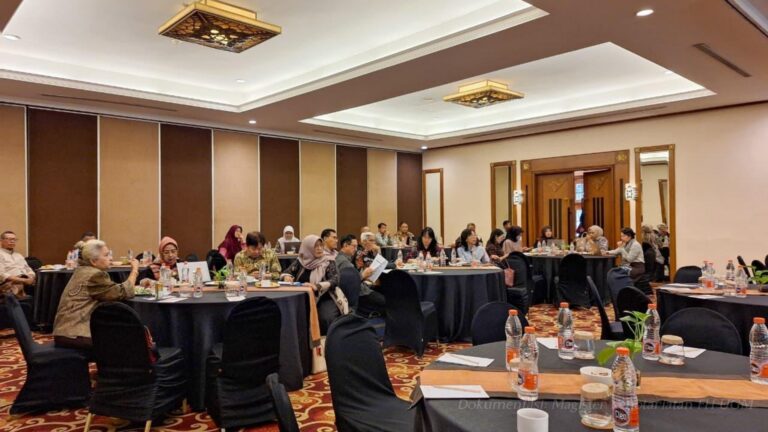
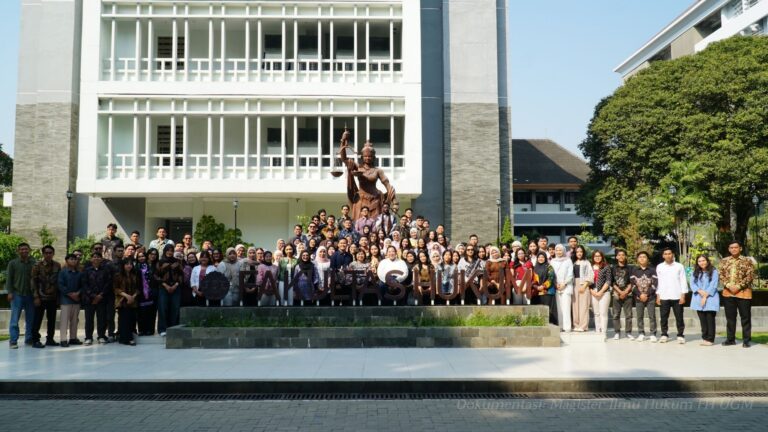
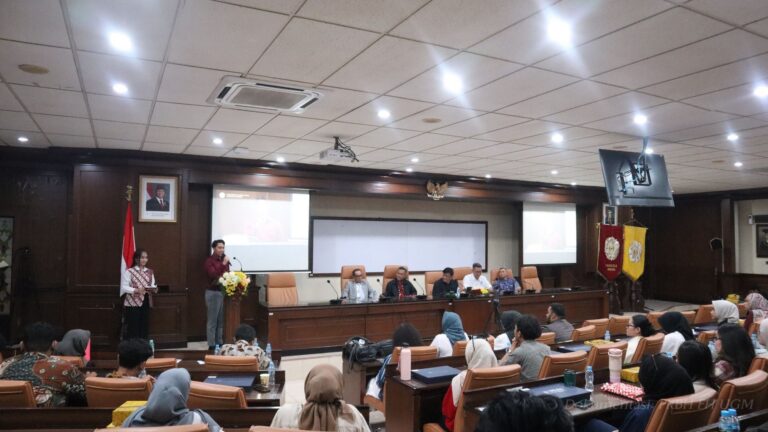
Students from the Master’s Program in Business and Public Law (MHBK), Faculty of Law, Gadjah Mada University (UGM), hosted a legal awareness broadcast titled “Understanding Prisoners’ Rights: Voices Behind Bars”. This event took place on Wednesday (June 18, 2025), via a live broadcast on Radio Republik Indonesia (RRI) Yogyakarta. The event was a collaboration between MHBK UGM students, the Center for Legal Consultation and Assistance (PKBH) at the UGM Faculty of Law, and RRI Yogyakarta. The broadcast aims to provide legal education to the public, particularly regarding the issue of fulfilling prisoners’ rights as part of human rights protection.
The event featured two keynote speakers from the Master’s Program in Business and Public Law at the Faculty of Law, UGM: Sena Putri Safitri and Raudhatul Jannah. Both speakers offered in-depth legal and humanitarian perspectives on the rights of prisoners, which are often overlooked within the correctional system. This discussion is significant as part of an educational campaign aimed at raising public awareness of the importance of fair and dignified treatment for all citizens, including those currently serving prison sentences. RRI Yogyakarta, as a public media outlet, is actively participating in highlighting law enforcement issues through a humanistic approach.
In his remarks, Sena emphasized that the fact that inmates are perpetrators of crimes does not automatically deprive them of their fundamental human rights. He stressed the importance of upholding human values in the implementation of the correctional system in Indonesia. “In various national and international legal instruments, the basic rights of prisoners have been established to ensure that human dignity is upheld. This is a form of respect for human rights principles,” he said in the broadcast.
In line with this, Raudhatul Jannah—known as Nana—stated that the fulfillment of prisoners’ rights is a crucial element in a correctional system focused on social reintegration. According to her, a repressive system will not be able to produce inmates who are ready to return to society. “If we examine this further, the rights of inmates include the right to humane treatment, health and medical services, education and rehabilitation, communication, due process, and the right to safety,” Nana explained.

Furthermore, Nana stated that ensuring the fulfillment of prisoners’ basic rights is not merely a state obligation enshrined in positive law, but also a tangible manifestation of a commitment to social justice. She emphasized the importance of fostering public legal awareness that prisoners still possess human rights. “We are not defending crime, but ensuring that the legal system operates fairly and upholds human values,” she added. This underscores that a humanistic approach must be the guiding principle in every correctional policy.
Through this broadcast program, RRI Yogyakarta seeks to fulfill its strategic role as a media outlet that educates and provides a platform for voices that are often marginalized. The issue of ensuring the rights of prisoners is a crucial component in shaping a more inclusive and just legal system. The public is expected to better understand that human rights are universal, including for those in correctional facilities. Thus, this broadcast serves as a bridge of knowledge between the academic world, the media, and the broader public.
This legal education broadcast directly supports the achievement of the Sustainable Development Goals (SDGs), particularly SDG 16: Peace, Justice, and Strong Institutions. By addressing the issue of protecting the rights of prisoners, this broadcast underscores the importance of a fair rule of law that respects human rights, including for vulnerable and marginalized groups within the criminal justice system. Additionally, this initiative is relevant to SDG 4: Quality Education, as it strengthens public legal literacy through an inclusive educational approach. Through collaboration between academic institutions and public media, this broadcast serves as a concrete example of the role of higher education in driving social change, fostering legal awareness, and strengthening accountable institutions that are responsive to the values of justice and humanity. Students, as agents of change, are expected to continue serving as driving forces in efforts to uphold the law with dignity and a commitment to humanity.
Author: Raudatul Jannah (Mahasiswa MHBK Penerima Hibah Penyuluhan Hukum Mahasiswa)